
Kumbh Mela (the festival of the sacred Pitcher or pot ) is considered as the largest peaceful congregation of pilgrims on earth, and it includes the ritual of taking bathe or a holy dip in a sacred river.
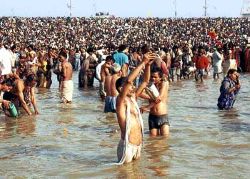
It is a huge spiritual event inviting global attention as a tradition interwoven with the rich cultural heritage of India since ancient times.The event is a religious and cultural spectacle which occurs once in 12 years attracting participants from around the globe to take a dip in the holy waters
In 2025 Mahakumbhamela is happening in Prayagraj in India. The 45-day Maha Kumbh, happening after a gap of 144 years, will witness the participation of over 45 crore devotees, including nearly 15 lakh from foreign nations
Kumbh Mela plays a central spiritual role in the country and the event encapsulates the science of astronomy, astrology, spirituality, ritualistic traditions, and social and cultural customs and practices making this a culturally diverse festival. Knowledge and skills related to this tradition are transmitted through ancient religious manuscripts, oral traditions, historical travelogues and texts produced by eminent historians. However, the teacher-student relationship of the sadhus in the ashrams and akhadas remains the most important method of imparting and safeguarding knowledge and skills relating to Kumbh Mela.
The ritualistic bath of kumbh mela
The kumbh mela festival is connected with the ritual of the sacred bath or dip in Ganges River or its confluences. Devotees believe that by bathing in the holy Ganges, one is freed from sins liberating the person from the cycle of birth and death. This impart Kumbh mela a dimension of salvation or moksha along with the fervor and enthusiasm interwoven with the celebration of spirituality.
The congregation of pilgrims attending Maha Kumbh mela includes ascetics, saints, sadhus, aspirants-kalpavasis and visitors from any part of the globe. It is believed that Kumbh mela is a festival which is celebrated in India since ancient times at periodic intervals as a celebration of holy bath and congregation for spiritual discussions and rituals, in various other names as Magh festival. Still it is a matter of debate while looking through the lens of history .
Most pilgrims stay at the venue of Kumbh mela for a day or two, but some stay the entire month of Magh during the festival and live an austere life during the stay. They attend spiritual discourses, fast and pray over the month, and these Kumbh pilgrims are called kalpavasis
Traditionally, the riverside events conducted at four major pilgrimage sites are recognized as the Kumbh Melas: Prayagraj (Ganges-Yamuna-Sarasvati rivers confluence), Haridwar (Ganges), Nashik-Trimbak (Godavari), and Ujjain (Shipra). It was asserted that, in 2022, after a 700-year break, Bansberia (Hooghly), hosted the pilgrimage again.
Apart from the ritualistic dip in the waters, Kumbh mela is a festival of community commerce with numerous fairs, education, religious discourses by saints, mass gatherings of monks, and entertainment.
Kumbh mela through the veil of myths
Kumbh mela is a festival categorized under intangible cultural heritage by UNESCO. This congregation of pilgrims intricately is linked with the legend of Indian mythology. Through the veil of myths and legends Kumbh mela has deeper connection with Hindu puranas and epics which describes the churning of the great ocean Palazhimanthan and from which many precious objects, animals and divine figurines emerged.
However historian rejects this linking of Kumbhamela with the myth of “the great ocean churning” with the claim that as none of the ancient or medieval era texts t mention the Samudra Manthana legend [ ocean churning] ever linked it to a “mela” or festival. Giorgio Bonazzoli, a scholar of Sanskrit Puranas, considers these myths as mere anachronistic explanations, an adaptation of early legends to a later practice by a “small circle of adherents” who have sought the roots of a highly popular pilgrimage and festival.
Hindu mythology puranas and epics describes the emergence of a “Kumbha of amrita (nectar of immortality)” after the forces of good and evil churn the great ocean of creation. The gods and demons fight over the possession of this amrit kumbh to attain immortality. In a later day extension to this myth ,the pot or amrit kumbh is spilt at four places, and that relates to the origin of the four Kumbha Melas. However this myth of “spilling” and associated Kumbh Mela celebration is not found in the earliest mentions of the original legend of Samudra Manthana (churning of the ocean) such as the Vedic era texts (pre-500 BCE).
There is another story associated with Kumbh mela which is the more widely known version that narrates about the Mohini avtar or incarnation of Lord Vishnu to regain the pot from demons who stole it for a short interval from the gods. All these myths and legends impart the festival a divine dimension beyond its relevance as the periodical spiritual congregation .
The “Kumbha Mela “ word as such is not found in the ancient or medieval era texts, however many texts and verses mention about a bathing festival, the sacred junction of rivers Ganga, Yamuna and sacred Saraswati at Prayag, and pilgrimage to Prayag.
History of origin of kumbh mela
Kumbh mela , an ancient religious festival, the roots of which lies in obscurity since time immemorial. According to religious texts, it is believed that the festival began in the 8th-century as a Hindu gathering initiated by Hindu philosopher and saint Adi Shankara for philosophical discussions and debates along with Hindu monasteries across the Indian subcontinent. However, historical literary evidence is lacking about these mass pilgrimages called “Kumbha Mela” prior to the 19th century.
There is mention about Magha mela celebrated annually in various inscriptions and manuscripts with periodic huge gatherings of pilgrims at 6 0r 12 years and taking holy dip in sacred rivers.
According to the author & professor of school of Humanities and Languages, Kama MacLean, Kumbh mela is rebranding and remobilization of the ancient Magha Mela as the modern era Kumbh Mela, particularly after the Indian Rebellion of 1857.She mentions about Kumbh mela in her book Pilgrimage and power and also in other articles.
The first Kumbh Mela event was organized in 1870, under the supervision of British empire in the colonial era. The weeks over which the festival is observed cycle at each site approximately once every 12 years based on the Hindu luni-solar calendar and the relative astrological positions of Jupiter, the sun and the moon. The difference between Prayag and Haridwar festivals is about 6 years, and both feature a Maha (major) and Ardha (half) Kumbh Melas.
The exact years for the celebration of Kumbh Melas at Ujjain and Nashik have been a topic of dispute in the 20th century. The Nashik and Ujjain festivals have been celebrated in the same year or one year apart typically about 3 years after the Prayagraj Kumbh Mela.
There is mention about holy dip in Prayaga in many religious texts but the name “ kumbh mela “ is conspicuously absent. The earliest mention of Prayaga and the bathing pilgrimage is found in a supplement to the Rigveda.
The holy bath in prayaga is also mentioned in the Pali canons of Buddhism. In section 1.7 of Majjhima Nikaya, Buddha states that bathing in Prayaga cannot wash away cruel and evil deeds, rather the virtuous one should be pure in heart and fair in action.
The Indian epic Mahabharata mentions a bathing pilgrimage at Prayag as a means of atonement, penance for past mistakes and guilt.
In Tirthayatra Parva of Mahabharata [means pilgrimage before the great war depicted in the epic] the epic states “the one who observes firm [ethical] vows, having bathed at Prayaga during Magha, becomes spotless and reaches heaven. Magha mentioned here is the Magha festival of ancient era.
The Anushasana Parva of the epic [ the part of mahabharatha epic post war] also narrates about this bathing pilgrimage as “geographical tirtha” that must be combined with Manasa-tirtha (tirtha of the heart).
There are a few other textual references to Prayaga and river-side festivals including the places where present-day Kumbh Melas are held. However, the exact age of the Kumbh Mela is still obscure and remain intertwined with myths and legends. Most of the texts mentioning Prayaga is referring to Magha festival. Nonetheless, no evidences corroborates that Magha is the primitive form of Kumbha mela.
Historians probably take into account the 7th-century Buddhist Chinese traveller Xuanzang’s (Hiuen Tsang) mentioning about king Harsha and his capital of Prayag, which he states to be a sacred Hindu city with hundreds of “deva temples” and two Buddhist institutions. The ancient traveler also mentions the Hindu bathing rituals at the junction of the rivers. According to some scholars, this is the earliest surviving historical account of the Kumbh Mela, which took place in present-day Prayag in 644 CE.
Some traditions believes that Kumbha Mela’s origin happened in the 8th CE as philosopher Shankara called for a major Hindu gatherings for philosophical discussions and debates along with Hindu monasteries across the Indian subcontinent.
According to James Mallinson, a scholar of Hindu yoga manuscripts and monastic institutions, bathing festivals at Prayag with large gatherings of pilgrims are attested since “at least the middle of the first millennium CE”. He also states that textual evidence exists for similar pilgrimage at other major sacred rivers since the medieval period. He conclude that four of these pilgrim gatherings morphed under the name ” Kumbh Mela” during the reign of East India Company which made a deliberate move to control the war-prone monks through this transformation. The imperial power of Britain also had an eye on the lucrative tax and trade revenues at these Hindu pilgrimage festivals.
The Ramcharitmanas, a 16th century text of Tulsidas also cite an annual Mela in Prayag .
The Muslim historian’s Ain-i-Akbari (c. 1590 CE) The Persian text calls Prayag (spells it Priyag) the “king of shrines” for the Hindus, and mentions that it is considered particularly holy in the Hindu month of Magha.
The late 16th-century Tabaqat-i-Akbari also describes explicitly of an annual bathing festival at Prayag Sangam where “various classes of Hindus came from all over the country to bathe in large numbers that the jungles and plains were unable to hold them”.
The Kumbh Mela of Haridwar appears to be the original Kumbh Mela, since it is held according to the astrological sign “Kumbha” (Aquarius), and because there are several references to a 12-year cycle for it.
The later Mughal Empire era texts that contain the term “Kumbha Mela” in Haridwar’s context include Khulasat-ut-Tawarikh (1695–1699 CE), and Chahar Gulshan (1759 CE).The Khulasat-ut-Tawarikh also mentions an annual bathing pilgrimage festival in Prayag, but it does not call it Kumbh.
Both these Mughal era texts use the term “Kumbh Mela” to describe only Haridwar’s fair, mentioning a similar fair held in Prayag and Nashik. The Khulasat-ut-Tawarikh lists the following melas: an annual mela and a Kumbh Mela every 12 years at Haridwar; a mela held at Trimbak when Jupiter enters Leo (that is, once in 12 years); and an annual mela held at Prayag (in modern Prayagraj) in Magh.
The Magh Mela of Prayag is probably the oldest among the four modern-day Kumbh Melas. It dates from the early centuries CE, given it has been mentioned in several early Puranas. However, the name Kumbh for these more ancient bathing pilgrimages probably dates to the mid-19th century.
D. P. Dubey states that none of the ancient Hindu texts call the Prayag fair a “Kumbh Mela”.
Kama Maclean states that the early British records do not mention the name “Kumbh Mela” or the 12-year cycle for the Prayag fair. The first British reference to the Kumbh Mela in Prayag occurs only in an 1868 report, which mentions the need for increased pilgrimage and sanitation controls at the “Coomb fair” to be held in January 1870. According to Maclean, the Prayagwal Brahmin priests of Prayag coopted the Kumbh legend and brand to the annual Prayag Magh Mela given the socio-political circumstances in the 19th century.
The Kumbh Mela at Ujjain began in the 18th century when the Maratha ruler Ranoji Shinde invited ascetics from Nashik to Ujjain for a local festival.
Management of kumbh mela festival
The Kumbh Melas have three dates around which the significant majority of pilgrims participate, while the festival itself lasts between one and three months around these dates. Each festival attracts millions, with the largest gathering at the Prayag Kumbh Mela and the second largest at Haridwar.
The festival is observed over many days, with the day of Amavasya attracting the largest number on a single day. According to official figures, the largest one-day attendance at the Kumbh Mela was 30 million on 10 February 2013 and 50 million on 4 February 2019.
The Kumbh Mela is curated like camps, facilitating access to Sadhus & Hindu worshippers. Two key groups central to the Kumbh Mela are the Sadhus (Hindu ascetics) and the pilgrims. Through their dedicated yogic practices, Sadhus embody the transient nature of life and play a vital role in connecting the spiritual and the mundane.
The holy bath at the Kumbh festival
Bathing, or a dip in the river waters with a prayer, is the most important ritual of the Kumbh Melas for all pilgrims including monks or Sadhu akharas.
According to the traditions on a precalculated date of amavasya the Hindu pilgrims welcome and wait for the thirteen sadhu akharas to bathe first. This event is called shahi snan or rajyogi snan. This includes a celebratory processional march, with banners, flags, elephants, horses and musicians along with the naked or scantily clad monks, some smeared with bhasma (ashes) called akharas. These monk groups come from different parts of India, and have a particular emblem symbol and deity (Ganesha, Dattatreya, Hanuman, etc.).
The largest contingent is the Juna akhara, traced to Adi Shankara, representing a diverse mix from the four of the largest Hindu monasteries in India with their headquarters at Sringeri, Dwarka, Jyotirmatha and Govardhana. The Mahanirbani and Niranjani are the other large contingents, and each akhara has their own lineage of saints and teachers.
In this holy bath celebration, great crowd gather in reverence of Sadhu akharas and cheer for this procession. The holy bath by akhara monks, the festival day opens for bathing by the pilgrim visitors.
Bathing ritual for the pilgrims in Kumbh mela may be aided by a Prayagwal priest or maybe done as a simple dip that is private. When the holy bath is done under the guidance of priests the rituals include mundan (shaving of head), prayers with offerings such as flowers, sindur (vermilion), milk or coconut, along with the recitation of hymns with shradha (prayers in the honour of one’s ancestors).
This may include sometimes elaborate ceremonies of yajna (homa) led by a priest and followed by a dip in the water and prayer by the pilgrim. Later pilgrim exits the river waters and visit old Hindu temples near the site.
The motivations for the bathing ritual is salvation or moksha – a means to liberation from the cycle of rebirths.
The pilgrimage is also recommended in Hindu texts as a means of atonement, penance for the mistakes committed during lifetime. Pilgrimage and bathing in holy rivers with a motivation to do penance and as a means to self-purify has Vedic precedents and is discussed in the early dharma literature of Hinduism.
Darshan in Kumbhamela
After the holy dip in water pilgrims may visit the near by temple in the premises of Kumbh mela.The darshan experience is integral to the Kumbh Mela, and worshippers do it as an act of great reverence, understanding the religious sanctity of the moment. It emphasizes a visual exchange—a divine connection with the deity’s power through sight. The pilgrims undertake this journey to experience the profound religious and cultural essence of the event.
The pilgrims can interact with monks or Sadhu akharas during this period.The interaction with Sadhus allows pilgrims to seek spiritual guidance and advice. In Kumbh mela any kind of interactions with Sadhus are very respectful, with devotees often leaving offerings at their feet as tokens of devotion and gratitude.
Activities at Kumbhamela
Kumbh mela provides a platform for religious discussions, devotional singing and religious assemblies where doctrines are debated and standardised (shastrartha).
The festival grounds also feature a wide range of cultural events including kalagram (venues of kala, Indian arts), laser light shows, classical dance and musical performances from different parts of India, thematic gates reflecting the historic regional architectural diversity, boat rides, tourist walks to historic sites near the river etc.
The festival also offers opportunities to visit the monastic camps to watch yoga adepts and spiritual discourses.
In the festival site the food to all is strictly vegetarian and the management has established multiple food stalls, offering delicacies from different states of India. The ritual practices are followed by celebratory feasts for the visitors and the pilgrims and all people sit in rows and share a community meal called mahaprasada that is prepared by volunteers from charitable donations
The collective energy generated during the Mela strengthens social bonds and elevates individual and communal consciousness, illustrating the power of such gatherings to create shared identity and purpose.
Caution of stampede
According to some news agencies’ reports, in January 2025, at least 50 people died and 100 others were injured in the stampede at the Maha Kumbh venue in Prayagraj, and hence Amrit Snan or ritual bath was temporary suspended. It was announced that a judicial enquiry by a three-member committee would be conducted, led by Justice Harsh Kumar.
Stampedes are common occurrences in many other important temple fests and other huge events, however it is a grave reminder that in any holy place, extra caution has to be exerted in crowd management with basic as well as emergency medical facilities along with a functional system for providing adequate resources – food, water and other basic amenities. The authorities must ensure this basic safety and amenities for pilgrims with extra caution and sense of dutifulness in a festival like Kumbh mela , the echoes of which touch the global conscience as well as consciousness.
Written by
Dr sanjana p souparnika
image courtesy-India today