Bhagoriya festival is a harvest festival celebrated by tribal people in Madhya Pradesh and Maharashtra, a unique celebration of the Bhil and other indigenous communities such as Bhilalas and Pateliyas.
It is a festival of singing and dance which celebrates the arrival of Spring and harvest. The tribal people start the celebrations seven days before the festival of Holi.
Bhagoriya is more than just a festivity, it’s a vibrant expression of tribal culture, unity which also has a sacred linking with divinity, according to the beliefs of tribal community.
It is the tradition of the tribes of the hamlets here to honour Lord Shiva and his consort goddess Parvati. The name Bhagoriya is derived from “Bhav-Gauri”, another name for lord Shiva and goddess Parvati.
Locations of bhagoriya celebration
The festival takes place in the Barwani, Dhar, Alirajpur, Khargone and Jhabua districts of Madhya Pradesh and Maharashtra. It is celebrated for seven days in the month of March before the Holi.
Traditionally, the people of the tribes travel to the festival grounds with their families on decorated bullock carts to do shopping for the upcoming festival of Holi and dance to traditional musical instruments, sing songs in unison with the tribal people of different areas.
The festival is the celebration of vibrant colours with music and dance in the ground of fair where men reach wearing dhoti, jhuladi, and a safa (turban), often accessorised with conventional weapons and a belt of bells around their waists. The tribal women appear in ghaghra and polki, adorned with dazzling accessories of silver jewellery from head to foot.
History
According to folklore the festival is connected to a king who initiated it for searching his missing daughter. However, historians attribute the patronage of the festival to King Kasumar Damor.
During the festival, the dancing tribes take Mahua liquor, a local brew enjoyed during the festivities. Groups from various villages arrive in processions, carrying traditional musical instruments such as the mandar, kund, brass plates, and flutes.
The dance is a visual treat with the fascinating performance of tribes in silver ornaments , vibrant attires enriched with intricate body movements and expressions.
The Bhagoriya Festival fairs are a treasure trove of tribal life, featuring shops selling tribal jewellery, artefacts, clothes, and indigenous items made by the tribal people.
Food stalls are also organized to offer local delicacies across the festival ground. The festival fair also comes alive with fun rides, including merry-go-rounds.
Cultural organisations and NGOs have taken initiatives to document and promote Bhagoriya festivities. DECU ISRO has worked with local artists to preserve the dance and its traditions. Recently Madhya Pradesh ministry has stated that Bhagoriya festival is part of its cultural heritage.
Indeed, tribal fests are to be revived & preserved for the posterity to understand the indigenous culture and tradition of this land in the decades yet to come. These kinds of tribal fests of the subcontinent features our tangible & intangible heritage which can inspire the world forever.
Microbes play a vital role in reducing air pollution and global warming. Let us have a glimpse at the role of microbes in carbon sequestration and in climate change.
Microbes are microscopic living things found in water, soil, the air and our bodies. Microbes are also referred to as microorganisms and some of them are disease causing agents while others are helpful to the body as well as the environment. The microbes include bacteria, viruses and fungi and they are part of our life and environment.
It is a well-known fact that human body contains numerous microbes and every microorganism is not harmful to us. For example, human intestine contains probiotic bacteriae and vitamin K synthesizing bacteriae which helps to maintain the gut health. Similarly, our environment also incorporates microbes as a part of our ecosystem and which helps to maintain ecological balance.
Melbourne researchers have discovered that microbes of our environment consume huge amounts of atmospheric carbon monoxide (CO) and helps in detoxification process. CO is a green house gas which leads to global warming phenomenon due to their increased heat trapping potential.
The Monash University-led Study, published in Nature Chemical Biology, shows that at an atomic level how microbes consume carbon monoxide present in the atmosphere. The microbes use a special enzyme, called the CO dehydrogenase in this detoxification process. These microbes consume CO for their own survival, but it helps to clear carbon monoxide, the toxic gas that gets trapped on Earth’s atmosphere.
Microbes reduce air pollution
Carbon monoxide [CO] is an atmospheric trace gas and rarely exceeds 1 ppm except in heavily polluted city airspaces, volcanic exhalations, or industrial flue gases . Volcanic exhalations have significant CO content, submarine hydrothermal vent fluids have about 100 nM CO .
Moderate concentrations of CO are produced by bacterial fermentation or in soil associated with rhizosphere bacteria. CO has high potential as an electron donor, and represents a very favorable energy and carbon source for microbial growth. Some atmospheric microbes utilize atmospheric carbon monoxide as a part of their survival process, but this detoxification process by the microbes has positive impact on our ecosystem as it reduces air pollution, which kills many millions of people each year.
Microbes impact global warming
According to NASA, Global warming is the long-term heating of Earth’s surface observed since the pre-industrial period (between 1850 and 1900) due to human activities , primarily fossil fuel burning, which increases heat-trapping greenhouse gas levels in Earth’s atmosphere. Since the pre-industrial period, human activities are estimated to have increased Earth’s global average temperature by about 1 degree Celsius (1.8 degrees Fahrenheit), a number that is currently increasing by more than 0.2 degrees Celsius (0.36 degrees Fahrenheit) per decade.
Generally, life on Earth depends on energy coming from the Sun. About half the light energy reaching Earth’s atmosphere passes through the air and clouds to the surface, where it is absorbed and radiated in the form of infrared heat. About 90% of this heat is then absorbed by greenhouse gases and re-radiated, slowing heat loss to space. Greenhouse gases are slowing heat loss from the lower atmosphere.
The consumption of carbon monoxide [CO]by the microbes help to reduce global warming, as CO is a notoriously known for raising atmospheric temperature as a greenhouse gas. Five key greenhouse gases are carbon dioxide, nitrous oxide, methane, chlorofluorocarbons, and water vapor.
History of link between microbes and environment
The evidence for CO utilization by “methane bacteria” was noted by Kluyver and Schnellen in 1947 and since then many microbes using CO via oxidation have emerged. Many strains of microbes use molecular oxygen as the electron acceptor for aerobic oxidation of CO.
Carbon monoxide (CO) is one of the most important chemical reactants in the troposphere layer of earth’s atmosphere. It influences the fate of methane and ozone by removing the major atmospheric oxidizing agent, hydroxyl radical.
Fossil fuel use, biomass burning, and oxidation of atmospheric hydrocarbons (methane and other compounds) account for most of the CO source strength of the atmosphere.
Carbon dioxide sequestration
Soil microbes are essential to carbon sequestration. Certain bacteria and algae convert carbon dioxide into organic matter, which is then stored in the soil. This helps remove excess carbon dioxide from the atmosphere, mitigating the effects of global warming.
Some of the key soil microbes involved in carbon sequestration include:
Mycorrhizal fungi: These fungi form mutualistic relationships with plant roots, helping plants to absorb nutrients and water from the soil. They also play a role in carbon sequestration by increasing the amount of carbon stored in the soil.
Actinobacteria: These bacteria are known to decompose plant litter and other organic matter, releasing carbon dioxide in the process. They also play a role in carbon sequestration by producing organic compounds that help to stabilize soil organic matter.
Rhizobia: These bacteria form symbiotic relationships with legume plants, fixing nitrogen from the air and making it available to the plant. This process also helps to increase the amount of carbon stored in the soil.
Arbuscular mycorrhizal fungi: These fungi form symbiotic relationships with a many plant species, and they play vital role in carbon sequestration by increasing the amount of carbon stored in the soil.
Proteobacteria: These bacteria help in decomposing plant litter and other organic matter, releasing carbon dioxide. However, they aid carbon sequestration by producing compounds that help to stabilize soil organic matter.
Scientists have recently discovered a microbe, a type of cyanobacteria, off the coast of a volcanic island near Sicily that consumes carbon dioxide (CO2) very quickly. Cyanobacteria are a type of bacteria that use photosynthesis to obtain energy, capturing carbon in the process.
Together with a team of researchers from Harvard and Cornell universities in the US and the University of Palermo in Sicily, and with help from the Vulcano community, Tierney isolated a microbe that converted CO2 into biomass faster than other known cyanobacteria.
How do microbes impact climate change?
Scientists all over the world are of the opinion that tackling climate change will require large-scale carbon capture and carbon sequestration. Both aims at removing excess carbon dioxide from the atmosphere and thus prevent the climate change. This can probably be achieved via new technology or through protecting and enhancing existing natural ecosystems such as forests, peatlands and soils.
Last year the UN’s Intergovernmental Panel on Climate Change (IPCC) said that carbon capture is essential because even big cuts to emissions won’t be enough to limit global warming. Microbes play a crucial role in caron capture.
This discovery elucidates the significance of coexistence of microbes in our environment for better weather and climatic state. All microbes are not deleterious to our health in normal weather and climatic conditions. Some are helpful in preserving the equilibrium of our ecosystem.
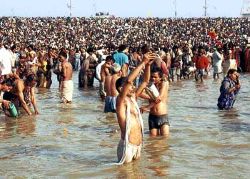
Kumbh Mela (the festival of the sacred Pitcher or pot ) is considered as the largest peaceful congregation of pilgrims on earth, and it includes the ritual of taking bathe or a holy dip in a sacred river.
It is a huge spiritual event inviting global attention as a tradition interwoven with the rich cultural heritage of India since ancient times.The event is a religious and cultural spectacle which occurs once in 12 years attracting participants from around the globe to take a dip in the holy waters
In 2025 Mahakumbhamela is happening in Prayagraj in India. The 45-day Maha Kumbh, happening after a gap of 144 years, will witness the participation of over 45 crore devotees, including nearly 15 lakh from foreign nations
Kumbh Mela plays a central spiritual role in the country and the event encapsulates the science of astronomy, astrology, spirituality, ritualistic traditions, and social and cultural customs and practices making this a culturally diverse festival. Knowledge and skills related to this tradition are transmitted through ancient religious manuscripts, oral traditions, historical travelogues and texts produced by eminent historians. However, the teacher-student relationship of the sadhus in the ashrams and akhadas remains the most important method of imparting and safeguarding knowledge and skills relating to Kumbh Mela.
The ritualistic bath of kumbh mela
The kumbh mela festival is connected with the ritual of the sacred bath or dip in Ganges River or its confluences. Devotees believe that by bathing in the holy Ganges, one is freed from sins liberating the person from the cycle of birth and death. This impart Kumbh mela a dimension of salvation or moksha along with the fervor and enthusiasm interwoven with the celebration of spirituality.
The congregation of pilgrims attending Maha Kumbh mela includes ascetics, saints, sadhus, aspirants-kalpavasis and visitors from any part of the globe. It is believed that Kumbh mela is a festival which is celebrated in India since ancient times at periodic intervals as a celebration of holy bath and congregation for spiritual discussions and rituals, in various other names as Magh festival. Still it is a matter of debate while looking through the lens of history .
Most pilgrims stay at the venue of Kumbh mela for a day or two, but some stay the entire month of Magh during the festival and live an austere life during the stay. They attend spiritual discourses, fast and pray over the month, and these Kumbh pilgrims are called kalpavasis
Traditionally, the riverside events conducted at four major pilgrimage sites are recognized as the Kumbh Melas: Prayagraj (Ganges-Yamuna-Sarasvati rivers confluence), Haridwar (Ganges), Nashik-Trimbak (Godavari), and Ujjain (Shipra). It was asserted that, in 2022, after a 700-year break, Bansberia (Hooghly), hosted the pilgrimage again.
Apart from the ritualistic dip in the waters, Kumbh mela is a festival of community commerce with numerous fairs, education, religious discourses by saints, mass gatherings of monks, and entertainment.
Kumbh mela through the veil of myths
Kumbh mela is a festival categorized under intangible cultural heritage by UNESCO. This congregation of pilgrims intricately is linked with the legend of Indian mythology. Through the veil of myths and legends Kumbh mela has deeper connection with Hindu puranas and epics which describes the churning of the great ocean Palazhimanthan and from which many precious objects, animals and divine figurines emerged.
However historian rejects this linking of Kumbhamela with the myth of “the great ocean churning” with the claim that as none of the ancient or medieval era texts t mention the Samudra Manthana legend [ ocean churning] ever linked it to a “mela” or festival. Giorgio Bonazzoli, a scholar of Sanskrit Puranas, considers these myths as mere anachronistic explanations, an adaptation of early legends to a later practice by a “small circle of adherents” who have sought the roots of a highly popular pilgrimage and festival.
Hindu mythology puranas and epics describes the emergence of a “Kumbha of amrita (nectar of immortality)” after the forces of good and evil churn the great ocean of creation. The gods and demons fight over the possession of this amrit kumbh to attain immortality. In a later day extension to this myth ,the pot or amrit kumbh is spilt at four places, and that relates to the origin of the four Kumbha Melas. However this myth of “spilling” and associated Kumbh Mela celebration is not found in the earliest mentions of the original legend of Samudra Manthana (churning of the ocean) such as the Vedic era texts (pre-500 BCE).
There is another story associated with Kumbh mela which is the more widely known version that narrates about the Mohini avtar or incarnation of Lord Vishnu to regain the pot from demons who stole it for a short interval from the gods. All these myths and legends impart the festival a divine dimension beyond its relevance as the periodical spiritual congregation .
The “Kumbha Mela “ word as such is not found in the ancient or medieval era texts, however many texts and verses mention about a bathing festival, the sacred junction of rivers Ganga, Yamuna and sacred Saraswati at Prayag, and pilgrimage to Prayag.
History of origin of kumbh mela
Kumbh mela , an ancient religious festival, the roots of which lies in obscurity since time immemorial. According to religious texts, it is believed that the festival began in the 8th-century as a Hindu gathering initiated by Hindu philosopher and saint Adi Shankara for philosophical discussions and debates along with Hindu monasteries across the Indian subcontinent. However, historical literary evidence is lacking about these mass pilgrimages called “Kumbha Mela” prior to the 19th century.
There is mention about Magha mela celebrated annually in various inscriptions and manuscripts with periodic huge gatherings of pilgrims at 6 0r 12 years and taking holy dip in sacred rivers.
According to the author & professor of school of Humanities and Languages, Kama MacLean, Kumbh mela is rebranding and remobilization of the ancient Magha Mela as the modern era Kumbh Mela, particularly after the Indian Rebellion of 1857.She mentions about Kumbh mela in her book Pilgrimage and power and also in other articles.
The first Kumbh Mela event was organized in 1870, under the supervision of British empire in the colonial era. The weeks over which the festival is observed cycle at each site approximately once every 12 years based on the Hindu luni-solar calendar and the relative astrological positions of Jupiter, the sun and the moon. The difference between Prayag and Haridwar festivals is about 6 years, and both feature a Maha (major) and Ardha (half) Kumbh Melas.
The exact years for the celebration of Kumbh Melas at Ujjain and Nashik have been a topic of dispute in the 20th century. The Nashik and Ujjain festivals have been celebrated in the same year or one year apart typically about 3 years after the Prayagraj Kumbh Mela.
There is mention about holy dip in Prayaga in many religious texts but the name “ kumbh mela “ is conspicuously absent. The earliest mention of Prayaga and the bathing pilgrimage is found in a supplement to the Rigveda.
The holy bath in prayaga is also mentioned in the Pali canons of Buddhism. In section 1.7 of Majjhima Nikaya, Buddha states that bathing in Prayaga cannot wash away cruel and evil deeds, rather the virtuous one should be pure in heart and fair in action.
The Indian epic Mahabharata mentions a bathing pilgrimage at Prayag as a means of atonement, penance for past mistakes and guilt.
In Tirthayatra Parva of Mahabharata [means pilgrimage before the great war depicted in the epic] the epic states “the one who observes firm [ethical] vows, having bathed at Prayaga during Magha, becomes spotless and reaches heaven. Magha mentioned here is the Magha festival of ancient era.
The Anushasana Parva of the epic [ the part of mahabharatha epic post war] also narrates about this bathing pilgrimage as “geographical tirtha” that must be combined with Manasa-tirtha (tirtha of the heart).
There are a few other textual references to Prayaga and river-side festivals including the places where present-day Kumbh Melas are held. However, the exact age of the Kumbh Mela is still obscure and remain intertwined with myths and legends. Most of the texts mentioning Prayaga is referring to Magha festival. Nonetheless, no evidences corroborates that Magha is the primitive form of Kumbha mela.
Historians probably take into account the 7th-century Buddhist Chinese traveller Xuanzang’s (Hiuen Tsang) mentioning about king Harsha and his capital of Prayag, which he states to be a sacred Hindu city with hundreds of “deva temples” and two Buddhist institutions. The ancient traveler also mentions the Hindu bathing rituals at the junction of the rivers. According to some scholars, this is the earliest surviving historical account of the Kumbh Mela, which took place in present-day Prayag in 644 CE.
Some traditions believes that Kumbha Mela’s origin happened in the 8th CE as philosopher Shankara called for a major Hindu gatherings for philosophical discussions and debates along with Hindu monasteries across the Indian subcontinent.
According to James Mallinson, a scholar of Hindu yoga manuscripts and monastic institutions, bathing festivals at Prayag with large gatherings of pilgrims are attested since “at least the middle of the first millennium CE”. He also states that textual evidence exists for similar pilgrimage at other major sacred rivers since the medieval period. He conclude that four of these pilgrim gatherings morphed under the name ” Kumbh Mela” during the reign of East India Company which made a deliberate move to control the war-prone monks through this transformation. The imperial power of Britain also had an eye on the lucrative tax and trade revenues at these Hindu pilgrimage festivals.
The Ramcharitmanas, a 16th century text of Tulsidas also cite an annual Mela in Prayag .
The Muslim historian’s Ain-i-Akbari (c. 1590 CE) The Persian text calls Prayag (spells it Priyag) the “king of shrines” for the Hindus, and mentions that it is considered particularly holy in the Hindu month of Magha.
The late 16th-century Tabaqat-i-Akbari also describes explicitly of an annual bathing festival at Prayag Sangam where “various classes of Hindus came from all over the country to bathe in large numbers that the jungles and plains were unable to hold them”.
The Kumbh Mela of Haridwar appears to be the original Kumbh Mela, since it is held according to the astrological sign “Kumbha” (Aquarius), and because there are several references to a 12-year cycle for it.
The later Mughal Empire era texts that contain the term “Kumbha Mela” in Haridwar’s context include Khulasat-ut-Tawarikh (1695–1699 CE), and Chahar Gulshan (1759 CE).The Khulasat-ut-Tawarikh also mentions an annual bathing pilgrimage festival in Prayag, but it does not call it Kumbh.
Both these Mughal era texts use the term “Kumbh Mela” to describe only Haridwar’s fair, mentioning a similar fair held in Prayag and Nashik. The Khulasat-ut-Tawarikh lists the following melas: an annual mela and a Kumbh Mela every 12 years at Haridwar; a mela held at Trimbak when Jupiter enters Leo (that is, once in 12 years); and an annual mela held at Prayag (in modern Prayagraj) in Magh.
The Magh Mela of Prayag is probably the oldest among the four modern-day Kumbh Melas. It dates from the early centuries CE, given it has been mentioned in several early Puranas. However, the name Kumbh for these more ancient bathing pilgrimages probably dates to the mid-19th century.
D. P. Dubey states that none of the ancient Hindu texts call the Prayag fair a “Kumbh Mela”.
Kama Maclean states that the early British records do not mention the name “Kumbh Mela” or the 12-year cycle for the Prayag fair. The first British reference to the Kumbh Mela in Prayag occurs only in an 1868 report, which mentions the need for increased pilgrimage and sanitation controls at the “Coomb fair” to be held in January 1870. According to Maclean, the Prayagwal Brahmin priests of Prayag coopted the Kumbh legend and brand to the annual Prayag Magh Mela given the socio-political circumstances in the 19th century.
The Kumbh Mela at Ujjain began in the 18th century when the Maratha ruler Ranoji Shinde invited ascetics from Nashik to Ujjain for a local festival.
Management of kumbh mela festival
The Kumbh Melas have three dates around which the significant majority of pilgrims participate, while the festival itself lasts between one and three months around these dates. Each festival attracts millions, with the largest gathering at the Prayag Kumbh Mela and the second largest at Haridwar.
The festival is observed over many days, with the day of Amavasya attracting the largest number on a single day. According to official figures, the largest one-day attendance at the Kumbh Mela was 30 million on 10 February 2013 and 50 million on 4 February 2019.
The Kumbh Mela is curated like camps, facilitating access to Sadhus & Hindu worshippers. Two key groups central to the Kumbh Mela are the Sadhus (Hindu ascetics) and the pilgrims. Through their dedicated yogic practices, Sadhus embody the transient nature of life and play a vital role in connecting the spiritual and the mundane.
The holy bath at the Kumbh festival
Bathing, or a dip in the river waters with a prayer, is the most important ritual of the Kumbh Melas for all pilgrims including monks or Sadhu akharas.
According to the traditions on a precalculated date of amavasya the Hindu pilgrims welcome and wait for the thirteen sadhu akharas to bathe first. This event is called shahi snan or rajyogi snan. This includes a celebratory processional march, with banners, flags, elephants, horses and musicians along with the naked or scantily clad monks, some smeared with bhasma (ashes) called akharas. These monk groups come from different parts of India, and have a particular emblem symbol and deity (Ganesha, Dattatreya, Hanuman, etc.).
The largest contingent is the Juna akhara, traced to Adi Shankara, representing a diverse mix from the four of the largest Hindu monasteries in India with their headquarters at Sringeri, Dwarka, Jyotirmatha and Govardhana. The Mahanirbani and Niranjani are the other large contingents, and each akhara has their own lineage of saints and teachers.
In this holy bath celebration, great crowd gather in reverence of Sadhu akharas and cheer for this procession. The holy bath by akhara monks, the festival day opens for bathing by the pilgrim visitors.
Bathing ritual for the pilgrims in Kumbh mela may be aided by a Prayagwal priest or maybe done as a simple dip that is private. When the holy bath is done under the guidance of priests the rituals include mundan (shaving of head), prayers with offerings such as flowers, sindur (vermilion), milk or coconut, along with the recitation of hymns with shradha (prayers in the honour of one’s ancestors).
This may include sometimes elaborate ceremonies of yajna (homa) led by a priest and followed by a dip in the water and prayer by the pilgrim. Later pilgrim exits the river waters and visit old Hindu temples near the site.
The motivations for the bathing ritual is salvation or moksha – a means to liberation from the cycle of rebirths.
The pilgrimage is also recommended in Hindu texts as a means of atonement, penance for the mistakes committed during lifetime. Pilgrimage and bathing in holy rivers with a motivation to do penance and as a means to self-purify has Vedic precedents and is discussed in the early dharma literature of Hinduism.
Darshan in Kumbhamela
After the holy dip in water pilgrims may visit the near by temple in the premises of Kumbh mela.The darshan experience is integral to the Kumbh Mela, and worshippers do it as an act of great reverence, understanding the religious sanctity of the moment. It emphasizes a visual exchange—a divine connection with the deity’s power through sight. The pilgrims undertake this journey to experience the profound religious and cultural essence of the event.
The pilgrims can interact with monks or Sadhu akharas during this period.The interaction with Sadhus allows pilgrims to seek spiritual guidance and advice. In Kumbh mela any kind of interactions with Sadhus are very respectful, with devotees often leaving offerings at their feet as tokens of devotion and gratitude.
Activities at Kumbhamela
Kumbh mela provides a platform for religious discussions, devotional singing and religious assemblies where doctrines are debated and standardised (shastrartha).
The festival grounds also feature a wide range of cultural events including kalagram (venues of kala, Indian arts), laser light shows, classical dance and musical performances from different parts of India, thematic gates reflecting the historic regional architectural diversity, boat rides, tourist walks to historic sites near the river etc.
The festival also offers opportunities to visit the monastic camps to watch yoga adepts and spiritual discourses.
In the festival site the food to all is strictly vegetarian and the management has established multiple food stalls, offering delicacies from different states of India. The ritual practices are followed by celebratory feasts for the visitors and the pilgrims and all people sit in rows and share a community meal called mahaprasada that is prepared by volunteers from charitable donations
The collective energy generated during the Mela strengthens social bonds and elevates individual and communal consciousness, illustrating the power of such gatherings to create shared identity and purpose.
Caution of stampede
According to some news agencies’ reports, in January 2025, at least 50 people died and 100 others were injured in the stampede at the Maha Kumbh venue in Prayagraj, and hence Amrit Snan or ritual bath was temporary suspended. It was announced that a judicial enquiry by a three-member committee would be conducted, led by Justice Harsh Kumar.
Stampedes are common occurrences in many other important temple fests and other huge events, however it is a grave reminder that in any holy place, extra caution has to be exerted in crowd management with basic as well as emergency medical facilities along with a functional system for providing adequate resources – food, water and other basic amenities. The authorities must ensure this basic safety and amenities for pilgrims with extra caution and sense of dutifulness in a festival like Kumbh mela , the echoes of which touch the global conscience as well as consciousness.
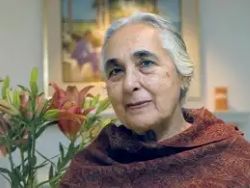
Romila Thapar is a renowned Indian historian and author of many historical books. She has authored many internationally acclaimed books on history including From Lineage to State, Asoka and the Decline of the Mauryas, Early India: From Origins to AD 1300, and the popular History of India, Part I.
Thapar is an Honorary Fellow of the School of Oriental and African Studies, London, where she also received her Ph.D. in 1958, and a Foreign Honorary Member of the American Academy of Arts and Sciences. She was an emeritus professor of history at jawaharlal nehru university , New Delhi.
Thapar is a historian who believed in authenticity of historical data that is corroborated by archaeological evidences. Her historical writings delineate the origins of Hinduism as an evolving interplay between social forces.
Romila’s book From Lineage to State analyses the formation of states in the middle Ganga valley in the first millennium BCE, tracing the process to a change, driven by the use of iron and plough agriculture, from a pastoral and mobile lineage-based society to one of settled peasant holdings, accumulation and increased urbanisation. Her book on Somnath examines the evolution of the historiographies about the legendary Gujarat temple.
Thapar was a great critic of “communal interpretation” of Indian history, in which events in the last thousand years are interpreted solely in terms of a notional continual conflict between monolithic Hindu and Muslim communities. According to Thapar, this communal history is “extremely selective” in choosing facts, “deliberately partisan” in interpretation and does not follow current methods of analysis using multiple, prioritised causes.
Personal life
Romila Thapar was born 0n 30th November 1931 in lucknow,india as the daughter of Lieutenant-General dr.Dayaram thapar,the director general of Indian armed forces medical services. Young Romila ‘s education was in different cities of India as her father had to move as a military officer. She is an alumna of the St. Mary’s School and Wadia College, Pune. After doing her graduation from Punjab university in English literature she secured a second bachelors degree and later doctorate in history from the university of London in 1958.
Career
she started her career journey in Indian history as a reader at Kurukshetra university between 1961 and 1962 and later at Delhi university between 1963 and 1970. Thapar joined as professor of ancient Indian history at the Jawaharlal Nehru university, New Delhi later and continued in the university as Emeritus professor.
She has authored many books as a historian and her major works include:
Asoka and the decline of the Mauryas
Ancient Indian social history: some interpretations
Recent perspectives of early Indian history
A History of India volume one
Early India: from the origins to ad 1300.
From lineage to state.
Thapar’s first volume ofa history of Indianarrates the period from its early history to the arrival of Europeans in the sixteenth century.
Ancient Indian social history gives an account of the period from early times to the end of the first millennium, and detailing a comparative study of Hindu and Buddhist socio-religious systems. It scrutinizes the role of Buddhism in social protest and social mobility in the caste system.
From lineage to state is a meticulous analysis about the formation of states in the middle Ganga valley in the first millennium B C and it traces the process to a change, driven by the use of iron and plough agriculture, from a pastoral and mobile lineage-based society to one of settled peasant holdings, accumulation and increased urbanisation.
Each book of Romila Thapar is an immersive account of historical narratives from a research-oriented perspective.
Honors & accolades
Romila Thapar is an honorary fellow at lady Margaret hall, oxford, and at the school of oriental and African studies (soas), university of London.
She holds honorary doctorates from the university of chicago, the institut national des langues et civilisations orientales in Paris, the university of oxford, the university of Edinburgh (2004), the university of Calcutta (2002) and recently (in 2009) from the university of Hyderabad.
Thapar was elected a foreign honorary member of the American academy of arts and sciences in 2009. She was also elected an honorary fellow of st Antony’s college, oxford, in 2017.
in 2004, the us library of congress appointed her as the first holder of the kluge chair in countries and cultures of the south.
She has been a visiting professor at Cornell university, the university of Pennsylvania, and the college de France in Paris.
She was elected general president of the Indian history congress in 1983 and a corresponding fellow of the British academy in 1999.
She is co-winner with Peter Brown of the Kluge Prize for the Study of Humanity for 2008.It is a very prestigious prize received by Romila Thapar. The prize is awarded by the John W. Kluge Centre at the Library of Congress.
in January 2005, she declined the Padma Bhushan awarded by the Indian government. Later she wrote to the president like this “i only accept awards from academic institutions or those associated with my professional work, and not state awards”.
Romila Thapar is considered as one of the intellectuals of Indian history who believes in doing justice to the nation’s history with a bold unyielding voice.
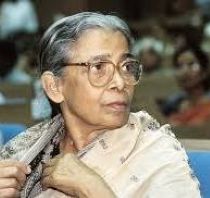
Mahasweta Devi (1926–2016) was one of the illustrious writer and social activist of India. She is one off the widely read author of many notable novels, essays and short stories. Her outstanding literary works include Hajar Churashir Maa, Rudali, and Aranyer Adhikar.
Personal life
Mahasweta Devi was born on 14 January 1926 in a Brahmin family in Dacca, British India (Dhaka, Bangladesh] as the daughter of Manish Ghatak, a poet and novelist of the Kallol movement and Dharitri Devi, a writer and a social worker. Her earlier schooling was in Eden Montessori School Daka (1930) and later moved to West Bengal’s Mission Girls’ High School, Midnapore in 1935 and to Santiniketan during the period of 1936 to 1938.
Later she continued her studies at Beltala Girls’ School (1939-1941) where she finished her matriculation. In 1944 . She secured I.A. from Asutosh College and completed a B.A. (Hons) in English from Rabindranath Tagore-founded Visva-Bharati University . She finished her studies of masters in English literature from Calcutta University.
Maha Swetha Devi is married to renowned playwright Bijon Bhattacharya, who was one of the founding fathers of the Indian People’s Theatre Association movement. In 1948. Soon she gave birth to her son Nabarun Bhattacharya, who became a novelist and political critic later.
Devi was a popular writer as well as social activist and visionary who fought against injustice towards the adivasi tribes of central India.
She was a leftist who worked for the rights and empowerment of the tribal people (Lodha and Shabar) of West Bengal, Bihar, Madhya Pradesh and Chhattisgarh states of India.
Her book about the life of Queen of Jansi ,Rani Lakshmi bhai and her struggles was published in 1956 and it was a great milestone for Mahaswetha devi too. It was the beginning of a new journey in her literary career.
She was honoured with many prestigious literary awards such as the Sahitya Akademi Award (in Bengali), Jnanpith Award and Ramon Magsaysay Award along with India’s civilian awards Padma Shri and Padma Vibhushan. She was awarded the Ramon Magsaysay Award in 1997 for her artistic as well as social activities to uphold the rights of tribes of India. She received the Jnanpith Award, India’s highest literary honour, in 1996.
A life dedicated to Bengali literature
Mahaswetha Devi wrote over 100 novels and over 20 collections of short stories in Bengali language and many of them were translated to other languages.
Her first novel, titled Jhansir Rani, a biography based on the life of the Rani of Jhansi was published in 1956.
In 1964, she began teaching at Vijaygarh Jyotish Ray College (an affiliated college of the University of Calcutta system). In those days Vijaygarh Jyotish Ray College was an institution for working-class women students. During that period she also worked—as a journalist and as a creative writer.
Devi’s prominent literary work Mastar Saab also known as Massaheb (The School Teacher) is based on Bihar’s communist led armed revolution for land reforms. This novel is believed to be portraying the life of naxal leader Jagdish Mahto, who was a prominent figure in Bhojpur known for his armed struggle for the poor against the landlords.
Aranyer Adhikar means Right to the Forest is her one of the most renowned novels published in 1979.
Her novel Chotti Munda Ebong Tar Tir [Chotti Munda and His Arrow] was published in 1980..
Her short story collections include:
Agnigarbha (1978],
Murti (1979]
Neerete Megh (1979]
Stanyadayani (1980]
Devi’s stories have been adapted into films also and they include Sunghursh (1968)& Rudaali (1993)
Mahasweta Devi – a close ally of Adivasi tribes
Mahasweta Devi’s specialization lay in the studies of Adivasi, Dalit women and Marginalized citizens. Her life was very simple, but her compassion & sense of justice was peerless and unparalleled. She stayed with the Adivasi tribes in West Bengal, Bihar, Madhya Pradesh, Chhattisgarh for many years, understanding the pulse of their life and and their struggles.
For Devi ,writing was a tool for expressing her vision and giving voice to the oppressed sessions of the country. She has embodied their struggles and sacrifices in her literary works explicitly and has raised voice against the atrocities and negligence the tribes had gone through for many decades. Devi had claimed once that her stories aren’t just her creation, they are the stories of the people of her country. Her work “Chotti Mundi Ebong Tar Tir” is an embodiment for her stance and love for the people of her country.
Mahasweta Devi raised her voice several times against the discrimination suffered by tribal people in India.Devi’s 1977 novel Aranyer Adhikar (Right to the Forest) was about the life of Birsa Munda,a tribal indepence activist who fought against British rule,their unfair land grabbing practices that demolished tribal conventional land system.
In June 2016, as a result of Mahaswetha Devi’s consistent and relentless efforts, the Jharkhand State Government finally sanctioned the removal of the manacles from the figure of Munda, which had been part of the commemorative sculpture of this young tribal leader. The book Aranyer adhikar won the Sahithya academy award for Bengali in 1979.
The woes of old age didnt deter her from spearheading the Nandigram agitation which resulted in a number of intellectuals, artists, writers and theatre workers joining in protest of the controversial industrial policy and particularly its implementation in Singur and Nandigram. She raised voice fearlessly against the government and criticized the handing over of farmers’ fertile land to industrial groups at throw away prices.People of India will reminisce her name forever as a compassionate writer and human being.
On 23 July 2016, Devi suffered a major heart attack and died of multiple organ failure on 28 July 2016, at the age of 90.
Translations of Devi’s work
Gayatri Chakravorty Spivak has translated Devi’s short stories into English and published three books Imaginary Maps (1995, Routledge), Old Woman (1997, Seagull), The Breast Stories (1997, Seagull)
Awards &honours for Mahaswetha Devi’s work
1979: Sahitya Akademi Award (Bengali): – Aranyer Adhikar (novel)
1986: Padma Shri for Social Work
1996: Jnanpith Award – the highest literary award from the Bharatiya Jnanpith
1997: Ramon Magsaysay Award – Journalism, Literature, and the Creative Communication Arts for “compassionate crusade through art and activism to claim for tribal peoples a just and honorable place in India’s national life.
2003: Officier de l’Ordre des Arts et des Lettres
2006: Padma Vibhushan – the second highest civilian award from the Government of India
2007: SAARC Literary Award
2009: Shortlisted for the Man Booker International Prize
2010: Yashwantrao Chavan National Award
2011: Banga Bibhushan – the highest civilian award from the Government of West Bengal
2012: Nominated for Nobel Prize for Literature
2014 : Mamoni Raisom Goswami National Award for Literature constituted by Asam Sahitya Sabha and sponsored by Numaligarh Refinery Ltd., Assam
On 14 January 2018, Google honored Mahasweta Devi on her 92nd birth anniversary, celebrating her work by creating a doodle on her.
Anti -inflammatory diet is suitable to people suffering from chronic inflammatory diseases as well as food sensitivity or allergy.
The term anti-inflammatory diet is not a specific type of dietary habit suitable for all. As the term anti- inflammatory denotes it is a food choice to reduce inflammation as well as its impacts of body organs. In order to delve deeper into anti-inflammatory diet and understand its benefits one should know what is inflammation, its signs and symptoms and complications or impacts on the body.
The triggers as well as type of inflammations and their impacts vary from person to person. Therefore, while choosing an anti-inflammatory diet an individualized approach is better.
What is inflammation?
Inflammation is a key aspect of the body’s immune defenses. It can be acute or chronic. Symptoms can include swelling, heat, pain, and more. Treatment is offered depending on the underlying cause.
Inflammation may be acute as well as chronic. Acute inflammations occur abruptly and may last for a short period of time. Often acute inflammations are caused by injury, environmental chemicals and by infective agents causing infections of various kinds.
The sign s of acute or sudden inflammation include redness, pain, swelling , heat , loss of function.
Chronic inflammation & its impact on your body
Chronic inflammation means inflammation of the cells and tissues of body for a prolonged period of time. The chronic inflammatory state may cause damage to cells and body organs in the long run. It impairs the functions of organs such as heart, kidney, lung, brain etc.
For instance,metabolic syndrome, which includes type 2 diabetes, heart disease, and obesity is a chronic inflammatory condition which needs anti-inflammatory diet as a life style and nutritional intervention.
Anti -inflammatory diet is suitable to people suffering from chronic inflammatory diseases as well as food sensitivity or allergy.
A few Chronic inflammatory diseases affecting humans are listed below:
Crohn’s disease.
Heart disease.
Chronic obstructive pulmonary diseases
Rheumatoid arthritis.
Type 2 diabetes.
Ulcerative colitis.
High blood pressure.
Irritable bowel syndrome.
Multiple sclerosis.
Obesity.
Psoriasis.
Chronic inflammations are mostly caused by genetic, metabolic and environmental factor. Food sensitivity in people is also a type of inflammatory response.
Who are at risk of chronic inflammation & anti-inflammatory diet may be helpful?
The risk for chronic inflammation is enhanced in:
Old people
Obese people
In people who eat processed foods more
In persons who smoke
In over stressed individuals
In people who follow erratic sleep habits
How chronic inflammations adversely affect your health?
Chronic inflammation eventually leads to complicated Organ diseases
Chronic inflammation predisposes to complex diseases of liver, kidney, heart, lungs etc. which can considerably enhance the morbidity as well as mortality rates globally.
Chronic inflammatory state enhances the risk for cancer.
The incidence of diabetes and obesity are rising in the global population and this chronic inflammatory conditions alarmingly increase the risk of cancer as well as other allied complications of lifestyle diseases.
How do you know you have inflammations? Signs and symptoms
Inflammation is characterized chronic pains , swelling ,redness ,tenderness of the affected parts.
Inflammation causes other symptoms also depending on the organs and tissues affected.
Anti-inflammatory diet
Anti -inflammatory diet offers guidelines to follow to eat in a way that reduces the likelihood of inflammation. In a nutshell anti-inflammatory diet is one that includes minimally processed foods and includes healthy antioxidant rich vegetables, fruits, nuts and seeds ,fish with anti -inflammatory properties.
Avoid the following Foods:
Sweets, pre-packaged desserts, ice cream and candy.
Snacks – fried and junk foods
Processed meats, including bacon, sausage, hot dogs etc.
Processed cheeses
Sugary beverages
The anti-inflammatory diet recommends the following foods to include in your diet plan:
Brown or wild rice.
Vegetables particularly green leafy vegetables which are rich in antioxidants and phytochemicals
Fruits
Chicken breast
Eggs
Fish (oily fish, such as salmon, tuna, herring or mackerel).
Legumes
Nuts and seeds.
Oats.
olive oil
cardamom
ginger
cloves
Best types of anti-inflammatory diet patterns
Mediterranean diet
Dash diets
MIND Diet
These are specific diet patterns which help to prevent and manage life style diseases and various other organ diseases of mankind.The mediterranean and DASH diets are found to be very effective in preventing and modifying diseases of heart and blood vessels .
It helps to prevent heart attack, stroke , diabetes and hypertension. Most of these diseases are associated with chronic inflammations. These diets help to reduce inflammation also. MIND diet is a combination of Mediterranean diet and DASH diet. Here processed and junk foods, excessive intake of sweet and salt intake are restricted.
Further more, the diet includes so much of antioxidants and ingredients with anti-inflammatory properties.
Mediteraanean diet includes olive oil as the prominent ingredient of foods and which are anti-inflammatory to a great extent.
Research studies show that people of Mediterranean region who consume these foods had very low incidence of heart diseases and stroke. Now mediterranean diet is accepted by the whole world as the best and practical solution for obesity and life style diseases prevention.
Both of these conditions are related with chronic inflammation and the efficacy of Mediterranean, DASH and MIND diets prove its anti- inflammatory role also.
Benefits of Anti-inflammatory diet
Improves skin health and beauty
Reduces joint pain & swelling
Improves gut health & reduces abdominal bloating from gas
Better and refreshing sleep.
Reduces heart attack and stroke
Lower blood pressure.
Lower blood sugar and helps to manage type 2 diabetes well.
Helps in weight loss.
Improves energy level.
Foods to include in anti-inflammatory diet
Berries
Fatty fish
Broccoli
Avocados
Green tea
Peppers
Mushrooms
Grapes
Turmeric
Extra virgin olive oil
Dark chocolate and cocoa
Tomatoes
Cherries
Of late anti-inflammatory diet is gathering attention world wide as a solution for obesity and many types of diseases of inflammatory nature including lifestyle diseases.
History of Indian medical heritage points out that many centuries ago herbs, vegetables and fruits were used in the treatment of various inflammatory conditions.
The Indian systems of medicine gives emphasis to prescription of food with some inclusion and exclusion criteria, for various types of clinical conditions or diseases. Recent advances in nutritional research substantiates the ancient practice with well designed dietary protocols understanding the underlying pathology as inflammation.
Everyone can achieve wellness and health through well chosen diet plans tailoring to individual needs.
The antioxidants in walnuts help to either reduce the risk or slow the progression of mild cognitive impairment and Alzheimer’s disease from brain cell damage.
Are you concerned about your reducing cognitive abilities & declining memory associated with the ageing ?
Sometimes, people suffer from progressive reduction in comprehension, understanding and memory even before other changes of ageing set in apparently. It is a red signal or a cautionary warning that most probably, it could be the beginning of mild cognitive impairment.
What is cognition &cognitive impairment?
Cognition is the terminology that denotes the mental process of thinking, learning, and understanding. It involves a number of interacting skills, including attention, language, memory, and perception.
Cognitive impairment is much more severe than the age-related fading of memory and difficulties in comprehension. Of late the problems related to declining memory has garnered greater attention across the globe due to the spike in its incidence.
Ageing as well as some hereditary and environmental factors accelerate the nerve cell degeneration within the brain and lead to cognitive impairment or decline.
What is Alzheimer’s disease ?
Nowadays there is a global spike in the occurrence of Alzheimer’s disease which is considered as the major cognitive impairment.
Alzheimer’s runs in families, however it has been detected in people with no positive family history of the disease. Therefore, the impact of free radicals on brain cells came into the view as the most probable cause of the nerve degeneration .
The role of free radicals related oxidative stress & nerve damage has been researched meticulously across the globe. It is confirmed beyond any doubt that Cognitive impairment occurs as a result of free radical attack on brain cells.
Alzheimer’s disease – link with free radicals
Amyloid beta protein (Aβ) is the main component of amyloid plaques in the brains of people with Alzheimer’s disease.
Several studies suggest that Aβ stimulates the production of free radicals in nerve cells, which leads to oxidative damage and cell death.
Free radicals are chemical groups which either reach human body from outside through various sources or they are generated as byproducts of metabolism within the body.
Free radicals cause oxidative stress to all the body cells. Nerve cells or neurons suffer this damage more intensely. Aβ can also induce neuroinflammation by increasing pro-inflammatory cytokines and enzymes.
Oxidative stress and neuroinflammation have important roles in the aging process, mild cognitive impairment (MCI), Alzheimer’s disease (AD), and other brain disorders.
Currently the only solution that has been emerged to fight against free radical damage is antioxidants.
What are antioxidants?
These compounds are effective warriors against the free radical attack and consequent damage to cells and tissues. Antioxidants prevent damage to nerve cells or neurons also. Thus, the antioxidants may function as very potent compounds against cognitive decline or impairment resulting from nerve cell damage or degeneration.
We can get this antioxidant protection by consuming various kinds of vegetables, fruits, seeds and nuts.
Among the potent antioxidant foods walnuts play a pivotal role in protecting the nervous system and brain from free radical damage. Many research studies confirm the good effects of walnuts on the brain and nervous system
Walnuts
Walnuts are nutritious seeds native to North and South America, southern Europe, Asia, and the West Indies. Walnut is the common name for any of the large, deciduous trees comprising the genus Juglans of the flowering plant family Juglandaceae.
The word “walnut” derives from Old English wealhhnutu, literally “foreign nut,” with wealh meaning “foreign.”
Walnuts are used for their edible fruit, their wood, and their ornamental purposes. There are many species of walnuts. The nuts of all the species are edible, but the walnuts commonly available in stores are from the Persian walnut, the only species that has a large nut and thin shell, with the edible portion most easily separated from the shell.
walnuts have immense potential to improve brain & cardiovascular health.
Walnuts may be effective in improving chronic inflammation and neurodegeneration of brain.
Walnuts are also great immunity boosting foods
. A study [1] shows that walnut could significantly improve humoral and cell-mediated immunity. Walnut proteins boost the immune system and perform their immunomodulatory functions.
Walnuts also helps to reduce blood sugar levels.
A large study of 83,818 women (age: 34–59 years) showed that dietary supplementation of 1 oz of nuts, such as walnuts, five times or more per week decreased the risk of developing type 2 diabetes [5].
Nutritional value of walnuts:
According to the U.S. Department of Agriculture (USDA) National Nutrient Database, 1 cup of unbranded, organic walnuts (30 grams) contains:
Energy: 200 calories
Carbohydrate 3.89 grams (g)
Sugar: 1 g
Fiber: 2 g
Protein: 5 g
Fat: 20 g
Calcium: 20 milligrams (mg)
Iron: 0.72 mg
Sodium: 0 mg
Walnuts also provide minerals such as:
manganese
copper
magnesium
phosphorus
vitamin B6
iron
Walnuts – Great source of omega fatty acids to boost brain health
Walnuts contain a lot of polyunsaturated fatty acids, which can improve heart and brain functions.
Walnuts containalpha-linolenic and linoleic acids, which may have anti-inflammatory effects that keep blood vessels healthy and reduce bad blood cholesterol.
How does walnut consumption help to fight against cognitive impairment?
Walnuts contain several nutrients that have antioxidant and anti-inflammatory effects.
Animal and human studies suggest that supplementation with walnuts in the diet may improve cognition and reduce the risk and/or progression of Mild cognitive impairment and Alzheimer’s disease [2].
Walnuts have a high content (3.68 mmol/oz) of antioxidants, including flavonoids, phenolic acid (ellagic acid), melatonin, folate, gamma tocopherol (vitamin E), selenium, juglone, and proanthocyanidins .
Walnuts also provide protein (4 g/oz), fiber (2 g/oz), phosphorus (10% daily value), and magnesium (11% daily value).
Walnuts have mainly polyunsaturated fat (13 g of 18 g total fat per 1 oz walnuts), of which the alpha linolenic acid [ALA] amount is 2.5 g.
Omega fatty acids in walnuts have anti-inflammatory properties.
Walnuts contain a high amount of n-3 α-linolenic acid (ALA), a plant-based omega-3 fatty acid that has a highly potent anti-inflammatory effect.
ALA is the precursor for eicosapentaenoic acid (EPA) and docosahexaenoic acid (DHA), which are known to have anti-inflammatory effects.
Studies have shown that ALA inhibits inflammation by downregulating iNOS (thus inhibiting NO production), COX-2, and inflammatory cytokines (IL-1β, IL-6, TNF-α)
In another study with older women, higher long-term intake of walnuts has improved cognitive performance. In this study, 15,467 women (70 years of age or older; mean age: 74 years) participated.
The National Health and Nutrition Examination Study (NHANES) of an adult population [of age groups 20–59 years; 60 years and older) in the United States also showed better cognition scores with walnut consumption.
How do walnuts help to prevent cognitive impairment?
The consumption of walnuts may reduce the risk or slow the progression of age-related cognitive decline, mild cognitive impairment and Alzheimer’s disease .
The probable mechanisms are:
Walnuts Inhibit Aβ Fibrillization process and Solubilize Aβ Fibrils .It is a fact that the deposition of these amyloid protein fibrils leads to inflammation of nerve cells causing Alzheimer’s disease. Walnuts help de-fibrillization and protect nerve cells.
Walnuts Decrease alpha beta protein or Aβ-induced Oxidative Stress and Cell Damage. The components of walnuts, such as flavonoids, ellagic acid, gamma tocopherol, and melatonin, are known to have antioxidant and free-radical scavenging properties which prevents oxidative damage to nerve cells.
Parkinsons disease also is a nervous system disease associated with cognitive impairment or dementia
Walnut extract has shown to improve symptoms of Parkinson’s Disease (postural balance, motor coordination, and movement), These seeds have been found to be effective in reducing oxidative stress, and protecting neurons[4].
Include walnuts in your daily foods for better brain health
Walnut may be used as ingredients of porridge, cheese sauce, Apple walnut salad, fruit muffins, granola bars and brownie balls. Walnut cookies& Walnut cakes also are yummy and nutritious disserts.
.Jiang R., Manson J.E., Stampfer M.J., Liu S., Willett W.C., Hu F.B. Nut and peanut butter consumption and risk of type 2 diabetes in women. JAMA. 2002;288:2554–2560. doi: 10.1001/jama.288.20.2554. [DOI] https://pubmed.ncbi.nlm.nih.gov/12444862/
Do your eyes feel strained after working with computer or mobile screen for long? it is high time that you should take measures to prevent digital eye strain.
Digital eye strain is of late a common problem affecting all age groups from children to adults across the world.
Computer vision syndrome is commonly referred to as digital eye strain, and it includes a group of symptoms related to eyes and vision resulting from prolonged usage of computer, tablet, and cell phones.
Prolonged exposure to digital gadget screens causes eye discomfort and vision problems and the level of discomfort increases with duration of exposure.
What is the cause of digital eye strain?
Your eyes get fatigued by constant and prolonged exposure to digital screens of devices and gadgets. Increased screen time compels your eyes work harder in unusual ways and predispose many individuals to develop vision-related symptoms.
Furthermore, a few pre- existing vision problems in people, including far sightedness, astigmatism, age related vision changes [ presbyopia ] complicate the computer vision syndrome or worsen it.
During your digital interaction with a mobile or computer screen the work your eye muscles and other cells and tissues do is entirely different from that done while reading a book. Often the letters on the computer or handheld device are not as precise or sharply defined, the level of contrast of the letters to the background is reduced, and the presence of glare and reflections on the screen may make viewing difficult.
Moreover, the sitting posture and distance to screen and exposure time to screen also affect the focus and eyesight.
Thus, the eye focusing and eye movement requirements for digital screen viewing can place additional demands on the visual system.
Uncorrected or under corrected vision problems can be major contributing factors to computer-related eyestrain. It is not uncommon that people who have an eyeglass or contact lens prescription may find it’s not suitable for the specific viewing distances of their computer screen.
Symptoms of digital eye strain
The most common symptoms of digital eyestrain include:
Eyestrain.
Headaches.
Blurred vision.
Dry eyes.
Neck and shoulder pain.
There are various factors accounting to these symptoms including:
Poor lighting.
Poor seating posture.
Uncorrected vision problems.
Glare on a digital screen.
Improper viewing distances.
Mostly multiple factors synergistically operate to cause these symptoms in people of all age groups.
How digital eye strain is detected?
There are many tests and processes to find out it.
You may check your vision and other symptoms consulting with an ophthalmologist. Sometimes this problem may need preventive as well as curative treatment.
The common processes done here include
History taking.
Visual acuity tests are routinely done to assess the extent to which vision may be affected.
Assessment to determine the appropriate lens power needed to compensate for any refractive errors (nearsightedness, farsightedness or astigmatism) also is done.
Testing how the eyes focus, move and work together is important in order to obtain a clear, single image of what is being viewed by the eyes. It must effectively change focus, move and work in unison. This testing will look for problems that keep the eyes from focusing effectively or make it difficult to use both eyes together.
Eye exercise for reducing digital eye strain
Focusing exercise
Hold your pointer finger a few inches away from your eye.
Focus on your finger.
Slowly move your finger away from your face, holding your focus.
Look away for a moment, into the distance.
Focus on your outstretched finger and slowly bring it back toward your eye.
Look away and focus on something in the distance.
Near and far vision exercises
Hold your thumb about 10 inches from your face and focus on it for 15 seconds.
Find an object roughly 10 to 20 feet away and focus on it for 15 seconds.
Return your focus to your thumb.
3.Figure eight exercise
This exercise needs to be done from a seated position.
Choose a point on the floor about 10 feet in front of your eyes and focus on it.
Trace an imaginary figure eight with your eyes here.
Do tracing for 30 seconds, then switch directions.
The 20-20-20 rule
Eyestrain is a problem for many people as they continuously focus eyes on bright screen light .
If you work at a computer for a long period of time, the 20-20-20 rule may help prevent digital eyestrain.
How to apply this 20-20 rules for the well-being of your eyes?
To implement this rule, every 20 minutes, look at something 20 feet away for 20 seconds.
Many of the visual symptoms experienced by users are only temporary and will decline after stopping computer work or use of the digital device. However, some individuals may experience continued reduced eye sight such as blurred distance vision, even after stopping work at a computer.
Can exercise alone help your eye health?
These self-help eye exercise programs may help you improve your eye strain and fatigue. But no scientific data support it. However , experiences show that it helps to reduce eye fatigue.
A ophthalmologist’s help may be needed for prescribing the correct glasses for your nearsightedness, farsightedness, presbyopia, or astigmatism.
Similarly eye exercises do absolutely nothing for glaucoma or macular degeneration — serious diseases that require professional medical help.
Eyeglasses or contact lenses prescribed for general use may not be adequate for computer work. Lenses prescribed to meet the unique visual demands of computer viewing may be needed.
Special lens designs, lens powers or lens tints or coatings may help to maximize visual abilities and comfort.
Better body posture and positioning of computer helps to reduce digital eye strain
Proper body positioning , lighting conditions, chair comfort, location of reference materials, the position of the monitor, and the use of rest breaks play crucial role in reducing digital eye strain.
Location of the computer screen is very important. Most people find it more comfortable to view a computer when the eyes are looking downward. Optimally, the computer screen should be 15 to 20 degrees below eye level (about 4 or 5 inches) as measured from the center of the screen and 20 to 28 inches from the eyes.
Reference materials.
These materials should be ideally placed above the keyboard and below the monitor. Otherwise, a document holder can be used beside the monitor. Here the goal is to position the documents at eye levels, so the head does not need to be repositioned from the document to the screen.
Lighting
Position the computer screen in such a way to avoid glare, particularly from overhead lighting or windows.
Use blinds or drapes on windows and replace the light bulbs in desk lamps with bulbs of lower wattage.
Anti-glare screens also can be used. If there is no way to minimize glare from light sources, consider using a screen glare filter. These filters decrease the amount of light reflected from the screen.
Seating position
Use a comfortably padded a conform to the body. Chair height should be adjusted so the feet rest flat on the floor. Arms should be adjusted to provide support while typing and wrists shouldn’t rest on the keyboard when typing.
Rest breaks.
Give rest to eyes when using the computer for long periods. Resting the eyes for 15 minutes after two hours of continuous computer use. Also, for every 20 minutes of computer viewing, look into the distance for 20 seconds to allow the eyes a chance to refocus.
Blinking.
Blink frequently to reduce dryness of eyes when using a computer.Blinking helps to keep your eye moist.
Regular eye examinations and proper viewing habits can help to prevent or reduce the development of the symptoms associated with CVS.
How to prevent digital eye strain?
Use appropriate spectacles or glasses which suits your work and vision.
People may be benefitted from one of the new lens designs made specifically for computer work.
Minimize discomfort from blue light and glare. Blue light from LED and fluorescent lighting, as well as monitors, tablets and mobile devices, can negatively affect vision over the long term. Special lens tints and coatings can reduce the harmful impact of blue light.
Minimize glare on the computer screen by using a glare reduction filter, repositioning the screen or using drapes, shades or blinds.
Keep your computer and mobile screen dirt-free and removing fingerprints on it for better clarity.
Adjust work area and computer for comfort. When using computers, most people prefer a work surface height of about 26 inches. Desks and tables are usually 29 inches high. Place the computer screen 16 to 30 inches away. The top of the screen should be slightly below horizontal eye level. Tilt the top of the screen away at a 10- to 20-degree angle.
Use an adjustable document holder. Place reference material at the same distance from eyes as the computer screen and adjacent to it. This may help the eyes to avoid changing focus when looking from one to the other.
In a nut shell, follow healthy habits to improve vision reducing digital eye strain. Consult your ophthalmologist if you have any kind of vision problems and use the right kind of lenses. At the same time discuss with your ophthalmologist about the nature of your work, particularly if you use computer for the entire day. If glasses are worn for distant vision, reading or both, they may not provide the most efficient vision for viewing a computer screen, which is about 20 to 30 inches from the eyes. Tell the doctor about job tasks and measure on-the-job sight distances. If you provide the accurate information to your doctor or optometrist it will help, get the best vision improvement.
Begum Hazrat Mahal was a Muslim ruler of Awadh, India well- known forher bravery in taking control of ‘Awadh’ after he husband was exiled by the British empire. She rebelled against the british east india company during the Indian mutiny of 1857. Begum Hazrat Mahal (c. 1820 – 7 April 1879), also known as the Begum of Awadh, was the second wife of Nawab of Awadh , and the regent of Awadh in 1857–1858.
Early life
No concrete data is available about the childhood of Begam hasrat mahal.She was born in 1820 at Faizabad, the former capital of Oudh State.
She was known by the name Muhammadi khanum in the earlier part of her life and was brought up as a dancing girl by her parents, who then sold her to the royal Palace- harem of the ruler of Awadh.
Her life in the palace of Awadh began as a ‘khawasin’ (maid), and later promoted as ‘pari’ (fairy). Later she became the concubine of the nawab of Awadh Wajid Ali Shah. During that relationship with nawab she gave birth to a son, Birjis qadar, the tajdaar-e-Awadh. The nawab married her, to make the son his legitimate heir, and then named her Begam Hazrat Mahal, the name with which she is known to history of India.
The British East India company annexed Awadh in February of 1856, in its conquest of Indian states and annexation to British empire. As per the contract with East India company Nawab of Awadh agreed to be pensioned off to Calcutta and begam was not part of that entourage. Begam Hazrat Mahal was left in Awadh and she decided to fight for her rights in Awadh remaining with people of the land.she made her son, Prince Birjis Qadr, the ruler of Awadh, with herself as regent during his minority.
In 1857 the sepoy mutiny erupted due to the prolonged resentment and intolerance with the reign of East India company among Indian soldiers. Its repercussions echoed in Awadh too.
Begam Hazrat Mahal and her people made an army against the British East India company and decided to fight. She rebelled against the forces of the British under the leadership of Raja Jailal Singh; they seized control of Lucknow and she took power as the guardian of her minor son, Prince Birjis Qadr, whom she had declared as the ruler.
As regent, she automatically came to have a leadership role in the rebellion against the British.
Begam Hazrat Mahal took control of affairs as her son’s regent of Awadh and fought relentlessly for ten months against the British. She was praised by many people of her time, ranging from the ordinary citizen of Awadh to the Mughal emperor – Bahadur shah jafar for her courage and exemplary rule.
Hazrat Mahal worked in association with Nana saheb, but later joined the Maulavi of faizabad in the attack on Shahjahanpur.
A few British accounts of the battle of Musa bagh in Lucknow, testify that the begum was personally present in the battle ground, fighting and rallying the 9,000 rebels there. She was found in the war field riding an elephant during the battle as well.
But It was difficult to stand against the mighty British for long for a small state like Awadh. She had to withdraw herself in front of the fire power and strategic help of other regions to British. However, she was not ready to surrender to the British army and live in exile.
At the end of the war begam rejected the pension and mercy of British throne. She slipped out of Lucknow to the Himalayan belt fighting with the army and sought refuge in Nepal. She lived in Nepal till her last breath with no wealth left. Yet she was not ready to surrender to British throne even in those adverse circumstances. When she died in Nepal in 1879, it was very difficult to find money even for a grave for the people around her.
Begum Hazrat Mahal’s tomb is located in the central part of Kathmandu near Jama Masjid, Ghantaghar,
She will be remembered in the history of India for the exemplary courage with which she fought against British army and later preferring an ordinary life rejecting their agreement of pension by surrendering.
After her death, on the occasion of the jubilee of Queen of England (1887), the British Government pardoned her son Birjis Qadr and he was allowed to return to India.
Memorials & honours
On 15 August 1962, Begam Hazrat Mahal was honoured at the Old Victoria Park in Hazratganj, Lucknow for her role in the Great mutiny in 1857. The renaming of the park to Begam Hazrat mahal park in her honour took place in this year and also a marble memorial was constructed, which includes a marble tablet with four round brass plaques bearing the coat of arms of the Awadh royal family.
A scholarship is given in her name through Maulana azad foundation to meritorious Girls belonging to minority communities by the government of India.
The Badami cave temples are a complex of Buddhist, Hindu and Jain cave temples located in Badami, an ancient heritage town in the Bagalkot district in northern part of Karnataka, India. This is an instance of rock cut temple built in Chalukya architectural style
.
History & geographical location
The Badami cave temples are located about 142 km east of Belagavi and 140 km northwest of Hampi.
Badami a heritage town, was previously known as “Vataapi”, the capital of the early Chalukya dynasty. Chalukyas ruled a significant portion of Karnataka from the 6th to the 8th century. Badami is situated on the west bank of a man-made lake Agastya Teertha ringed by an earthen wall with stone steps. In this serene heritage town, you can feel the footsteps of history in the vestiges and artefacts centuries have left behind.
It is surrounded on the north and south by forts built during Early Chalukya reign and in later times. The Malaprabha River is flowing silently [4.8 km away) through this pilgrim land of ancient architectural marvels. The journey to Badami cave temples will definitely provide you an enthralling and delightful experience transporting into another period of time.
The UNESCO world heritage site Pattadakal [23km]and Aihole – another site with over a hundred ancient and early medieval era Hindu, Jain and Buddhist monuments[ 35km] are close to Badami.
The Badami temple complex has principally 4 caves. The first three caves feature sculptures of Hindu gods and legends focusing on Shiva and Vishnu, while Cave 4 features Jain icons and themes.
It is believed that the cave temples are built in the late 6th century onwards. The exact dating is known only for Cave 3, which is a Hindu temple dedicated to Lord Vishnu.
An inscription found here records the dedication of the shrine by Mangalesha in Saka 500 (solar calendar, 578/579 CE). The inscription is written in the old Kannada language and it denotes the dating of these rock cave temples to the 6th century. This makes the cave 3 temple of Badami as the oldest firmly-dated Hindu cave temple in India.
Architecture of Badami cave temples
The temple is built on a rocky terrain in red sandstone and here you can explore the Chalukya architectural style.The Badami rock temple caves include 4 caves, all in the escarpment of the hill in soft Badami sandstone formation, to the south-east of the town.
The complex includes four caves principally, although a few caves are also located in the premises. Around the lake, Badami has additional caves and one of them is believed to be a Buddhist cave. Another Cave like gallery known as Arali Tirtha has around twenty-seven carvings.
Four cave temples in the escarpment of the hill to the south-east of the town were carved into the cliff’s monolithic stone face. The escarpment is above a man-made lake called Agastya Teertha, created by an earthen dam faced with stone steps.
The largest and highest cave is Cave 3 in the complex and it is situated further to the east on the northern face of the hill. The fourth cave, Cave 4, is a few steps down further east. The cave has fine carvings exhibiting matured stage of Karnataka ancient art. Cave 4 is dedicated to revered figures of Jainism.
The artwork in Caves 1 and 2 exhibit the northern Deccan style of the 6th and 7th centuries, while those in Cave 3 represent two ancient Indian artistic traditions; the northern Nagara and the southern Dravida styles.Cave 3 also shows icons and reliefs in the so-called Vesara style, a fusion of ideas from the two styles, as well as some of the earliest surviving historical examples in Karnataka of yantra-chakra motifs (geometric symbolism) and colored fresco paintings.
Cave 1 is a Hindu temple and here you can find various sculptures of Hindu divinities and themes along with a prominent carving of the dancing Shiva as Nataraja. Cave 2 goes in the same architectural line of cave 1 in its layout and dimensions, featuring Hindu subjects of which the Hari Hara, Ardhanari shiva, Mahishamardini, Dwi Bahu Ganesha and Skanda in a separate antechamber on extended cave at western side-next to great Nataraja sculpture. The Cave 2 also has premier images of Vishnu as Trivikrama and it is the largest.
The largest cave, Cave 3, featuring Vishnu as Ananta seated on coiled serpent, Varaha with Bhudevi, Harihara, Narasimha in standing posture, great image of Trivikrama and Virata Vishnu.
which Alice Boner – a Swiss art historian and Indologist, states is a time division symbolizing the cosmic wheel.
The Badami cave temples- Interior architecture &themes
Cave I of Badami :
Nataraja Carving is the significant feature of this cave. The cave depicts the Tandava-dancing Shiva as Nataraja on the rock face to the right of entrance. The image, 5 feet (1.5 m) tall, has 18 arms (9 in left and 9 on right) in a form that expresses the dance position (about 9×9=81 combinations in total) arranged in a geometric pattern. The eighteen arms express Natya mudras (symbolic hand gestures), with some holding objects such as drums, a flame torch, a serpent, a trident and an axe.
Shiva has his son Ganesha and the bull Nandi by his side.
The wall depicts the goddess Durga of Shaktism tradition slaying the buffalo-demon Mahishasura. The carvings and its accuracy show that sculptors who built this cave temple were very proficient in the Natya mudras of Bharatanatya dance form.
Mahisasura Mardini Carving
On the right side of the Nataraja carving is a carving of Mahishasura mardini with Chaturbhuja (Chatur means 4, Bhuja means hands). The sculpture depicts the killing of the demon Mahishasura by godess Durga. According to legends and myths Mahishasura, a demon was the son of Mahisi and great grandson of Bhahmarishi Kashyapa.
On the left of the entrance is a two-handed Shaiva dvarapala who holds a trident, and below him is a bull-elephant fused image where they share a head; seen from left it is an elephant and from right a bull.
Harihara Carving
Inside the veranda, the cave depicts a carved sculpture of Harihara, a 7.75-foot (2.36 m) high sculpture of a fused image that is half-Shiva and half-Vishnu. He is flanked by the goddesses Parvati and Lakshmi on each side.
Ardhanareshwara Carving
To the right, toward the end of the wall, is a relief sculpture of Ardhanarishvara, a fused image of Shiva and his consort Parvati. One half of the image has Shiva with a moon on his mukuta (head), snakes in his hands, earrings and next to the half that represents Parvati is an attendant carrying a tray of jewels.
It delineates the vision of the Chalukya kings delivering message to the Chalukya citizens about gender equality.
On the ceiling of this cave are images of the Vidyadhara couples as well as couples in courtship and erotic Mithuna scenes.
Through a cleft in the back wall of the cave is a square sanctuary with more carved images.
In the mantapa is a seated Nandi facing the garbha ghruha (sacrum sanctum) containing a Shiva linga.
Cave 2 of Badami
Cave 2 is above and to the east of Cave 1 and faces north. It was built in late 6th or early 7th century. It is smaller than Cave 1 and it is dedicated primarily to Lod Vishnu. It depicts the legend of Vishnu in his Trivikrama form.
Inside the temple are friezes showing stories from Hindu texts such as the Bhagavata Purana. These show the legend of cosmic ocean churning (Samudra Manthan) and Krishna’s birth and flute playing indicating the theological and cultural significance of these in 7th century India.
The ceiling and door head carvings show Gajalakshmi, the swastika symbols, flying couples, Brahma, Vishnu.
The ceiling of Cave 2 shows a wheel with sixteen fish spokes in a square frame. The end bays have a flying couple and Vishnu on Garuda.
Cave3 of Badami
Cave 3 is considered as the earliest dated Hindu temple in the Deccan region. It is dedicated to Lord Vishnu and it is the largest cave in the complex.
The cave is facing north, 60 steps from Cave 2 at a higher level. The cave is 15 feet (4.6 m) high; it is supported by six pillars, each measuring 2.5 square feet (0.23 m2). It has intricately carved friezes and giant figures of Trivikrama, Anantasayana, Vasudeva, Varaha, Harihara and Narasimha.
This temple is built in Vaishnavite theme; however, it also shows Harihara on its southern wall – half Vishnu and half Shiva shown fused as one.
Cave 3 also shows fresco paintings on the ceiling, some of which are faded and broken. These are among the earliest known surviving evidence of fresco painting in Indian art.
The Hindu god Brahma is portrayed on Hamsa vahana in one of the mural paintings. The wedding of Shiva and Parvati, attended by various Hindu deities is depicted in another painting.
Cave 4 of Badami
The cave 4 is located immediately adjacent to and east of Cave 3. The floor is situated about 10 feet lower and is the smallest of the four caves of this land. It is dedicated to Tirthankaras, the revered figures of Jainism.
It was constructed after the first three, sponsored by Hindu kings in later part of the 7th-century. Some scholars are of the view that this cave may have been created in the 8th century.
Also it has been proposed that some embellishments seems to be added in the subsequent centuries until about the 11th or 12th century.
Cave 4 shows detailed carvings and a diverse range of motifs. The cave has a five-bayed entrance with four square columns – each with brackets and capitals. To the back of this verandah is a hall with two standalone and two joined pillars
Inside the cave are major carvings of Bahubali, Parshvanatha and Mahavira with symbolic display of other Tirthankaras.
Bahubali is standing in Kayotsarga meditating posture with vines wrapped around his leg, his classic iconography. Parshvanatha is shown with the five-headed cobra hood.
Mahavira is represented sitting on a lion throne.
Other carvings include Indrabhuti Gautama covered by four snakes, Brahmi and Sundari.
In the sanctum is an image of Mahavira resting on a pedestal containing a 12th-century Kannada inscription marking the death of one Jakkave. Twenty-four small Jaina Tirthankara images are engraved on the inner pillars and walls. In addition there are idols of Yakshas, Yakshis and Padmavati.
Other unnamed caves of Badami
Apart from the numbered 4 main caves of Badami, this land has a few other centuries old caves with statues and carvings. History sleeps in this land of temples which is believed to be built in medieval era. On the other side of the lake, near the Bhutanatha temple, there is a 7th-8th century Chalukya period cave with a carved statue seated over a sculpted throne with reliefs showing people holding chauris (fans), a Pipal tree, elephants, and lions in an attacking pose.
According to colonial-era texts of John Murray – a Jainism scholar & missionary in British India, the main image carved in this Cave is that of a Jaina figure. However, it has been contradicted by archeologists Henry Cousens and A. Sundara and their views have been buttressed by local legends, which proposes that the statue is of an ancient king. Because in a photograph of the statue taken before its face was damaged, the figure lacked the Ushnisha lump that typically found with Buddha’s image.
The statue has several unusual, non-Buddha ornaments such as rings for fingers, a necklace, and a chest-band; it wears a Hindu Yajnopavita thread and its head is stylistically closer to a Jina head than a Buddha’s head. These features point out that the statue may be of a king represented with features of various traditions. There are no clear-cut evidence regarding the century of construction of this main statue.
Adjacent to the controversial cave are other monuments belonging to the ancient centuries. One of them is a small shrine consisting of a 7th-century rock carving of Anantashayana Vishnu, or reclining Vishnu with Lakshmi and Garuda in namaste posture.
In 2013, Manjunath Sullolli, Assistant Director of Bagalkot district working for the state government of Karnataka, reported the discovery of another cave with 27 rock carvings, about 500 metres (1,600 ft) from the four main caves.
Water gushes from this newly discovered cave year-round. It depicts Vishnu and other Hindu deities, and features an inscription in the Devanagari script. The dating of these carvings also is unknown.
Best time to visit Badamicaves
November to February is the best season to visit. The weather is fine cool and and clear. Other months are less recommended as scorching summer or Monsoon rain may make it difficult to travel and explore.
Internet Connectivity
BSNL or Cell one connectivity is available
How to reach Badami ?
The nearest airports to Badami in Karnataka are Hubli and Belgam. Hubli is connected to Banglore and Mumbai airports.
From Hubli cabs are available to Badami[105km].
From Belgam to Badami [150km]
Badami is connected to other cities by bus.
For international travelers
Flight to Banglore and train to Badami [447km]-7 hours 51 minutes
Flight to Pune airport[Mumbai] and then train to Badami[470km] 9 hours 28 min
Flight to Hyderabad [Andrapradesh]airport and train to Badami.[420km] 9 hours 32 min
References
1.Evolution of Temple Architecture – Aihole-Badami- Pattadakalhttps://whc.unesco.org/en/tentativelists/5972