Just in- posts

  •  Exercise & good sleep habits for brain health

    The cognitive decline or impairment in brain functions may happen prematurely or with advancing age. Exercise & good sleeping habits are crucial for brain health as a repairing mechanism.

    Cognitive impairment an overview

      Ageing is often associated with problems of memory and understanding or comprehension. We can call it scientifically as cognitive decline or mild cognitive impairment.

    The grades or intensity of cognitive decline vary from person to person depending on the impact of various genetic as well as environmental factors. It can happen at a younger age also prematurely.

    Mild to severe cognitive impairment is associated with various  brain diseases as well as stress in various forms. Apart from brain diseases and stress , cognitive impairment ilinked with several other factors such as sleep deprivation, metabolic errors or dysfunctions of the body stemming from faulty life style.

    This article by dr sanjana p souparnika emphasizes the risks associated with sleep deprivation and sedentary life style. The importance of atleast 6-8 hours of sleep has been elucidated with findings from research studies and advancement in medical neuroscience. Please have a glimpse into the cognitive functions of brain and the risks erratic sleep & faulty life style pose to your brain.

    What is cognition?

     Cognition means your understanding, comprehension and other mental abilities.  Cognitive function or cognition refers to higher-level functions of the brain such as acquiring knowledge, perception, attention, judgment, decision making, processing speed, executive function, cognitive flexibility, task switching, comprehension, response inhibition, and memory performance etc.

    Causes of cognitive impairment or decline in functions of brain

    The cognitive decline may happen prematurely or with advancing age. This cognitive impairment is a condition which can affect the independence and quality of life of a person.  In short, our brain functions are to be maintained in well condition for better quality of life ,as far as possible, by preventing factors causing the impairment.

        It is a fact that in this area of medical science still there is obscurity regarding the exact cause of cognitive decline apart from ageing.

    Alzheimer’s diseases is one of the most common causes of cognitive impairment and it is seen in people with positive family history and in those people also who had no genetic predisposition.

    The only proposed cause is free radical damage to brain. Free radicals are by products of metabolism in human body. It also reaches our body from outside through food and chemicals. Whatever the source of origin of free radicals they cause oxidative stress to brain. It is a form of brain cell injury and leave behind some deposits in brain which cause nerve cell damage.

    Apart from these various other factors causing cognitive impairment such as faulty life styles & erratic sleep.

    How does sleep deprivation affect cognitive brain functions?

    ·       Erratic sleep or sleep deprivation

     Sleep is a very important factor for memory and recall. Brain &nervous system research studies have shown that lack of sleep can impair memory &recall functions. Sleep deprivation may cause brain fatigue & it can elevate your stress levels.

    Sleep is very much essential to regenerate certain areas of brain and its proper functioning.

    1. Scientific studies point out that during the state of sleep, the cerebrospinal fluid removes the beta-amyloid metabolite in the brain. These fibrils are harmful to brain functions and they have been implicated in the disease pathology of Alzheimer’s disease. Also, sleep deprivation can negatively affect motor functions, cognitive performances and human behavioral patterns probably due to the excess accumulation of toxic metabolites like beta-amyloid fibrils due to sleep deprivation. The accumulation can lead to severe brain injury if the causes leading to it persists for a prolonged time.

     2. Each phase of the sleep cycle restores and rejuvenates the brain for optimal function.

    When sleep is deprived, the glymphatic system of brain does not get a chance to eliminate these toxins that accumulate, and negatively affects cognitive abilities, behavior, and judgment.

    3.  Lack of sleep also affects your linguistic abilities.

    Temporal lobe of brain is associated with language processing, so lack of sleep may cause slurred speech because the brain’s incapacity to process the neuronal signal at optimum levels during waking hours.

    4. Sleep can affect the neurotransmitter chemical levels in brain.

     Studies have shown that sleep [particularly NREM sleep]is important for turning off the norepinephrine, serotonin and histamine neurotransmitters, which is the time available for receptors to “rest” and regain sensitivity to be more effective at naturally produced levels again.

      Sleep deprivation impair optimum functioning of brain as the neurotransmitters, and neurons are unable to rest or regenerate.

    Studies have proven that lack of sleep affects long-term memory, working memory, attention, higher order executive function, and various decision making processes.

    ·       Physical inactivity & lack of exercise of sedentary life style

    Physical exercise has very crucial role in boosting brain functions. It improves focus, memory and concentration. Sedentary life style and lack of exercise can accelerate the pace of cognitive decline or impairment.

    How to improve the brain power?

    How to improve cognitive functions?

    • Physical exercise & training

    Exercise training can improve memory and cognition through the unique potential of human brain called “neuroplasticity”.

    Neuroplasticity is the term referring to the brain’s ability to change, reorganize, or grow neuronal networks. This can involve functional changes due to brain damage or structural changes due to learning.

    Regular  or consistent exercise is an effective solution for neuronal health and functional abilities.

    It is thought that exercise-induced memory improvement might be mediated through neurotrophic factors, and exerkines.

     Exerkines are defined as signaling molecules released in response to acute and/or chronic exercise, which exert their effects through various pathways. Many organs, cells and tissues release these factors, including skeletal muscle (myokines), the heart (cardiokines), liver (hepatokines), white adipose [fat]tissue (adipokines), brown adipose tissue (baptokines) and neurons (neurokines). Exerkines have potential roles in improving cardiovascular, metabolic, immune and neurological health.

    ·       Brain or mind exercises to improve cognition

    Brain exercises modify neuronal activity and help improvement in memory, cognitive functions or mental abilities.

    Please do practise the following things in your life to improve brain power:

    ·      New skill development

    ·       Learning a new language

    ·       Recall what you have read

    ·       Cooking

    ·       Visualization of words, things etc.

    ·       Eye- hand coordination activities such as playing tennis, chess etc.

    ·       Sports games

    ·       Meditation

    ·       Completing a jigsaw puzzle

    ·       Socializing

           Learning new and complex skills such as playing instruments, games

    ·       Solving math problems

    ·       Increasing vocabulary or word power

    ·       Listening to music

    In a nutshell, to boost your memory do physical exercise, practice brain exercise and ensure that you get adequate sleep.

    Erratic sleep may disrupt your memory and other brain functions even if you exercise  everyday. Therefore ensure that you sleep for at least 6-8 hours a day.

    • Good sleep habits

    Good sleep routine has to be developed by all.

    Ensure regular and fixed timing for sleep.

    Sleep for atleast 6-8 hours a day.

    Avoid excessive eating or being starved before sleeping

     Avoid bright light exposure of the eyes before sleep

    Create a good sleep environment. Reduce bright lights.

    Reduce your screen time with gadgets.

    Think positive

    All these are tips for better sleep. Follow it consistently for better brain power and cognitive ablities.

    Inculcate healthy living habits, good sleep hygiene in your children right from the formative years of development for better cognitive functions and brain health. It also helps to prevent neurodegenerative disorders such as Alzheimer’s disease and dementia in later years of life.

    To get a comprehensive information about healthy living follow the link below

    healthyliving

    written by dr sanjana p souparnika

    References

    1.    https://www.ncbi.nlm.nih.gov/pmc/articles/PMC4651462/

    2.     https://pubmed.ncbi.nlm.nih.gov/16251949/

    3.    Underwood E. Neuroscience. Sleep: the brain’s housekeeper? Science. 2013;342:301. doi: 10.1126/science.342.6156.301.Googlescholar

    4.    https://pubmed.ncbi.nlm.nih.gov/12205198/

    5.    https://www.ncbi.nlm.nih.gov/pmc/articles/PMC6091269/

    6.    Neuropsychiatr Dis Treat 2007;3(5):553-67.Sleep deprivation: Impact on cognitive performance

    https://pubmed.ncbi.nlm.nih.gov/19300585

    7.    https://www.ncbi.nlm.nih.gov/pmc/articles/PMC8829997/

    8.    National center for integrative and complementary medicine https://www.nccih.nih.gov/health/meditation-and-mindfulness-what-you-need-to-know

    9.    https://www.ncbi.nlm.nih.gov/books/NBK557811/#:~:text=It%20is%20defined%20as%20the,traumatic%20brain%20injury%20(TBI).

    10.           https://pubmed.ncbi.nlm.nih.gov/35304603/#:~:text=Exerkines%20are%20defined%20as%20signalling,paracrine%20and%2For%20autocrine%20pathways.

    11.           https://www.ncbi.nlm.nih.gov/pmc/articles/PMC9775149/

    12.           https://www.ncbi.nlm.nih.gov/books/NBK83766/

  • Health benefits of Basil leaves

    Basil leaves have many health benefits including nutritional &medicinal . They are found to be useful in the treatment of fever, common cold , cough ,asthma & stress. It helps in purifying blood, reducing blood glucose and cholesterol level, helps in managing mouth ulcer and arthritis.

    How basil leaves help to improve your health?

    Do you know basil leaves benefit your health & wellness in a myriad ways? Basil leaves have culinary as well as medicinal uses. It is a good flavoring agent in various cuisines worldwide. The leaves and the essential oil distilled from the flowering plants are used as powerful flavoring agents. It is used for treating cough and also used in cosmetics. Basil leaves are also found to be helpful in boosting your memory.

     Basil leaves have numerous health benefits & they are useful in the treatment of fever, common cold & stress. It helps in purifying blood, reducing blood glucose, risk of heart attacks and cholesterol level, mouth ulcer and arthritis.

    Its nutritional & medicinal values are extensively researched of late by the scientific community and the studies points out that basil leaves are rich source of vitamin A, Vitamin C, calcium, phosphorus, beta carotene.  All these vitamins are extremely good antioxidants which help to prevent many serious diseases of vital organs. In addition these vitamin antioxidants function as anti-ageing factors to your skin enhancing its glow.

     The plant details – name, family &various species of basil

    Basil leaves are glossy and oval-shaped, with smooth or slightly toothed edges that typically cup slightly; the leaves are arranged oppositely along the square stems. In India it is called babui tulsi.

    It is known by various names in different geographical areas  including basilica (in French), basilikum or basilienkraut (in German), ba-silico (in Italian), rehan (in Arabic) . In the English language, it is known as basil, common basil or sweet basil.

    Basil is an aromatic herb of the mint family, with a pungent clovelike flavor.

    Basil (Ocimum basilicum) belongs to the mint family Lamiaceae and genus ocimum.

    Various species of basil are produced and used commercially including the small-leaf common basil, the larger leaf Italian basil, and the large lettuce-leaf basil.

    Thai basil (O. basilicum var. thyrsiflora) and the related holy basil (O. tenuiflorum) and lemon basil (O. ×citriodorum) are commonly used in foods of Asians.

    History of the plant-its origin & global usage

    Basil leaves have been mentioned in Greek mythology. In ancient Egypt, basil  has been used in combination with other essences and oils, during religious ceremonies and for mummification.

     These leaves were introduced in England in the sixteenth century. Basil leaves were widely used in medicine and for culinary and perfumery purposes all over the Europe, particularly in France during that time.

    Basil leaves oil – properties

    Their oil possesses various functions like antimicrobial activity, anticancer activity, and also anti-inflammatory activities [3]. This may protect you from microbes and cancers.

    There are various compounds present in the oil of basil leaves such as oxygenated monoterpenes, sesquiterpene hydrocarbons, and oxygenated sesquiterpenes. They also contain various components like linalool, camphor, and germacrene .

    What are the health benefits of basil leaves?

    • Basil leaves are very good Antioxidants

       Vitamin A, C and beta carotenes are effective antioxidants which fight against free radicals attacking the cells of your body. The free radical attack is detrimental to your health as it may cause various organ diseases and premature skin ageing.

     Ocimum basilicum (O. basilicum) species contains more than 20 bioactive compounds such as linalool, estragole, methyl eugenol, 1,8-cineole, etc.  Flavonoids, catechins, and triterpenes showed protective effect on oxidative stress induced by environmental factors. Oxidative stress  caused by free radicals is the main trigger for various serious diseases of human body. Basil leaves offers you antioxidant protection effectively.

    • Basil leaves have potential to prevent inflammations

    A2017 study shows that basil leaves essential oils have anti-inflammatory properties [4].

    • Boosts health of bones &muscles

      Calcium, phosphorus and magnesium in basil leaves help in strengthening your bones and muscles.

    •          Basil leaves helps to reduce your cholesterol levels in the body

    Basil leaves helps to reduce LDL cholesterol  and triglycerides.

    The underlying mechanisms of the effect found may be due to an increased stimulation of the lipolytic activity of plasma lipoprotein lipase and liver  enzyme lipase[6].

    •  Basil leaves  can improves your fasting blood sugar

    Animal study shows that basil leaves can lower blood glucose level[7].

    • Basil leaves help to manage lung diseases such as bronchitis,asthma etc.

     A study shows that O. basilicum basil leaves  are traditionally used in different cultures across the globe for the management of lung diseases and other organ disorders[5].

     The bioactive ingredients of O. basilicum have been described to prevent different viral infections.

     Three types of compounds including linalool, apigenin, and ursolic acid have been found to be protective against various types of human adenovirus complications in  people having bronchitis.

     Basil leaves compounds have bronchodilatory effects against chronic lung diseases such as asthma &bronchitis.

    Various studies showed the relaxant effects of O. basilicum and its main constituents including linalool and eugenol, and have showed bronchodilatory effects. However, further extensive studies are needed in this area to confirm the effects more convincingly.

    Foods that you can make with basil leaves

    You may include basil leaves in various types of salads. Further more, you may cook various veg and no veg recipes with basil leaves such as:

    Pesto shrimp

    Basil pasta

    Tomato basil soup

    Pesto salmon

    Basil tomato sauce

    References

    1.https://www.researchgate.net/publication/267031488_Basil_A_natural_source_of_antioxidants_and_neutraceuticals

    2.        https://www.britannica.com/plant/basil

    3.        https://www.sciencedirect.com/topics/pharmacology-toxicology-and-pharmaceutical-science/basil

    4.        https://www.ncbi.nlm.nih.gov/pmc/articles/PMC5495712/

    5.         https://www.frontiersin.org/articles/10.3389/fphar.2021.805391/full

    6.        https://clinicalnutritionespen.com/article/S1751-4991(09)00041-9/fulltext

    7.        https://www.ncbi.nlm.nih.gov/pmc/articles/PMC6542390/

  • 7 ways to avoid procrastination & maximize your productivity

    The habit of procrastination or delaying your work by setting aside may be a big reason for your failure in achieving success. Procrastination is an impediment or hindrance on your way to progress in life. Say good bye to procrastination. But how? How to maximize your productivity & creative potential?

    • Improve your physical & mental health

    Your mind is under the control of your brain and your mood is a big factor. So healthy habits play a key role in developing a healthy mind. You can achieve that pinnacle of success by training and nourishing your brain’s health. In a nutshell eat healthy to improve your physical and mental health including more vegetables, fruits, legumes, nuts and seeds in your diet plan. Exercise regularly at least for 40 minutes.

    • Begin the action immediately to avoid procrastination

    The best way to overcome procrastination is to start taking action before your brain says NO with multiple lame excuses. Do not think about the perfect action plan or time to do something. Just begin. Only that’s enough to generate interest in your work. From that moment of overcoming procrastination you should begin the next step of action.

    • Prioritize the tasks

    You may have to make an action plan at this stage to go forward with it. Identify your work strategy & policies and then try to prioritize tasks on the basis of urgency &importance. Focus on very significant & urgent tasks with higher priority. Later move on to tasks that have been assigned with lower priorities.

    • Be clear about your targets

    Have great clarity about your goals. Always choose achievable less difficult goals first. Focus on small achievable goals first as fulfilling these can boost your confidence and may guide you to achieve more complex tasks.

    • Organize your work &time well

    Manage your time as per the priority of the work. Avoid distractions and include the habit of consistency into your life. Work consistently  sitting  everyday at a particular time , in a particular space. Your work space and time schedule will become part of your life gradually. Consistent action may definitely help you progress in life.

    • Cultivate growth mindset

    Adopt a positive growth mindset which can find challenges as learning opportunities. Embrace  hindrances with a positive mind .Never run away from them. Adversity may help you grow if you are ready to face it with adequate planning & strategies.

    • Celebrate your success

    Even your small successes can boost your motivation and may help you achieve your bigger tasks or goals eventually. It can tell you that you are on the right path and help you advance in that direction overtime. So celebrate your success every time with your team mates or supporters.

  • Tamil literature

      The Tamil literature encompasses a wide a collection of literary works that originated from a tradition spanning more than two thousand years in South India. It also portrays the history of Tamil Nadu, with its social, economic, political and cultural trends of various periods.

       Tamil is one of the oldest Dravidian languages of Indian subcontinent. The Tamil writing system evolved from the Brahmi script. The scriptures in Tamil are written mostly as religious texts of Sangam period and a few in post Sangam period. The contributors to the Tamil literature are mainly from Tmil speaking people of Tamil Nadu, Kerala, Eelam Tamils from Sri Lanka, as well as the Tamil diaspora.

    The Sangam literature

    The early Sangam literature, dated before 300 BCE, is one of the most renowned epic poetries of Tamil literature and contains anthologies of many Tamil poets depicting various aspects of life, including love, war, social values and religion.

    Scholars consider this Tamil tradition-based chronology as ahistorical as well as mythical.  The sangam period and literature originated in South India and lasted between the period 3rd century BCE to 3rd century CE. Most scholars suggest the historical Sangam literature era, also called the Sangam period, spanned from c. 300 BCE to 300 CE, while others variously place this early classical Tamil literature period a bit later  before 300 CE.

    According to Kamil Zvelebil, a Tamil literature and history scholar, the most acceptable range for the Sangam literature is 100 BCE to 250 CE, based on the linguistic and text references. Tamil tradition holds the earliest Sangam poetry to be older than twelve millennia. Modern linguistic scholarship places the poems between the first century B.C.E. and the third century C.E. The age of Sangam is established through the correlation between the evidence on foreign trade found in the poems and the writings by ancient Greek and Romans such as Periplus.

       The sangam literature is historically known as ‘the poetry of the noble ones’.

    It is believed that Sangam literature originated in three chankams, or literary academies, in Madurai, India, from the 1st to the 4th century BCE. The Tamil tradition and legends link it to three legendary literary gatherings around Madurai and Kapaṭapuram and the first lasted over 4,440 years, the second over 3,700 years, and the third over 1,850 years.

    The Sangam age is considered by the Tamil people as the golden era of the Tamil language. During this period, the Tamil country was ruled by the Cheras, Pandyas, and the Cholas.

    Many of the original literature works of Sangam period is lost. The available literature from this period has been broadly divided in antiquity into three categories based roughly on chronology. These are: The Major Eighteen Anthology Series comprising the Ettuthokai (Eight Anthologies) and the Pattupattu (Ten Idylls) and the Five Great Epics. Tolkaappiyam, a commentary on grammar, phonetics, rhetoric, and poetics, is dated from this period.

    These were composed in three successive poetic assemblies (Sangam) that were held in ancient times on a now vanished continent far to the south of India. It is believed that a significant amount of literature could have preceded Tolkappiyam, as grammar books are usually written after a literature has existed for a long period.

    The poems of Sangam literature mostly are discussing two main topics: those of the first five collections are on love (akam), and those of the next two are on heroism (puram), including the praise of kings and their deeds. Paripatal, the eighth collection, contains poems of both types.

    Post Sangam period works of Tamil literature

    Later, at the end of Sangam period many great tamil epics were written including Cilappathikaram,Manimeghalai ,Civaka cintamani ,Valayapathi and Kundalakesi.

    Manimegalai and Kundalakesi are Buddhist religious works. Civaka cintamani and Valayapathi are Tamil Jain works. Cilappathikaram does not implicate any religious views and it is written in monologue style of Sangam literature.

    The ‘Tirukkuraḷ ‘written during this period is a collection of aphorisms depicts topics such as love, kingship, and ethics. It is a work that has had great influence on Tamil culture  and life. It is usually attributed to the poet Tiruvalluvar , who is thought to have lived  in the 6th century, though some scholars assign an earlier date (1st century bc).

    The Tirukkural consists of 133 sections of 10 couplets each are divided into three books: aram (virtue), porul (government and society), and kamam (love). The first section opens with praise of God, rain, renunciation, and a life of virtue. It then presents a world-affirming vision, the wisdom of human sympathy that expands from one’s family and friends to one’s clan, village, and country. The porul section projects a vision of an ideal state and relates good citizenship to virtuous private life. The kamam section addresses both “secret love” and married love; the section on married love is written as a dialogue between husband and wife.

    From the 6th to 12th century CE, the Tamil devotional poems written by Alvars (sages of Vaishnavism) and Nayanmars (sages of Shaivism) and, heralded the onset of  great Bhakti movement which later spread to the whole Indian subcontinent.

    In the post Sangam period the early epics and moral literature, authored by Vaishnavite, Shaivite, Ajivika; probably written by Jain and Buddhist authors and poets lasting up to the 5th century CE. Original scriptures of Ajivika seems to be lost .The Ajivika school of philosophy is known for its doctrine of fate or Niyati.That is the followers believed that every happenings of past,present and future are preordained and a function of cosmic principles. This philosophy was prominent in Mauryan empire of Bindusara in the 4th century. It reached Tamil speaking areas in 14th century CE.

    During the medieval era some of the grandest of Tamil literary classics like Kambaramayanam and Periya Puranam were authored and many poets were patronized by the imperial Chola and Pandya empires.

     The later medieval period saw many assorted minor literary works and also contributions by a few Muslim and European authors.

    References

    1. https://en.wikipedia.org/wiki/Sangam_literature
    2. https://www.britannica.com/art/Sangam-literature
    3. https://www.britannica.com/topic/Tamil-language
    4. https://www.newworldencyclopedia.org/entry/Tamil_literature
    5. https://www.britannica.com/topic/Tirukkural
  • Sustainable living

    Sustainable living is a method of reducing one’s “carbon footprint”. In this life style people learn to minimize their use of Earth’s resources and reduce the personal and environmental impact. It also includes healthy organic food choices.

    Sustainable living means we prioritize the use of natural and renewable resources instead of creating excess waste and depleting environmental resources for future generations. Sustainable living can counteract climate change and other negative environmental concerns happening from human activity of exploiting natural resources.

    Sustainable living is a practical life style choice or philosophy that aims to reduce personal and environmental impact by making positive changes.

    More precisely, sustainable living is a method of reducing one’s “carbon footprint”.

    In this life style people learn to minimize their use of Earth’s resources and reduce the  personal and environmental impact.

    Sustainability or sustainable living was an idea proposed to create and maintain the conditions under which humans and nature can exist in productive harmony to support present and future generations.

    Living sustainably means” curb expenditure” in order to protect and improve our environment.”

        The natural resource base to supply food is being threatened by overfishing, land degradation, and more human activities exploiting natural resources. All these unbridled exploitations are polluting the world’s freshwater supplies faster than nature can purify them, and excessive use of water is contributing to global water stress. And household energy usage is contributing to 21 percent of consequential CO2 emissions.

    A few sustainable living options

    ·       Empower organic farmers & people with agricultural and financial support they needed to make a fair living without cutting down trees.

    ·       Don’t use plastic bags at checkout. Instead, take your own bags for groceries.

    ·       Buy your grains & groceries in bulk from your local farmer’s markets.

    ·       Avoid buying plastic-wrapped products, opt for a paper bag instead.

    ·       Stop buying bottled water. Use your own steel or glass bottles filled with water.

    ·       Shop at bulk food stores for any goods, avoid frequent food travels. Better take products in your own jars or bags.

    ·       Take your own paper bags or a container when buying snacks .

    ·       Support fashion brands that are ethical and environmentally conscious.

    ·       Learn how to find sustainable materials when shopping.

    ·       Go paperless to avoid deforestation or falling down trees for making paper.

    ·       Opt to receive digital letters and notices.

    ·       Send electronic wedding invitations.

    ·       Collect scrap paper in a tray.

    ·       Turn off your computer before leaving work.

    ·       Get rid of your home printer.

    ·       Unplug workstation from ports overnight to reduce phantom power.

    ·       If you need business cards, use an eco-friendly printer.

    ·       Add small pot plants to your workspace. Adopt green office environment

    ·       Always use double-sided printing where possible.

    ·       Juice the off-cuts of your vegetables and fruits.

    ·       Repurpose glass jars usage.

    ·       Use washable metal straws instead of disposable plastic straws.

    ·       Limit the use of hot water when hand washing dishes.

    ·       Use cloths instead of paper towels.

    ·       Make your own coffee instead of buying takeaway.

    ·       Ditch your bin liner or use newspaper instead.

    ·       Start composting the vegetable and food waste.

    ·       Reduce your food waste by eating only what you need.

    ·       Invest in a pressure cooker and reduce your cooking time and save energy.

  • Rock arts of prehistoric era, Vedic period& ancient India

    Rock arts of prehistoric era-The genesis of art in Indian subcontinent

    The origin of Indian art can be traced back to prehistoric settlements in the 3rd millennium BCE. Indian subcontinent has many rock art forms. The ancient art forms include rock paintings and engravings of prehistoric people . Later with the growth of civilizations terracotta figurines emerged as part of the culture and arts . Archeological studies denote that religious beliefs and daily life activities were portrayed in these art forms.

    Rock arts of prehistoric era

    Rock art of India includes rock relief carvings, engravings and paintings, some from the South Asian Stone Age. It is estimated there are about 1300 rock art sites with over a quarter of a million figures and figurines. The earliest rock carvings in India were discovered by Archibald Carlleyle, although his work only came to light much later via J Cockburn.

    Rock arts commonly depicted scenes of human life , animals, and hunts with stone implements. Although the topics of artistic expression were the same , their artistic style varied with region and age. The prominent feature of these art forms was a red wash made using a powdered mineral called geru, which is a form of iron oxide.

    With the emergence of civilizations the art forms also progressed in style as well as in the materials used .

    Terracotta figurines of Indus valley civilization [3300 BCE – c. 1750 BCE]

    The archeologists have found a large number of  gold, terracotta and stone figurines of girls in dancing poses from relics of Indus valley civilizations. They reveal the presence of some forms of dance prevailed during that period. The terracotta figurines from here also included cows, bears, monkeys, and dogs.

    Seals have been found at Mohenjo-Daro depicting a figure standing on its head, and another, on the Pashupati Seal, sitting cross-legged in a yoga-like pose. Thousands of steatite seals have been recovered, and their physical character is fairly consistent. In size they range from 3⁄4 inch to 11⁄2 inches square. The most famous seal piece is the bronze Dancing Girl of Mohenjo-Daro, which shows remarkably advanced modelling of the human figure of this period.

    It is surprising that after the end of the Indus Valley Civilization, there is an absence of art of any great degree of sophistication until the Buddhist era. It is presumed that this partly reflects the use of perishable organic materials such as wood during this period and those degradable artefacts faded into oblivion overtime.

    Vedic art

     During vedic period , there is sheer absence of anthropomorphical depictions. Anthrapomorphism is the attribution of human traits, emotions, or intentions to non-human entities. Animal-shaped works of art  represent the earliest known evidence of anthropomorphism.

     Mauryan art (c. 322 BCE – c. 185 BCE)– Ancient Indian art

    Mauryan sculpture and architecture is characterized by a very fine Mauryan polish given to the stone, which is rarely found in later periods. Many small popular terracotta  animal and human figurines of these kinds are recovered by archeologist. The Pillars of Ashoka is another monumental art form of this period, which showed a confident and boldly mature style and craft and first of its kind iron casting without rust until date.

  • Sharavati river basin

    Sharavati river

    Sharavati is one of the well known rivers flowing through Karnataka state ,India and major part of the river basins lies in the western ghats.

    Sharavati river flows through Shivamogga and Uttara Kannada districts of Karnataka. The river is around 128 km long and it joins the Arabian Sea at Honnavar in Uttara Kannada district.

     On its way to Arabian Sea, the Sharavati forms the Jog Falls [ in Siddapur taluk ,Uttarakannada district] where the river falls from a height of 253 m.

    The river is dammed at Linganamakki. This part of the river above the dam is upstream and the remaining is downstream. The Linganamakki dam located in the Sagar taluk has a length of 2.4 km  and was constructed across the Sharavati river in 1964.

     The major tributaries of the river are Nandihole, Haridravathi, Mavinahole, Hilkunji, Yennehole, Hurlihole, and Nagodihole

    Origin of the river and myth


      Indian geography and landscapes are intricately connected with mythology, epics and religious sentiments of the country. As Diana .L. Huc describes in her book ‘ India a sacred geography ‘ each and every landscapes including rivers, mountains and forests of this land are elaborately linked to the stories of gods & heroes of myths & epics. The Sharavati river also is not an exception to this sacred connection.

         Sharavati originates at a place called Ambutheertha in the Thirthahalli taluk. According to ancient legend, the Hindu god Rama [ Of epic Ramayana] shot at the ground with his Ambu (arrow) to quench the thirst of his consort sita devi. When his arrow hit the ground, water[ Thirtha] poured out. This location of origin of the River is known as thirthahalli [  which translates into” A hamlet of water”]. The river which originated from an arrow later known as “Sharavati” as “Shara” translates to arrow.

    Indian subcontinent has an amazing number of myths and legends, rituals and festivities connected with its geography & landscape. It denotes that ancient people of India had given supreme reverence to nature and regarded everything they received from nature as gifts of God. In Indian subcontinent the landscapes are not only connected with Hinduism, but also they have been linked to Buddhism, Jainism and various other religions of the subcontinent. If the historical geography of any particular landscape is studied it may point out that the rivers, mountains and other landscapes were part of many literary documents.

    Sharavati river basin- Climate, Biodiversity ,Wild life

    The river basin lies in Uttara Kannada and Shivamogga districts of Karnataka,India.  The  Sharavati river basin gets a large amount of rainfall. Mean annual rainfall ranges from 6000 mm in the western side to 1700 mm in the eastern side of the basin. Monsoon in July fills the river abundantly.

    Generally the climate is cool [22.2degree Celsius]. Humidity exceeds 75% for most times of the year. During the months of monsoon, the relative humidity during the afternoons is approximately 60%.

    The Sharavati river basin is rich in biodiversity. In a survey conducted in the basin, 23 amphibians belonging to the families of Bufonidae, Ichthyophiidae, Microhylidae, Ranidae and Rhacophoridae were recorded.

    The Sharavati waters contain a few special species of fishes which are named after the river.These include:

    Batasio sharavatiensis: A bagrid catfish discovered near Jog Falls, Uttara Kannada district.

    Schistura sharavatiensis: A fish species discovered in Sharavati river near Algod, Shimoga district.

    Two new species of diatoms were also discovered from Hirebhaskeri Dam of Sharavati River in 2011.

    A part of the Sharavati river basin was declared as a wildlife sanctuary on 20 April 1972

    Sharavati wildlife sanctuary

    The river basin is home to many species of plants and animals. Due to the presence of rich biodiversity a part of the Sharavati river basin was declared as a wildlife sanctuary on 20 April 1972.  The wild life sanctuary is spread over an area of 431.23 km2 , it has dense evergreen and semi-evergreen forests. The vegetation here ibnclude evergreen, semi-green and some moist deciduous forests.

     Trees in the evergreen forest include species such as Dipterocarpus indicus, Calophyllum tomentosum, Machilus macrantha, Caryota urens and Aporosa lindleyana. In the semi-evergreen and moist deciduous forests, common species include Lagerstroemia lanceolata, Hopea parviflora, Dalbergia latifolia, Dillenia pentagyna, Careya arborea, Emblica officinalis, Randia sp., Terminalia sp. and Vitex altissima.

    The altitude in the sanctuary varies from 94 m to 1102 m, the highest point being Devarakonda on the southern edge of the sanctuary.

    Linganamakki reservoir

    Linganamakki reservoir, with an area of 128.7 km2 , is a part of this sanctuary. The remaining area has been divided into core zone (74.33 km2.), buffer zone (170.67 km2) and tourism zone (57.53 km2). Honnemaradu is an island on the reservoir formed by the Linganamakki dam. It is located in the Sagar taluk of Shimoga district. This place is popular for water sports, such as canoeing, kayaking and wind surfing.

    The wild life including the animal species is varied in the sanctuary. It is home to the endangered lion-tailed macaque. Other mammals include tiger, leopard (black panther), wild dog, jackal, sloth bear, spotted deer, sambar, barking deer, mouse deer, wild boar, common langur, bonnet macaque, Malabar giant squirrel, giant flying squirrel, porcupine, otter and pangolin.

     Reptiles are also part of the wildlife here and include king cobra, python, rat snake, crocodile and monitor lizard.  Sharavati river basin wild life sanctuary has numerous birds also. Some of the avian species include hornbill, paradise flycatcher, racket-tailed drongo and Indian lories and lorikeets.

    How to reach Sharavati river basin?

    Nearest airport is Mangalore international airport. The distance by road from Manglore to sharavati is 200km. You can also reach from Bangalore airport.[274km].

    References

    • A Walk on the Wild Side, An Information Guide to National Parks and Wildlife Sanctuaries of Karnataka, Compiled and Edited by Dr. Nima Manjrekar, Karnataka Forest Department, Wildlife Wing, October 2000
    • https://en.wikipedia.org/wiki/Sharavati

  • Dementia – problems with memory & cognitive brain functions

    Dementia is a condition associated with destruction or degeneration of nerve cells of brain. The end result of dementia is  deterioration in cognitive function (i.e. the ability to process thought) .

    Dementia-memory loss -An over view

    Dementia is a medical term which denotes impaired ability to remember, think, or make decisions that interferes with doing everyday activities.

    Around more than 55 million people suffer from dementia globally. Currently Alzheimer’s disease is the most common type of dementia.

    In this disorder of brain there is destruction or degeneration of nerve cells of brain. The end result of this degeneration is  deterioration in cognitive function (i.e. the ability to process thought) .

    This state can not be compared with age related degenerative changes in brain and gradual loss of memory and other brain functions. It is more complex than the age-related changes in cognition.

    The consciousness is not affected in this disorder of brain.  Some kind of changes in mood, emotional control, behavior, or motivation occur in most of the dementia affected people before or after the impairment in cognition or functions of brain.

    Who are affected more with dementia?

    It is believed that dementia runs in families sometimes. But we cannot conclude that every case of dementia may have a history of occurrence of the disease in the family.  Briefly, there wouldn’t be a positive family history in all types of dementia.

    This neurocognitive disorder seems to be linked with some ethnic groups.

    Older African Americans are twice more likely to have dementia than whites. Hispanics 1.5 times more likely to have dementia than whites.

    It has been found that dementia rate is accelerated by some habits in people such as smoking. Smoking can enhance the risk for dementia.

    What are the different types of dementia?

    • Alzheimer’s disease

    Alzheimer’s disease is the most common cause of dementia, accounting for 60 to 80 percent of cases. The risk increases by 10 to 30 percent if te disease is present among family members.

    • Vascular dementia

      About 10 percent of dementia cases are happening after strokes or other impediments with blood flow to the brain. This is known as vascular dementia. Diabetes, high blood pressure and high cholesterol are risk factors for vascular dementia.

    • Lewy body dementia

    Lewy body dementia is another type of dementia associated with memory loss, balance problems, stiffness or trembling.

    • Fronto-temporal dementia

    Fronto-temporal dementia is a special type of dementia linked with changes in personality and behavior because of changes in specific brain areas. In people with this dementia behavior is affected worst. They may make offensive comments without any reason. Also neglecting responsibilities at home or work is common in these patients. Their language skills like speaking or understanding also affected.

     In some people more than one type of dementia may coexist together, particularly in people aged 80 and older.

    Dementia due to Alzheimer’s disease and stroke may occur in the same person. This is called mixed dementia.

    Other reversible causes of dementia include side effect of medication, increased pressure in the brain, vitamin deficiency, and thyroid hormone imbalance etc.

      Dementia is currently the seventh leading cause of death and one of the major causes of disability and dependency among older people globally.

    Risk factors for dementia

    Ageing as well as faulty life styles are intricately connected with occurrence of dementia . Dementia is common in people having:

    ·       Old age (more common in those 65 or older)

    ·       high blood pressure (hypertension)

    ·       high blood sugar (diabetes)

    ·        Overweight or obesity

    ·       Smoking

    ·       drinking too much alcohol

    ·        Physical inactivity

    ·       Social isolation

    ·       Depression

    . Bad sleep hygiene

    How does dementia affect the quality of life of a person?

    Dementia affects the potentials of a person & quality of life .

    It affects:

    ·       Memory

    ·       Attention

    ·       Communication

    ·       Reasoning, judgment, and problem solving

    ·       Visual perception beyond typical age-related changes in vision

    Signs that may indicate dementia include:

    ·       Getting lost in a familiar neighborhood

    ·       Using unusual words to refer to familiar objects

    ·       Forgetting the name of a close family member or friend

    ·       Forgetting old memories

    ·       losing or misplacing things

    ·       getting lost when walking or driving

    ·       being confused, even in familiar places

    ·       losing track of time

    ·       difficulties solving problems or making decisions

    ·       Losing the ability to do things independently.

    Changes in mood and behavior also follow or precede the main symptoms of dementia and these include:

    ·       anxious, sad, or angry  mood about memory loss

    ·       personality changes

    ·       inappropriate behavior

    ·       withdrawal from work

    ·       indifferent to social activities

    ·       not interested in other people’s emotions

    Complications of dementia memory loss

     Usually most of the symptoms of dementia worsen over time, while a few symptoms diminish for a particular period or only occur in the later stages of dementia.

    As the disease progresses, the ability to do things independently decreases.

     Dementia has physical, psychological, social and economic impacts.

    The people affected with dementia fail to recognize family members or friends.

    There can be loss of control over their bladder and bowls.

    They may have trouble eating and drinking .Aggressive behavior may happen in dementia and it will be troublesome to care givers and the patient too.

    How can you suspect dementia ?

    The diagnosis of dementia requires observation of a change from a person’s usual mental functioning and a greater cognitive decline than what is caused by normal aging. There should be considerable change in memory and other cognitive brain functions in a greater degree to suspect dementia.

    The symptoms observed by the relatives or care givers is important . Dementia is more serious than the age related changes in memory and thinking capacity. However the problem requires some lab investigations and imaging studies to confirm or rule out it.

    Diagnosis is usually based on history of the illness and cognitive testing with imaging studies [ MRI, CT scans]. Blood tests may be done to rule out other probable but reversible causes.

    What is the treatment available for managing dementia?

    The treatment is decided based on the type of dementia and the underlying causes. So the primary step is to identify the causes of this brain disorder.

    In vascular dementia stroke is the cause of dementia. It is addressed with post stroke medications, nutrition and exercise programs.

    Alzheimer’s disease is a neurodegenerative disorder with genes as its most probable cause. There is no effective cure till date.

    Recently oxidative stress by free radicals has been implicated with significance. Therefore the role of nutrition and antioxidant rich food is included in the treatment and prevention of Alzheimer’s disease and other neurodegenerative disorders.

    Being  physically active or taking part in activities and social interactions that stimulate the brain and maintain daily function is important in prevention as well as management of dementia.

    Medications

    Some medications in modern or conventional medicine can help manage dementia symptoms.

     Cholinesterase inhibitors like donepezil are used to treat Alzheimer disease.

    NMDA receptor antagonists like memantine are used for severe Alzheimer disease and vascular dementia.

    Medicines to control blood pressure and cholesterol can prevent further damage to the brain due to vascular dementia consequent to stroke.

    Selective serotonin reuptake inhibitors (SSRIs) can help with severe symptoms of depression in people living with dementia if lifestyle and social changes found ineffective.

    In aggressive dementia patients who are at risk of hurting themselves or others, medicines like haloperidol and risperidone can help.

     All the medications are to be recommended by a board certified healthcare provider after careful analysis of each person having dementia. Do not take over the counter medications.

    Complementary & alternative system of medicine

    Following therapies are available to mitigate the psychological, behavioral and speech related problems.

    ·       Occupational therapy

    ·       Speech therapy

    ·       Mental health counseling.

    ·       Music or art therapy

    ·       Homeopathy

    Homeopathy offers some medicines to improve the symptoms of cognitive decline. Here also the underlying cause of the condition is taken into account to decide treatment.

    written by dr sanjana p

    References

    1.    https://www.cdc.gov/aging/dementia/index.html

    2.    https://www.who.int/news-room/fact-sheets/detail/dementia

    3.    https://medlineplus.gov/dementia.html

    4.   https://siahmsrwellness.in/dementia-homeopathic-management

    5.    Homeopathic medical repertory Mind dementia [p- 1574]

    6.https://indiheritage.com/exercise-good-sleep-habits-for-brain-health/

  • Sanchi Buddhist Monuments

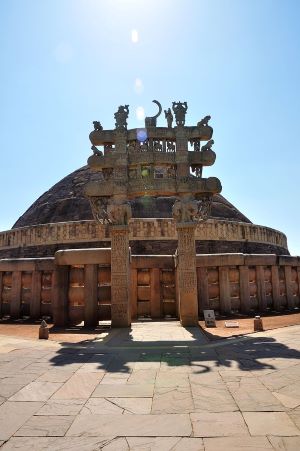
    The stupas, temples, viharas, and stambha monuments at Sanchi in Madhyapradesh,India are among the oldest and most relevant examples of aniconic arts and free-standing architecture that comprehensively document the history of Buddhism in ancient India.

    Sanchi Stupa is a Buddhist complex, famous for its Great Stupa, on a hilltop at Sanchi Town in Raisen District of the State of Madhya Pradesh, India. It is located 46 kilometres (29 mi) north-east of Bhopal, capital of Madhya Pradesh.

    The stupas, temples, viharas, and stambha at Sanchi in central India are among the oldest and most mature examples of aniconic arts and free-standing architecture that comprehensively document the history of Buddhism from the 3rd century BCE to the 12th century CE. It is an important monument of Indian Architecture originally commissioned by the Mauryan emperor Ashoka in the 3rd century BCE. The stupa at Sanchi built during the Mauryan period was made of bricks.

    The monuments at Sanchi now comprise a series of Buddhist monuments starting from the Mauryan Empire period (3rd century BCE), continuing with the Gupta Empire period (5th century CE), and ending around the 12th century CE. It is probably the best preserved group of Buddhist monuments in India.

    The oldest, and also the largest monument, the Great Stupa also called Stupa No. 1, initially built under the Mauryans, and adorned with one of the Pillars of Ashoka

       Sanchi is the center of a region with a number of stupas, all within a few miles of Sanchi. These include

    • Satdhara (9 km to the W of Sanchi]
    • The  Relics of Sariputra and Mahamoggallana
    • Bhojpur (also called Morel Khurd, a fortified hilltop with 60 stupas11km away)
    •  Andher (17 km SE of Sanchi)
    • Sonari (10 km SW of Sanchi)
    •  Saru Maru stupa [ 100 km away ]
    • Bharhut is 300 km to the northeast.

    During the reign of under the Shungas and the Satavahanas, the Great Stupa was enlarged and decorated with gates and railings, and smaller stupas were also built in the vicinity, especially Stupa No.2, and Stupa No.3

    Sanchi monuments were rediscovered by the British colonialists general Henry Taylor in 1818.The first excavation of this site was done under the supervision of Major Alexander Cunningham in 1851.

    The architecture of great stupa at Sanchi

    The “Great Stupa” at Sanchi is the oldest structure and was originally commissioned by the emperor Ashoka the Great of the Maurya Empire in the 3rd century BCE.

    Its nucleus was a hemispherical brick structure built over the sacred relics of the Buddha, with a raised terrace encompassing its base, and a railing and stone umbrella on the summit, the chatra, a parasol-like structure symbolizing high rank.

    The original Stupa only had about half the diameter of today’s stupa at Sanchi , which is further enhanced by the Sungas. It was covered in brick, unlike the stones that now cover it.

    During the later rule of the Shunga, the stupa was expanded with stone slabs to almost twice its original size. The dome was flattened near the top and crowned by three superimposed parasols within a square railing. With its many tiers it was a symbol of the dharma, the Wheel of the Law. The dome was set on a high circular drum meant for circumambulation, which could be accessed via a double staircase. A second stone pathway at ground level was enclosed by a stone balustrade.

    Myths & history associated with Sanchi stupa

      According to one version of the Mahavamsa, the Buddhist chronicle of Sri Lanka, The emperor Ashoka is closely linked with the region of Sanchi. It is believed that While he was heir-apparent and was journeying as Viceroy to Ujjain, he is said to have halted at Vidisha (10 kilometers from Sanchi), and there married the daughter of a local banker who was named as Devi. Sanchi was the venue of Devi and Ashoka’s wedding.

     The original construction work of this stupa was overseen by Ashoka. In the 1st century BCE, four elaborately carved toranas (ornamental gateways) and a balustrade encircling the entire structure were added.

    Inscriptions

    Sanchi, especially Stupa 1, has a large number of Brahmi inscriptions. Although most of them are small and mention donations, they are of great historical significance. James Prinsep in 1837, found that most of them ended with the same two Brahmi characters. Princep took them as “danam” (donation), which permitted the decipherment of the Brahmi script.

        An analysis of the deciphered scripts  denote that most of the donors were from Ujjain, Vidisha, Kurara, Nadinagar, Mahisati, Kurghara, Bhogavadhan and Kamdagigam. Three inscriptions are known from Yavana (Indo-Greek)donors at Sanchi,. The script denoting which reads “Setapathiyasa Yonasa danam” (“Gift of the Yona of Setapatha”), Setapatha being an uncertain city.

    The art of Sanchi

    The  art of Sanchi  developed considerably in the 1st century BCE/CE and is thought to predate the blooming of the Greco-Buddhist art of Gandhara, which went on to flourish until around the 4th century CE.

    The art of Sanchi is considered as the ancestor of the didactic forms of Buddhist art that would follow, such as the art of Gandhara. The Buddhist monuments at Sanchi contain an appreciable concentration of early Indian artistic techniques and Buddhist art, referred to as its Anionic School or Phase. Depicting Buddha through symbols, the sculpted art shows the evolution in sculpting techniques and the elaboration of icons, especially depicting Buddha.

    Ashoka pillar

    A pillar of finely polished sandstone, one of the Pillars of Ashoka, was also erected on the side of the main Torana gateway. The bottom part of the pillar still stands. The upper parts of the pillar are at the nearby Sanchi Archaeological Museum. The capital consists in four lions, which probably supported a Wheel of Law.

    The pillar has an Ashokan inscription (Schism Edict)[13] and an inscription in the ornamental Sankha Lipi from the Gupta period.[6] The Ashokan inscription is engraved in early Brahmi characters. It is unfortunately much damaged, but the commands it contains appear to be the same as those recorded in the Sarnath and Kausambi edicts, which together form the three known instances of Ashoka’s “Schism Edict”. It relates to the penalties for schism in the Buddhist sangha:

    … the path is prescribed both for the monks and for the nuns. As long as (my) sons and great-grandsons (shall reign; and) as long as the Moon and the Sun (shall endure), the monk or nun who shall cause divisions in the Sangha, shall be compelled to put on white robes and to reside apart. For what is my desire? That the Sangha may be united and may long endure.

    Now  Sanchi group of monuments are owned by the Government of India and is conserved, prot

    ected, maintained, and managed by the Archaeological Survey of India under the Ancient Monuments and Archaeological Sites and Remains (AMASR) Act (1958

    Sanchi Monument listed by UNESCO

    Currently , around fifty monuments remain on the hill of Sanchi, including three main stupas and several temples. The monuments have been listed among other famous monuments in the UNESCO World Heritage Sites since 1989.

    How to reach Sanchi?

    The nearest airport is Bhopal which is 55 km away from it. Trains are available from Bhopal and Rani Kamlapati to Sanchi railway station.

    References

  • UNESCO world heritage sites of India

    UNESCO World heritage sites of India

    World Heritage Sites are landmarks and areas with legal protection by an international convention administered by UNESCO for having cultural, historical, or scientific significance. The  “cultural and natural heritage around the world considered to be of outstanding value to humanity”

    World Heritage Sites might be ancient ruins or historical structures, buildings, cities] deserts, forests, islands, lakes, monuments, mountains or wilderness areas

    The sites are intended for practical conservation for posterity, which otherwise would be subject to risk from human or animal trespassing or negligence.  These sites are demarcated by UNESCO as protected zones.

    Intangible cultural heritage from India

    • Koodiyattam  -a performing art from kerala
    • Ramlila performing arts from Ramayana
    • Ramman festival -It is a festival of the Garhwali people of Saloor Dungra village of Himalayas.
    • Cchau dance of westbengal  &Odisha
    • Kalbelia folk songs and dances of Rajasthan 
    • Mudiyettu, ritual theatre and dance drama of Kerala
    • Buddhist chanting of Ladakh: recitation of sacred Buddhist texts in the trans-Himalayan Ladakh region,
    • Sankirtana, ritual singing, drumming and dancing of Manipur
    • Thatheras  handicrafts of Jandiala Guru, Punjab,
    • Naroz festival of Parsi community
    • Kumbh mela festival of Ujjain,Haridwar
    • Garba dance festival of Gujrat

    Tangible  cultural heritage of India

    A. Natural heritage sites

    • Great Himalayan national park,Himachal Pradesh
    • Kaziranga national park, Assam
    • Keoladeo national park , Rajasthan
    • Manas wild life sanctuary, Assam
    • Nandadevi &valley of flowers national park, uttaranchal
    • Sunderbans national park,West bengal
    • Western ghats , Kerala, south India

    B. Man made Heritage sites

    • Agra fort Uttar pradesh
    • Ajanta caves Maharashtra
    • Sanchi buddhist monuments Madhyapradesh
    • Champaner-pavhadh  archeological park,Gujrat
    • Chatrapathi Shivaji terminal Maharashtra
    • Elephanta caves Maharashtra
    • Ellora caves  Maharashtra
    • Goa churches Goa
    • Fatehpur Sikri Uttar pradesh
    • Great living Chola temples Tamilnadu
    • Monuments at Hampi Karnataka
    • Monuments of Mahabhalipuram Tamilnadu
    • Monuments at Pattadakkal karnataka
    • Hill fort at Rajasthan Rajasthan
    • Humayon’ s tomb Delhi
    • Monuments of Khajuraho  Madhyapradesh
    • Maha bodhi temple complex Bodh gaya Bihar
    • Mountain railways of India  Westbengal
    • Qutb minar Delhi
    • Rani-ki-vav stepwell Gujrat
    • Red fort complex New Delhi
    • Rockshelters of Bimbetka Madhyapradesh
    • Sun temple konark
    • Taj mahal Uttar pradesh
    • Jantar mantar Jaipur Rajasthan
    • Nalanda university Bihar
    • Architectural work of Le corbuster Chandigarh
    • Historic city of Ahmedbad Gujarat
    • Victorian,gothic and art ensembles of Mumbai Maharashtra
    • Jaipur city Rajasthan

    C. Mixed type

    • Khangchendzonga National Park sikkim