

The term “Biodiversity” encompasses a wide variety of life on Earth, with a large diversity of genes, species, and ecosystems. Tectonic plate movements and its consequent climate and habitat change have detrimental impact on biodiversity and evolution of species.
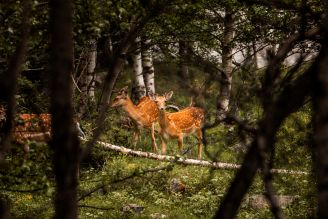
Biodiversity is a hotly debated and researched topic from time to time by numerous scientists & environmentalists in relation to climate, ecosystems and demographic characteristics. Its significance has been enhanced unprecedently in this modern era as multiple factors influence and impact on biodiversity.
Biodiversity is integral part of sustenance life on earth as it is essential to sustain the constant flow of clean air, fresh water, and food. Biodiversity plays key role in regulating the climate, and maintaining healthy ecosystems that support human well-being.
Biodiversity is studied by scientists conducting expeditions to survey and monitor species, habitats, and their interactions. On these expeditions, they collect data on various parameters such as population sizes and trends, distribution and habitat use, and impacts of management or other human activities.
Since prehistoric times the earth and ecosystems have been subjected to transformations and extinctions. It is an unfortunate fact that currently the impacts on biodiversity are happening in an unprecedented rate.
There has been an enhanced threat to biodiversity in the recent decades including habitat loss and fragmentation, excessive use of unsustainable resources, pollution, global climate change, emergence of invasive species.
Biodiversity is influenced by a wide array of factors. The population is exploding all over the world and its impact on biodiversity is unimaginable. Overconsumption of resources and human intervention on biodiversity has adverse impacts on mankind.
However, plate tectonics have a massive impact on biodiversity creating as well as destroying species and accelerating the process of evolution.
Plate tectonics
Movement of tectonic plates on the crust of Earth’s surface [plate tectonics] has major biogeographical consequences. Evidences suggest that tectonic activity began over 4 billion years ago. Collisions or rifting movements of plates creating and destroying habitats of organisms continues spanning centuries. It is happening through continental drift &by forming physical barriers like mountains through plate collisions.
Modern understanding of planetary dynamics including plate tectonics unravel the habitat loss or creation stemming from geographical changes like this.
Tectonic plate movement range from 10 to 40 millimetres per year (0.4 to 1.6 in/year). Where the plates meet, their relative motion determines the type of plate boundary as convergent, divergent, or transform.
[Read more about plate tectonics]
Tectonic movements are of different types.
- Ocean-to-continent subduction, where the dense oceanic lithosphere plunges beneath the less dense continent plate. At zones of ocean-to-continent subduction mountain ranges form.
2. Ocean-to-ocean subduction where older, cooler, denser oceanic crust slips beneath less dense oceanic crust. Deep marine trenches are typically associated with subduction zones.
3. At continental collision zones two masses of continental lithospheres are converging. As they are of similar density, neither is subducted.
The plate edges are compressed, folded, and uplifted forming mountain ranges,
4. At zones of ocean-to-ocean rifting, divergent boundaries form by seafloor spreading, allowing for the formation of new ocean basin. Two plates slide apart from each other. This rifting when happens on oceanic plates it leads to formation of new ocean basin.
5.Transform boundaries (conservative boundaries or strike-slip boundaries)
Here plates are neither created nor destroyed. Instead, two plates slide, or precisely they grind past each other, along transform faults. Strong earthquakes may happen along a fault.
Impact of plate tectonics on biodiversity

Tectonic movements and continental deformation consequent to that lead to complexity of habitat. They trigger a complex landscape response. For instance, a river network reorganization including river captures by tectonic forces leads to an unusually high diversity of habitat through isolation, creation or destruction of facets of the landscape.
Building of mountain barriers consequent to plate tectonics quite often lead to isolation and speciation, and connecting landmasses via land bridges that allow for species migration and exchange.
These movements of tectonic plates also drive global climate shifts, influencing the distribution and evolution of life.
Let us delve deeper into the tectonic impact on geomorphology and its impact on species and biodiversity.
- Continental drift and habitat formation:
As continents separate, new continental margins are created during movement of tectonic plates, it creates potential habitats and spurring diversification.
- Continental collision &new merged habitat formation:
When the tectonic plates collide, previously separated landmasses can merge again. This may lead to competition between new species and that occupied similar niches in isolation.
- Land bridges formation & migration
Plate tectonics can cause sea levels to drop, forming land bridges that connect continents. This new land bridges facilitate migration of species between the continents. A famous example is the Bering land bridge between Siberia and Alaska, which allowed many species, including early humans, to migrate between continents.
- Isolation and speciation
The formation of mountain ranges through plate collisions may function as a physical barrier leading to isolation or separating populations and thus preventing gene flow. Over time, isolated populations can evolve independently as new species through a process called allopatric speciation.
The separation of continents and the formation of ocean basins can act as another kind of barriers driving marine and terrestrial diversification.
- Climate change and species composition
Plate tectonics influence global climate patterns drastically by changing ocean currents and creating mountain ranges that affect atmospheric circulation.
The global climate patterns in turn affects the types of habitats available for organisms. The fossil records elucidate how climate changes drive changes in species composition and distribution.
- New ecosystems formation
Geological changes such as the creation of mid-ocean ridges, oceanic trenches, and volcanic island arcs due to tectonic movements eventually lead to the formation of new habitats and ecosystems.
The subsequent cooling and sinking of oceanic crust can displace seawater, causing global sea levels to rise.
- Evolutionary patterns of populations from variance
The splitting of a continuous population by the formation of a physical barrier such as mountains, ocean basins etc. is called vicariance. This can lead to the evolutionary divergence of populations on either side of the barrier.
- Plate tectonics function as Rift and collision pumps:
Plate tectonics can be described as a “rift pump” as it increases biodiversity through isolation. It functions as a “collision pump” that enhances competition between new & existing species when continents collide. In either way plate tectonics impacts on biodiversity.
- Acceleration of evolution:
The separation and collision of continents compel species to adapt to new environments created.
This can lead to new evolutionary paths or extinctions.
The dynamic changes impacted by plate tectonics, including the creation and destruction of habitats, can accelerate the pace of biological evolution.
Fossil studies reveal that plate tectonics have been associated with profound biogeographical consequences, such as isolation and speciation. Eventually geologically isolated species may emerge as a new species in the new ecosystem. Similarly, another type of collision of tectonic plates may merge isolated continents forming ridges or land bridges. Now this may cause competition between existing and newly joined species and gradual extinction.
The impact of plate tectonics on biodiversity and climate is evident in the fossil record of animals with Gondwanan affinities in India and Madagascar.
The collision of continents can connect previously separated landmasses. The collision of India with Asia as per the fossil studies show that fossils of shared vertebrate groups found in both India and Madagascar, showing a link to the former supercontinent Gondwana.
A formation of the Isthmus of Panama allowed for the exchange of animals between North and South America.
conclusion
Plate tectonic is not the only cause that impacts biodiversity. Several other factors like global warming, human interventions and natural catastrophes such as volcanic eruptions and ocean currents play their own roles. However the tectonic movements have significant role in the evolutionary process of extinction as well as emergence of new species.
Written by dr sanjana p souparnika