
– A comprehensive research review

Green tea has become an integral part of the daily life particularly among the urban population.Catechins are the major polyphenolic compound antioxidants in green tea. Catechins have great effect on blood vessels and their vascular protective effects operate through multiple mechanisms.
Cardiovascular health is a hotly debated topic in the wake of surging heart attacks and strokes. Cardiovascular disease (CVD) involves disorders of the heart and blood vessels, such as coronary artery disease, stroke, and heart failure, often caused by atherosclerosis (plaque buildup).
Cardiovascular diseases stem from multiple factors operating in the background. It is also associated with some non-modifiable risk factors such as age, gene etc. However, a major part of the cardiovascular risk is linked with faulty lifestyles such as unhealthy diet, erratic sleep, sedentary life styles etc.
For sustaining a healthy heart and plaque free blood vessels adopt a healthy diet plan. Diet to improve your heart health must include wholegrains, vegetables, fruits, nuts and seeds.
Moreover, one must refrain from hazardous foods weakening health of heart and blood vessels. Limit the following foods for better cardiovascular health. Cake biscuits, pastries, white bread, pasta, pizza, sweet desserts and candies. Avoid almost all junk foods, sugar, white flour and alcohol. For better health of heart & blood vessels along with cardiac diet, moderate physical activity also is recommended under the guidance of a health expert.
Cardiac diet must include whole grains, fruits, vegetables, nuts and seeds. Furthermore, some foods and drinks having potential to improve cardiovascular health need to be included in lifestyle.Green tea is a good option to prevent atherosclerotic plaque build up in blood vessels. Green tea has several other roles in heart and blood vessels. Moderate consumption of green tea also is highly recommended by experts.
Green tea -A treasure trove of antioxidants
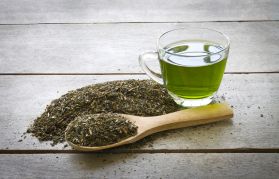
Green tea is commonly brewed using the dried leaves of the plant Camellia sinensis. Catechins are the most abundant antioxidants in green tea.
Green tea is manufactured by either firing or by steaming the fresh leaves, this process inactivates polyphenol oxidase in the fresh leaves. However, steaming prevents the enzymatic oxidation of catechins, the flavonoids in green tea extracts.
The main catechins of green tea are epicatechin (EC), epicatechin-3-gallate (ECG), epigallocatechin (EGC) and epigallocatechin-3-gallate (EGCG)
Around 80% to 90% of total flavonoids of green tea include catechins; EGCG being the most abundant catechin (48–55%). Drinking green tea raises the plasma catechin concentration after 2 to 4 hours of consumption. The plasma catechin levels after ingestion may raise between the range 0.6 to 1.8 μM. Even if the bioavailability is low, the absorbed catechins are still adequate to exert beneficial effects on cardiovascular system.
How to prepare green tea?
Green tea is prepared in a proportion of 1 g of tea leaves to 100 ml of boiling water in a 3-minute brewing.
Research studies substantiate -green tea antioxidants improve cardiovascular health
Does green tea offer protection to the heart?
Recently green tea and its effect on cardiovascular health is researched widely and extensively. Green tea has become an integral part of the daily life particularly among the urban population.
Catechins are the major polyphenolic compounds in green tea.
Catechins have great effect on blood vessels and their vascular protective effects operate through multiple mechanisms.
Catechins have antioxidative, anti-hypertensive, anti-inflammatory, anti-proliferative, anti-thrombogenic, and lipid lowering effects.
- The catechins as antioxidants play crucial role in scavenging free radicals. Free radical induced oxidative stress to heart and blood vessels is prevented by catechins.
- The catechins inhibit the key enzymes and reduce intestinal lipid absorption, thereby improving blood lipid profile.
- Catechins regulate vascular tone by activating endothelial nitric oxide.
- Catechins prevent vascular inflammation that has a pivotal role in the progression of atherosclerotic lesions.
- Catechins inhibit proliferation of vascular smooth muscle cells by interfering with vascular cell growth factors involved in atherogenesis.
- Catechins suppress platelet adhesion, thereby inhibit clot formation.
- LDL-cholesterol is an important risk factor for the development of heart diseases. Studies showed that green tea consumption helps to achieve a lower ratio of LDL-cholesterol to HDL (high density lipoprotein) cholesterol. This may reduce the risk for clot formation and plaque formation within blood vessels.
- Apolipoprotein B (ApoB) is the primary structural protein for LDL, VLDL, and IDL, which is a critical marker for cardiovascular risk. Consumption of green tea catechins supplements have shown to reduce ApoB and improve the ratio of ApoA-1/ApoB. Thus green tea reduces the risk for atherosclerosis and heart diseases associated with it.
Apoprotein B in cardiovascular diseases & green tea consumption impact
Apolipoprotein B (ApoB) is the primary structural protein for LDL, VLDL, and IDL, which is a critical marker for cardiovascular risk.
Nowadays apolipoprotein B and A are studied to assess the cardiovascular risk. It provides a more accurate assessment of heart disease risk than LDL. The reference range of apoB levels in adults is less than 130 mg/dL (1.3 g/L).
ApoB levels are higher in males than in females and tend to increase with age.
A high ApoB level often suggests a higher risk of plaque formation in the blood vessels.
Apolipoprotein B (ApoB) is the primary apolipoprotein component in LDL and high levels of ApoB and decreased Apolipoprotein A-1 (ApoA-1)/ApoB ratio are associated with higher risk of cardiovascular diseases. Green tea has a crucial role in reducing the risk associated with apolipoproteins.
Consumption of green tea catechins supplements have shown to reduce ApoB and improve the ratio of ApoA-1/ApoB.
Written by dr Sanjana p
image courtesy freepik.com
References for further reading