

“Panch Kailash” as the literal meaning indicates [the Five Kailashas] is the collective name for the group of five sacred mountain peaks in Himalayas which are worshipped by the Hindu pilgrims for many centuries.
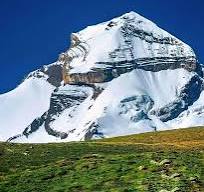
Panch Kailash is yet another instance of sacred linking of landforms with devotion, myths, epics and legends in the subcontinent. It is a highly revered group of mountains in Northern India under the Himalayan range of mountains. The faith and beliefs of people of these regions are deeply connected with divine presence of Lord Shiva in these mountains with goddess Parvati. Beyond the veil of myths, it is their hope and unwavering trust in the divine power residing on these mountains, which gives new momentum to take their everyday life forward.
Hindu religion has been intricately connected to these “five kailash” mountains and among them “The Mount Kailash” in Tibet is considered as the most sacred and visited by thousands of pilgrims and saints of several other religions apart from Hinduism.
The five kailash mountains situated in India fascinate pilgrim travelers from the subcontinent and neighborhood throughout the year. After mount Kailash in Tibet, the second most sacred mountain is the Adi Kailash of Uttarkhand[India].
Shri Khand Mahadev Kailash [ Shikhar Kailash), Kinnaur Kailash (Kinner Kailash), and Mani Mahesh Kailash (Chamba Kailash) are the remaining Kailash mountains situated in the state of Himachal Pradesh India.
Apart from these Panch Kailash mountains there is yet another culturally significant mountain in Hiimalayas which is known as “Sri Kailash”.
Sacred linking of Kailash mountains with Hindu mythology
Kailash-Mansarovar, Adi Kailash, and Om Parvat are sacred to pilgrims of Hindu religion. Adi kailash is revered as the first or original home of Lord Shiva and Godess Parvati before the divine couple’s movement to Mount Kailash in Tibet.
Adi Kailash has great spiritual significance as a place worshipped by Hindus as the meditation space of Lord Shiva for thousands of years. It is believed that Devi Parvati loved Lord Shiva on the foothills of this mountains and Lord Shiva tested the goddess for her determination and devotion to him and later married her. The myth prevailing in the region gives a fascinating narrative related to Shiva and his consort. According to that the deities started living in Adi Kailash in the initial period of their marriage and moved to Mount Kailash later.
Adi Kailash is also related to the cosmic dance or Thandava of lord Shiva “the creator of the universe who lived on Earth”.
Parvati Sarovar is a holy lake situated near to Adi kailash at an altitude of 4,501 meters. Gauri kund is close to Parvati saroar lake and it is a serene water body, with the peak of Adi Kailash reflecting on its surface.
Om Parvat is situated nearby at a height of 5,543 meters, known for its natural snow formation of the “OM” (ॐ) symbol
Adi Kailash
AdiKailash is known by several other names such as Shiva Kailash, Chota Kailash, Baba Kailash or Jonglingkong Peak.
Location:
This mountain is part of The Himalayan mountain range situated in the Pithoragarh, Uttarakhand India.
Gauri Kund (Jolingkong Lake) and Parvati Tal glacial lakes are at the base of the Adi Kailash
Adi Kailash and Limpiyadhura Pass (further northwest of Adi Kailash) are both located northwest of Gunji.
The Lipulekh Pass, Old Lipulekh Peak, and Om Parvat (southwest of Lipulekh Pass) are located northeast of Gunji.
Adi Kailash base camp, near the Hindu Shiva temple on the banks of sacred Jolingkong Lake (Gauri Kund), is located 17 km northwest of Kuthi (Kuti) village in Kuthi Yankti Valley (Kuthi or Kuti Valley)
How to reach Adi Kailash Mountain?
The journey to Adi Kailash takes about 7–10-day trip starting from Kathgodam or Dharchula.
An Inner Line Permit is mandatory to reach here and can be obtained in Dharchula.
- The Adi Kailash Yatra Circuit route-1 via Gunji, the eastern-southeastern route, is reached by the Pithoragagh-Lipulekh Pass Highway (PLPH) and its Gunji-Lampiya Dhura Pass Road (GLDPR) paved motorable spur via Kuthi Yankti Valley from Gunji to Adi Kailash.
The permits for this route are issued at Dharchula and medical check-up is conducted there.
- The Adi Kailash Yatra Circuit route-2 via Darma Valley, the western-southwestern route, begins by going up the Darma Valley and then crossing the Sin La pass south of Brahma Parvat to go to Kuthi Yankti Valley to Jolingkong Lake Base Camp.
Many travellers who take the route-2, after the Adi Kailash darshan, choose to traverse the route-1 in reverse direction till Gunji where they can join the Om Parvat and Mount Kailash-Lake Manasarovar Tibetan pilgrimage route along the Sharda River (Kali River).
Accommodation
The homestay accommodations are available in the villages along the route in Gunji, Napalachchu, Nabhi, Juli Kong and Kuti.
written by dr sanjana p