

Tag: wellness tips

  • Indian Gooseberry- health benefits

    Indian gooseberries are used widely as a fruit for consumption as well as for culinary uses. They possess numerous properties that are beneficial to health including antiaging, anticancer, anti-diabetic and anti-inflammatory properties.
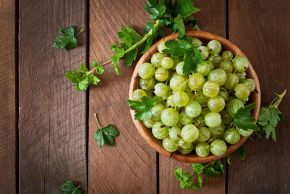
    Goosberries are part of Indian cuisines and the ancestral memories of every Indians as a sweet and bitter fruit. It is known for its nutritious potential since antiquity. Gooseberries are linked to in Indian history as a fruit which is revered in ancient texts like Charaka Samhita (800 BCE) and Sushruta Samhita (600 BCE). It is referred as a supreme rejuvenating herb for hair, skin, and overall vitality in ancient texts.

    Indian gooseberry is commonly known as Amla. Its scientific name is Phyllanthus emblica and belongs to Euphorbiaceae family.

      The gooseberry tree commonly grows to a height of 1–8 metres. The tree may grow with abundant light green leaves and greenish yellow flowers. The fruit is nearly spherical, light greenish–yello. It may be smooth and hard on appearance, with six vertical stripes or furrows. The fruit is up to 26 millimetres in diameter.

    Nutritional facts

    Indian gooseberry is a rich source of vitamin C and full of various other types of antioxidants as well.

    Gooseberries are used widely as a fruit for consumption as well as for culinary uses. They possess numerous properties that are beneficial to health including antiaging, anticancer, anti-diabetic and anti-inflammatory properties.

     Generally, gooseberries are low in calories and fat and thus safe to include as part of diet for obese people also. It contains carbohydrates [70 g/100 g dry weight] and fibers[7.2–16.5 g/100 g DW].

    Indian gooseberries are abundant source of antioxidants such as phenolic compounds, flavonoids and vitamin C.

    They contain minerals iron, calcium and phosphorous. Many studies show the presence of ellagitannins, which includes chebulinic acid, chebulagic acid, corilagin, emblicanin A and B, geraniin, isocorilagin, pedunculagin, phyllanemblinins A–F, and punigluconin in gooseberries.

    Health benefits of Indian gooseberries

    •      Anti-ageing properties

    Vitamin C an effective antioxidant as well as collagen improving agent is abundant in gooseberries. It helps to prevent wrinkles on skin and helps to maintain the tone and strength of skin.

    •      Antioxidant properties

      Polyphenol and vitamin C antioxidants of gooseberries help in free radical scavenging and thus prevent the threat of serious morbidities to vital organs.

    improves digestive health &immunity

    The antioxidants such as gallic acid, ascorbic acid and phenolic compounds of gooseberries boost the body’s immune system as well as digestive processes.

    Protects heart and cardiovascular system

    Owing to the anti- cholesterol and antiatherogenic properties gooseberries boost cardiovascular system health in human body. It helps to prevent heart attacks and stroke preventing clot formation within blood vessels.

    Protects nervous system

    The polyphenols of gooseberry have antioxidative potential and neuro protective properties.

    Lowers blood sugar

    The antioxidant compounds in gooseberries help to reduce blood sugar level.

    Improves hair health

    Vitamin C and antioxidants of gooseberries boost hair growth and imparts strength to hair strands.

    Anticancer potential

    The polyphenols prevent oxidative stress to cells of human body. They also produce pro-inflammatory chemicals, prevent DNA damage, and increase apoptosis or cell death of worn out and abnormal cells. This apoptosis process is crucial in preventing morbid as well as normal cell growth uncontrollably in cancer. Therefore, eating gooseberries are very beneficial in mitigating the cancer risks.

    Research updates about Indian gooseberry

    •      Experimental studies indicate that gooseberry and some of its phytochemicals such as gallic acid, ellagic acid, pyrogallol, some norsesquiterpenoids, corilagin, geraniin, elaeocarpusin, and prodelphinidins B1 and B2 also possess anticancer effects.

    It helps free radical scavenging, antioxidant, anti-inflammatory activities which reduce cancer risks in the population.

    •      According to a study at human level, a 500 mg gooseberry extract intake (twice a day) for three months reduced the highly sensitive C-reactive protein (CRP), total cholesterol, and LDL levels in Class I obese subjects. This may have a cardioprotective effect reducing heart attacks and other diseases.

    •      As per data from yet another study ellagic acid and ascorbic acid could reduce the activity of key enzymes involved in glucose digestion and therefore possess antidiabetic properties.

    •polyphenols have been indicated to protect gastrointestinal organs.  Gooseberries have the potential for inhibition of clarithromycin-resistant Helicobacter pylori strains in vitro, since this microorganism is a known cause of gastric ulcers

    How to include gooseberry include gooseberries in your daily foods?

    It is an edible fruit as such. However, to make it more palatable it can be used for making various types of:

    •      Jellies

    •      Salad ingredient

    •      Wine

    •      dessert

    •      Jams

    Safety &caution

    No adverse side effects have been reported if gooseberries are consumed in adequate amounts. Excessive usage may affect lowering the blood sugar in patients who are already under diabetic medications.

    Gooseberries are good source of vitamin C. excessive intake is not recommended as vitamin C is an important micronutrient helping metabolism. Consume only one gooseberry per day.

    written by dr sanjana p

    References

    1. European journal of cancer prevention  2011 May;20(3):225-39. doi: 10.1097/CEJ.0b013e32834473f4  PMID: 21317655 DOI: 10.1097/CEJ.0b013e32834473f4  https://pubmed.ncbi.nlm.nih.gov/21317655/
    • 6. Kapoor M.P., Suzuki K., Derek T., Ozeki M., Okubo T. Clinical evaluation of Emblica officinalis Gatertn (Amla) in healthy human subjects: Health benefits and safety results from a randomized, double-blind, crossover placebo-controlled study. Contemp. Clin. Trials Commun. 2020;17:100499. doi: 10.1016/j.conctc.2019.100499   https://pubmed.ncbi.nlm.nih.gov/31890983/
    • M.M., Joshi M.K. Influence of Emblica officinalis aqueous extract on growth and antioxidant defense system of human hepatoma cell line (HepG2) Pharm. Biol. 2012;50:497–505. doi: 10.3109/13880209.2011.618501. https://pubmed.ncbi.nlm.nih.gov/22133060/
    • Bharathi M.D., Thenmozhi A.J. Attenuation of Aluminum-Induced Neurotoxicity by Tannoid Principles of Emblica officinalis in Wistar Rats. Int. J. Nutr. Pharmacol. Neurol. Dis. 2018;8:35. doi: 10.4103/IJNPND.IJNPND_23_18  google scholar https://scholar.google.com/scholar_lookup?journal=Int.+J.+Nutr.+Pharmacol.+Neurol.+Dis.&title=Attenuation+of+Aluminum-Induced+Neurotoxicity+by+Tannoid+Principles+of+Emblica+officinalis+in+Wistar+Rats&author=M.D.+Bharathi&author=A.J.+Thenmozhi&volume=8&publication_year=2018&pages=35&doi=10.4103/IJNPND.IJNPND_23_18& 
    • Khanna S., Das A., Spieldenner J., Rink C., Roy S. Supplementatihttps://pubmed.ncbi.nlm.nih.gov/25756303/
    •  Nampoothiri S.V., Prathapan A., Cherian O.L., Raghu K.G., Venugopalan V.V., . Food Chem. Toxicol. 2011;49:125–131. doi: 10.1016/j.fct.2010.10.006   https://pubmed.ncbi.nlm.nih.gov/24418077/
    • image courtesy https://www.freepik.com/search?format=search&last_filter=query&last_value=indian+amla&query=indian+amla
  • Capsicum to improve your cardiovascular health

    Capsicum is known for its antioxidant, anti-inflammatory, and antimicrobial activities. It also helps to reduce the prevalence of type 2 diabetes and obesity. Capsicum has role in reducing cholesterol and hence cardiovascular diseases.

    Generally peppers belong to the genus Capsicum. Some commercially grown species of capsicum include C. annuum, C. frutescens, C. chinense, C. pubescenes, and C. baccatum . Among these C. annuum is grown most extensively worldwide.

    Capsicums  are an excellent source of phytochemicals, such as anthocyanins, vitamins, phenolic acids, flavonoids, carotenoids, and capsaicinoids

    Nutritional value

    Capsicum contains many valuable nutrients and phytochemicals

    It has been found that vitamin C, an effective antioxidant, is high in red peppers , while vitamin E is high in dried chili peppers.

    The capsicums contain fiber and some minerals such as:

    iron

    calcium

    copper

    manganese

    molybdenum

    amino acids such as:

    tryptophan

    phenylalanine

    lysine

    Health benefits of capsicum

    Capsicum can be found as an integral part of Mediterranean and continental foods. It is also used in Asia and middle East countries widely. However, many people are not aware of the health benefits capsicum provides.

    It is rich in nutrients and antioxidants.  Therefore, capsicum has protective effect on your heart , brain and immune system. It helps to reduce the impact of lifestyle diseases on your health including heart attack, diabetes, stroke &obesity.

    •          Anti-inflammatory properties

      Capsicum helps to reduce inflammation due the presence numerous antioxidants and phytochemicals within it.

    •          Antibacterial properties

    Capsicum is effective against microbes, particularly against bacteria. One research study show inhibitory effect of the extract of Capsicum annuum bell pepper type was evaluated against Salmonella typhimurium and Pseudomonas aeruginosa. The study shows that capsicum extracts kill bacteriae [2].

    • Helps to reduce blood sugar; anti-diabetic effect.

    Studies suggest capsaicin has several actions that have an anti-diabetic effect. This is achieved by reducing insulin resistance, which makes it easier for blood glucose to get inside cells from the bloodstream.

     Capsaicin also helps prevent obesity, which predisposes for diabetes.

    • Helps to reduce cholesterol

    A few studies suggest capsaicin can decrease total cholesterol, triglycerides, and low-density lipoproteins, known as “bad cholesterol.”

    It has been also found that capsicum can increase high-density lipoproteins, known as “good cholesterol.”

    • Reduces blood pressure

     Studies show capsaicin reduces high blood pressure through several benefits. These include releasing substances that dilate blood vessels, suppressing an enzyme that narrows blood vessels, and stimulating increased urination, which reduces blood pressure by helping remove excess fluid.

    References

    1. Anti-inflammatory effects of red pepper (Capsicum baccatum) on carrageenan- and antigen-induced inflammation

    Fernando Spiller 1, Márcia K Alves et al. Journal of Pharmacy and Pharmacology, Volume 60, Issue 4, April 2008, Pages 473–478, https://doi.org/10.1211/jpp.60.4.0010

    • Antibacterial activity of Capsicum extract against Salmonella typhimurium and Pseudomonas aeruginosa inoculated in raw beef meat

    Mónica Careaga 1, Elizabeth Fernández, Lidia Dorantes, Lydia etal.

    PMID: 12745238 DOI: 10.1016/s0168-1605(02)00382-3

    • https://pmc.ncbi.nlm.nih.gov/articles/PMC6770197/
    • https://www.freepik.com/free-photo/close-up-portrait-beautiful-woman-smiling-showing-yellow-pepper-vegetarian-girl-making-dinner_76274720.htm#fromView=search&page=1&position=1&uuid=b4d91212-e03c-4aff-bf8a-e5ef074413d2&query=Capsicum+eating+woman
  •  Mindful eating helps your hormonal rhythm

    Does mindful eating help in improving your overall health? Does it have any advantage over binge eating? Research studies are ongoing on this topic as the role of mind in impacting physical health is becoming prominent day by day.

        Mindfulness is an ancient practice in which one’s thoughts, emotions, and physical sensations are directed at the present moment. It is becoming more aware of, rather than reacting to, one’s situation and choices.

    Mindfulness is neither focusing to improve concentration nor it is meditative process. Instead it is a feeling of awareness. Being “aware of the present moment “ is mindfulness.

       Mindful eating focuses on your eating experiences, body-related sensations, and thoughts and feelings about food, with heightened awareness and without judgment. In short it is listening to your food, its taste, aesthetic appeal, in the process of eating or chewing it.

            Health benefits of mindful eating  

    • Improved gut health

     Mindful eating helps to reduce bloating and gas as you enjoy food here and take enough time to chew it. Chewing helps to mix food with saliva and other gastric juices facilitating proper digestion. Therefore, the amount of undigested food in your gut will be reduced and fermentation process will be reduced. So bloating do not happen. Most of do hasty eating without proper chewing and digestion is delayed.

     It also helps to reduce constipation, diarrhoea, reflux and IBS like symptoms.

    • Proper absorption of nutrients

     Good digestion helps absorption of nutrients in the intestine and proper absorption of food aid in improving health of organs and body in general.

    • Helps weight loss

    Research studies have shown that mindful eating helps you eat less and feel more full.

    • Increased appreciation of food

    Only  if you love your food taking time it is appreciated well.

    Once  you start loving food  it makes your meal or dinner or snacking an enjoyable experience in your thoughts .

    • Stress reduction and hormonal well- being :

        When you slow down while eating and enjoy it as if in mindful eating ,you are naturally reducing your cortisol (stress hormone). This may help your body to protect itself from bad effects of stress like hormonal and autoimmune diseases, migraine, fertility issues and sexual dysfunctions.

    Some studies suggest that mindful eating helps to maintain a balanced hormonal rhythm.

    How to eat mindfully?

    ·       Take a few deep breaths and think how hungry you are.

    ·       As you cook food, notice its texture, smells and the sounds generated by the food prepared.

    ·       Put only the needed amount of food on your plate to satisfy your hunger.

    ·       Taste your food chewing it slowly and know the real taste, how it feels in your mouth, and how much you are enjoying it.

    ·       Try to note your hunger cues along the way.

    ·        Are you really still hungry after eating a quarter or half of your meal? Enjoy the meal but do not eat in such a way that your stomach is full.

    ·       Stop eating when you feel enough for quenching hunger, no matter how much food is left. Keep away the plate away from you.

    ·       Eating too much till the stomach is full is against mindfulness.it may affect digestion badly. For proper digestion to happen leave some empty space in your stomach .

    Reference

    1.https://pmc.ncbi.nlm.nih.gov/articles/PMC5556586/

    2.https://pubmed.ncbi.nlm.nih.gov/36045097/

    3. https://www.freepik.com/free-photo/medium-shot-smiley-vegetarian-woman_13153038.htm#fromView=search&page=1&position=43&uuid=72b8f52f-f1c0-4676-aff8-fe841daad71a&query=woman+eating+healthy+food