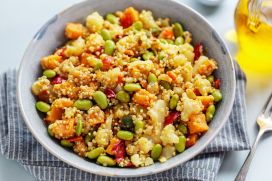
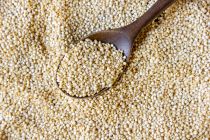
Quinoa is a highly nutritious, gluten-free food packed with protein, dietary fiber, vitamins, and minerals potassium and magnesium. Quinoa is very much useful to help weight loss and improve heart health and digestive health.
It is an easily digestible food and many people all over the world consume it as substitute for rice.
Quinoa is a herbaceous plant grown for its seeds and belongs to the amaranth family. The seeds of quinoa are edible and immensely nutritious as they are packed with protein, dietary fiber, B vitamins and important minerals such as potassium and magnesium.
Quinoa is a prominently cultivated food in Asia, the United States, and European countries. People love to include this protein and fiber rich food for weight loss along with a lot of vegetables and legumes in salads.
Nutritional value
Quinoa is enriched with protein, fibers, vitamins and minerals. A cup of quinoa contains around 8g of protein and 5g of fiber. It also contains folate, magnesium, iron and zinc. 1 cup of cooked quinoa contains 5.18 grams of fiber which is much more than that in whole grains.
Quinoa is naturally gluten-free and is useful to people who need to cut gluten from their diet.
Quinoa is enriched with high quality proteins as it contains all nine essential amino acids [amino acids that human body cannot form but need to be obtained from food].
However, quinoa contains some antinutrients such as saponins, tannins and phytic acid. These substances can reduce the absorption of iron and magnesium as they bind with them. But nothing to worry much. These antinutrients can be eliminated or reduced by rinsing, soaking, or sprouting the quinoa before cooking.
How to prepare quinoa?
First rinse quinoa well in a fine mesh strainer to remove bitter saponin coating. D it for 2-3 times for better results. Then soak it in water for 15 minutes.
Take 2 parts water for cooking1 part quinoa and bring to a boil, then simmer for 10-15 minutes.
The cooked quinoa can be mixed with cooked or boiled vegetables, chick pea etc. You may add ghee, some spices for flavor.
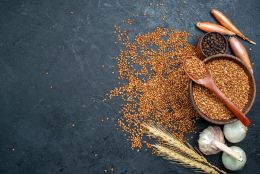
Quinoa is available in different colours and varieties.
Chenopodium quinoa is a dicotyledonous annual plant, usually about 1–2 m (3–7 ft) high. It has broad, generally powdery, hairy, lobed leaves.
This plant is a cultivated crop world wide and in 2013 quinoa was in huge demand as awareness about its health benefits created a boom in its production and use. The United Nations General Assembly declared 2013 as the “International Year of Quinoa” in recognition of the ancestral practices of the Andean people, who have preserved it as a food for posterity to foster sustainable living practices.
Health benefits of quinoa
Helps to reduce cholesterol &blood sugar
Quinoa is an abundant source of fibers and thus help to reduce cholesterol and blood sugar spike.
Helps to reduce the body weight &triglyceride levels
antimicrobial,
anticancer properties
Rich source of protein which helps healthy body building &proper functioning
Fingermillet is a highly nutritious gluten free grain which is a good source of calcium, iron,amino acids, fibers, antioxidants etc. Finger millet or ragi is crucial for bone health, digestive health and heart health. It is used as a food beneficial for achieving weight loss and managing blood sugar & cholesterol.
Relevance of healthy food & life style practices
In the digital era, owing to sedentary life styles and junk food consumption majority of the urban population suffer from deteriorating bone health, digestive health and cardiovascular health. Lifestyle diseases such as heart attack, stroke, fatty liver, diabetes etc. conquer a large number of men and women even in their early thirties.
Women also suffer from low bone mineral density and osteoporosis as a complication of poor bone health. Poor nutrition and lack of exercise are the fundamental causes of weakening of bones in women. Particularly post-menopausal women are more vulnerable to osteoporotic bone fractures due to declining female sex hormone oestrogens. They are also at risk of heart attacks as the oestrogen hormone start declining around menopause. A well-balanced diet, healthy mind, physical activity and moderate amount of strength exercises are crucial for bone health. Calcium rich food consumption in adequate amounts help bone health in postmenopausal women and others.
Of late there has been a transformation and awareness in a small fraction of population about the need of healthy food habits and life style practices in order to prevent lifestyle diseases and several other kinds of morbidities which endanger life.
Now people have started thinking about nutrient rich but low sugar low fat foods in the wake of enhanced health and wellness awareness. It is a great step towards a health indeed. They are aware about the dire need of physical activity also in sustaining a healthy body and mind.
Sedentary lifestyle leads to obesity and consequent to that many complications develop. This awareness has prompted many to choose foods having low sugar, low saturated or unhealthy fat and high in all essential nutrients.
Today I am narrating here such a highly nutritious staple food which can provide you with innumerable health benefits from weight loss to heart health. Let us have a glimpse into the nutritional value of finger millet or ragi.
Finger millet [ragi]
Finger millet or ragi is also known as Eleusine coracana. It is grown in several parts of the world particularly in India and Africa. It ranks 6th in production as a staple food after rice, wheat, maze, bajra etc globally.
Nutritional value:
Finger millet contains about 5–8% protein, 65–75% carbohydrates, 15–20% dietary fiber and 2.5–3.5% minerals
Nutritionally, finger millet is an important food due to its high content of calcium (0.38%), dietary fiber (18%) and antioxidant phenolic compounds (0.3–3%).
Calcium -344—364mg/100g
Protein 7g
Dietary fiber11.5g
Iron – 3.9-4.6 mg
Magnesium 137-146mg
Ragi is also well known for several health benefits it provides; such as anti-diabetic, anti-cholesterol, antioxidant and antimicrobial effects.
Finger millets also help weight loss, digestive and cardio vascular health due to fiber content.
The antioxidants in ragi include polyphenols and flavonoids. The polyphenols have antimicrobial, antioxidant and antidiabetic properties.
Health benefits of finger millets
Helps weight loss
The high fiber content of finger millets helps to provide easy satiety and prevent over eating preventing obesity. They also improve digestive health and reduce cholesterol accumulation in the body.
Helps to improve heart health
The fibers in ragi helps to reduce cholesterol and protects heart and blood vessels from atherosclerosis and clots. Thus, improve cardiovascular health.
Beneficial for diabetes management
The finger millets are rich in fibers and it is good for managing blood sugars. Research studies show that the carbohydrates present in finger millet are slowly digested and assimilated than those present in other cereals
Improves bone health
Ragi or finger millet being an abundant source of calcium it helps to improve bone health and muscle functions.It is also a good source of magnesium which is important for bone growth, strength and development
Agood source of iron
Ragi helps to reduce anaemia and its impact in humans as it is a good source of iron. Iron is crucial for proper oxygen delivery to cells by hemoglobin of our blood.
A good source of essential amino acids
Ragi contains essential amino acids tryptophan and methionine. Tryptophan is crucial in the formation of neurotransmitters and helps to improve brain function and maintain mood in a good condition. Tryptophan is necessary for formation of serotonin, melatonin and niacin. These control mood and sleep quality in human beings.
Tryptophan is a precursor in the formation of neurotransmitter seratonine. This neurotransmitter helps to curb appetite and reduce stress induced eating. So tryptophan of fingermillets has crucial rule in preventing obesity related to stress. Also it ensures happy mood helping seratonine production.
Methionine amino acid present in ragi helps to eliminate fat, support liver health and is good for skin and hair.
Antioxidants -prevents organ diseases&premature ageing
Ragi has several antioxidants which prevents oxidative stress induced by free radicals. Oxidative stress being an important link to processes leading to premature ageing. Finger millet antioxidants help to prevent premature ageing resulting from oxidative stress.
Methionine amino acid in ragi also boost skin health.
Free radical damages also cause several organ diseases. The antioxidants protect vital organs from the attack of free radicals .
Gluten free food
It is an excellent food for people having gluten sensitivity such as celiac disease. Ragi or finger millet is totally gluten free and rich in nutrients
Research studies on finger millets
A study conducted in 2010 by Shobana et al has substantiated the hypoglycaemic, hypocholesterolaemic properties. It also has illustrated the property of finger millets in protecting kidneys [1]
Diabetic patients are susceptible to oxidative stress by free radicals. The free radical types reactive oxygen species cause peroxidation of membrane lipids, protein glycation, and health complications. Antioxidants inhibit glycation by scavenging reactive oxygen species. Hegde et al. (2002) studied the role of polyphenol antioxidants of finger millet in this glycation inhibition effect. The study substantiated the antidiabetic properties.
How to include ragi or finger millet in your diet?