

R.K Narayan, one of the prominent literary figures of India who uplifted Indian literature into the western literary world in the beginning of 20th century has more than 200 novels, as well as short stories and plays in his credits. Most of his works feature the social context and the quintessential mundane life. His is the renowned author of Malgudi days
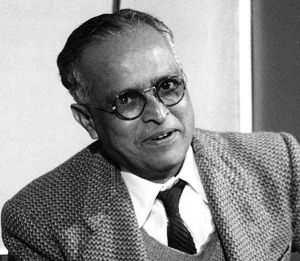
Narayan’s distinctive writing style and narrative have been compared with those of Guy de Maupassant by many stalwarts. R. K. Narayan was a distinctive personality in the literary world with his unpretentious expression of a natural element of humour in his works.
Most of his works narrate the stories of common man and his trials and trepidations of life, driving the readers to life experiences that relate to the theme mostly. Throughout his literary journey he wrote explicitly about the intricacies of Indian society without any deviation from his unique characteristic simplicity. His writings had the distinctiveness of the use of nuanced dialogic prose with gentle Tamil overtones based on the nature of his characters. This distinctive style of writing gifted R.K Narayan the sobriquet ‘the Indian Chekhov in the literary horizon’.
Anthony West of The New Yorker opined that Narayan’s writings were of the realism genre of Nikolai Gogol.
Somerset Maugham, The famous English writer on a trip to Mysore in 1938, ardently wished to meet Narayan. Unfortunately, it didn’t happen and Maugham subsequently happened to read Narayan’s book ‘The Dark Room’ and he made a note to Narayan, expressing his admiration about the work.
A glimpse into the private life of R.K. Narayan
Early childhood days
R. K. Narayan was born in a Tamil Brahmin family on 10 October 1906 in Chennai, in the state of Tamil Nadu. He was born as the second child to his parents and his father was a school headmaster and mother a home maker. His grandmother had a great role in his upbringing as he resided with her for a significant part of his childhood in their ancestral home. During that period grandmother taught him arithmetic, mythology, classical Indian music and Sanskrit. In the family mostly the members conversed in English, and grammatical errors on the part of Narayan and his siblings were scowled down. This exposure to English language in daily life might have influenced him later when he set his foot into the literary career.
Narayan had studied at a succession of schools in Madras, including the Lutheran Mission School in Purasawalkam, C.R.C. High School, and the Madras Christian College Higher Secondary School.
He was a voracious reader during his childhood days and he read avidly works of Dickens, Wodehouse, Arthur Conan Doyle and Thomas Hardy.
Young Narayan – the genesis of a writer
Later Narayan moved to Mysore to live with his parents when his father was transferred to the Maharaja’s College High School. The library at the school and his father’s own collections gave him more access to reading, and here he started writing as well.
In 1926 Narayan joined Maharaja College of Mysore and secured a bachelor’s degree. For a brief stint he worked as a school teacher; however, he left the job when he was asked to work as a substitute for the physical training master. This incident prompted him to choose writing as a profession.
His first published work was a book review of Development of Maritime Laws of 17th-Century England. Later he started writing for English newspapers and magazines although it was not a well-paid job which could earn a livelihood. However, he took a firm decision to continue with writing career as family whole heartedly supported it even in the adverse financial circumstances.
In 1930, Narayan wrote his first novel, Swami and Friends, but initially it was confronted with rejection. Later Narayan created Malgudi, a town that was a symbolic cross section of the prevailing society in his works.
Narayan worked as a reporter for a Madras-based daily called ‘The Justice’ dedicated to the rights of non-Brahmins and the job gave him acquaintances with a large network of great people.
Narayan had sent the manuscript of Swami and Friends to a friend at Oxford, and about this time, the friend showed the manuscript to Graham Greene a well-known writer of his time. Greene helped Narayan publish the book in 1935 with his recommendation. The book was semi-autobiographical and had reference to his childhood memoirs.
Narayan’s second novel “The Bachelor of Arts” published in 1937 again with the recommendation of Graham Grene. The theme discussed in the novel had been inspired by the college experiences of the author. It was a narrative that chronicled the transformation of a rebellious adolescent to a mature well-adjusted man.
He published the third novel The Dark Room in 1938 and received good reviews from the readers. The book discussed domestic or marital discord, that depicted the oppression suffered by women under male chauvinism.
In 1937, Narayan’s father died, and Narayan was forced to accept a commission from the government of Mysore as he was not making sufficient income.
Darkest moments of life inspiring to find solace in writing
Later R.K Narayan got married with Rajam but that marriage didn’t last long as his wife died of typhoid in 1939. The untimely demise was traumatic to Narayan and he fell into the abyss of grief and the void the loss had created, for a longtime. He never thought of a remarriage and his prime concern was their daughter Hema, who was only three years old when her mother died. The dejection and despair of his loss in life inspired him to return to writing, perhaps he could find solace in scribbling and the outcome was the novel ‘The English Teacher.’ This book also was autobiographical.
Narayan himself acknowledged that The English Teacher was almost entirely an autobiography, albeit with different names for the characters and the change of setting in Malgudi; he also explains that the emotional narrative in the book reflected his own grief related to his wife’s death. His first collection of short stories, Malgudi Days, was published in November 1942, followed by The English Teacher in 1945.
In between, being cut off from England due to the war, Narayan started his own publishing company, Indian Thought Publications; the publishing company was a success and is still active, currently managed by his granddaughter.
Gradually R.K. Narayan’s novels achieved fame and recognition in far-flung areas. By 1948, he accumulated wealth and built a big house and bought a luxury car of his times. In the meanwhile, Narayan wrote the story for the Gemini Studios also for the film Miss Malini.
In 1951 he published his book The Financial Expert, which is regarded his masterpiece and hailed as one of the most original works of fiction. The next novel, ‘Waiting for the Mahatma’ was a work based on the fictional visit to Malgudi by Mahatma Gandi.
In 1953, his works were published in the United States for the first time, by Michigan State University Press.
The Guide was written while he was visiting the United States in 1956 on the Rockefeller Fellowship. While staying in the U.S., Narayan had the habit of maintaining a daily journal these scribblings later served as the cornerstone for his book ‘My Dateless Diary’.
During a visit to England, Narayan could meet his friend and mentor Graham Greene for the first time in life directly. Grene was his mentor cum supporter in the initial years of publishing of his books.
The Guide was published after his return to India and the book is the embodiment of Narayan’s writing skills and elements such as ambivalent expressions coupled with a riddle-like conclusion. He was honored with Sahitya Academy Award in 1960 for this book.
The Man-Eater of Malgudi, was released in 1961. The book was reviewed as having a narrative that is a classical art form of comedy, with delicate control. After the launch of this book, R.k Narayan visited the U.S.and Australia. He got recognition in India and abroad as an accomplished and talented author of fiction portrayed in a realistic style.
Narayan was a columnist for magazines and newspapers including The Hindu and The Atlantic during that time.
Setting foot on mythology &translation of epics
In 1964, Narayan published his first mythological work, Gods, Demons and Others, a collection of rewritten and translated short stories from Hindu epics.
In 1938, he embarked on a translating journey first translating the Kamba Ramayanam to English and it was published in 1973, after long five years of meticulous researching. Subsequently, Narayan started working on a condensed translation of the Sanskrit epic, the Mahabharata.
Adopting unexplored paths and styles in writing &life
Narayan embarked on a new theme of work and published, The Painter of Signs. Here he took a deviation from his regular plot and experimented with hitherto unaddressed subject of sex in it.
He was elected as an honorary member of the American Academy of Arts and Letters and won the AC Benson Medal from the Royal Society of Literature during this time. Around the same time he rose to international fame and Narayan’s works were translated to Chinese for the first time.
In 1983, Narayan published his next novel, A Tiger for Malgudi, about a tiger and its relationship with humans.
His next novel, Talkative Man, published in 1986, was the tale of an aspiring journalist from Malgudi. During this time, he also published two collections of short stories: Malgudi Days (1982), a revised edition including the original book and some other stories, and Under the Banyan Tree and Other Stories, a new collection.
In 1987, he completed A Writer’s Nightmare, another collection of essays about topics as diverse as the caste system, Nobel prize winners, love, and monkeys. The collection included essays he had written for newspapers and magazines since 1958.
Living alone in Mysore, Narayan developed an interest in agriculture. He bought an acre of agricultural land and tried his hand at farming. He loved walking to the market every afternoon to interact with the people. Perhaps his social connections are reflected in his novels from the earlier years onwards as a writer.
R.K Narayan – a revolting visionary in politics
In 1980, Narayan was nominated to the Rajya Sabha, the upper house of the Indian Parliament, for his contributions to literature. During his entire six-year term, he was focused on one issue—the plight of school children, especially the heavy load of school books and the negative effect of the system on a child’s creativity, which was something that he first highlighted in his debut novel, Swami and Friends.
His inaugural speech highlighted this issue and resulted in the formation of a committee chaired by Prof. Yash Pal, to recommend changes to the school educational system.
In 1990, he published his next novel, The World of Nagaraj, also set in Malgudi. Narayan’s age shows in this work as he appears to skip narrative details that he would have included if this were written earlier in his career. Soon after he finished the novel, Narayan fell ill and moved to Madras to be close to his daughter’s family. A few years after his move, in 1994, his daughter died of cancer and his granddaughter Bhuvaneswari (Minnie) started taking care of him in addition to managing Indian Thought Publications.
Narayan then published his final book, Grandmother’s Tale. The book is an autobiographical novella, about his great-grandmother who travelled far and wide to find her husband, who ran away shortly after their marriage. The story was narrated to him by his grandmother, when he was a child.
In May 2001, Narayan was hospitalised. He died a few days later on 13 May 2001, in Chennai at the age of 94.
Awards &recognitions
Narayan’s early works were compared by critics to that of E. M. Forster, an author who shared his dry and humorous narrative. Often Narayan was labelled as “The South Indian E. M. Forster” by critics and followers. However, Narayan’s work and the linguistic simplicity was not well appreciated by later generation writers. His writings were criticized by some as of a pedestrian style with a shallow vocabulary and a narrow vision. Yet R.K Narayan is one of the most revered and read authors of India and west. He stands out as the luminous star in the literary firmament due to his unique style of simplicity in writing and connectedness with mundane life.
In a career that spanned over many decades Narayan was honored by many accolades and prestigious awards such as :
- the AC Benson Medal from the Royal Society of Literature,
- the Padma Vibhushan and the Padma Bhushan, India’s second and third highest civilian awards
- the Sahitya Akademi Fellowship, the highest honour of India’s National Academy of Letters.
- He was also nominated to the Rajya Sabha, the upper house of the Indian Parliament.
- In 1964, he received the Padma Bhushan
- In 1980, he was awarded the AC Benson Medal by the (British) Royal Society of Literature
- In 1982, he was elected an honorary member of the American Academy of Arts and Letters.
- He was nominated for the Nobel Prize in Literature multiple times.
- In 1986, he was honored by Rajyotsava Prashasti from Government of Karnataka.
He had been conferred with several honorary doctorates by the University of Leeds (1967), Delhi University (1973) and the University of Mysore (1976).
in 2000 nation honored him by awarding India’s second-highest civilian honour, the Padma Vibhushan.
Narayan’s greatest contribution to Indian literature is that he uplifted the Indian literature to the zenith of glory in the western world being a representative of the common man. He is regarded as one of the three eminent Indian fiction writers, writing in English language including Raja Rao and Mulk Raj Anand.
written by dr sanjana p[ copyrigh]
image courtesy- google images