

Tag: lifestyle diseases

  • Star anise antioxidants to prevent lifestyle diseases & obesity

    Star anise one of the flavouring agents of Indian cuisines,has the potential to prevent life style diseases and obesity being the rich source of bioactive compounds.
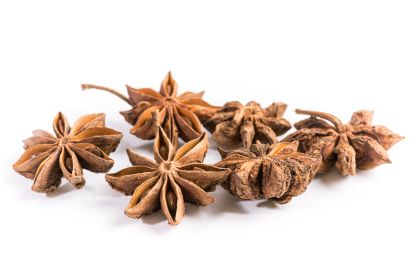
    Star anise -an overview

    Star anise is familiar to Indian kitchens as one of the key spice ingredients adding flavors to Indian cuisines. It is a fragrant licorice smelling spice used chiefly in cooking Biriyanis and delicious seafood reciipes since antiquity. Star anise is popularly known as “chakra phool” due to its wheel like shape.

    Star anise [illicium verum] is a medium sized evergreen tree native to South east Asian countries, particularly China. The Chinese star anise is well known for its quality and comparatively low propensity to trigger allergy. It is a safe variety of star anise to consume.

    The leaves of the tree are fragrant and the tree yields pink to red flowers also. This spice seed is taken from the fruits of the tree. The fruit is a capsule-like follicetum, star-shaped, reddish-brown, and contains six to eight follicles arranged in a whorl.

    Star anise as a food ingredient provides numerous health benefits. The spice is a treasure-trove of numerous biologically active compounds which protect against various lifestyle diseases afflicting the mankind.

    According to recent medical research studies, this flavoring ingredient offers great health benefits due to the presence of antioxidant compounds within it. Let us have a glimpse at the health benefits star anise provides.

    Health benefits of star anise

    • Antioxidant property

    Star anise contains several types of polyphenols and flavanoids. Phenolic compounds in star anise include p-coumeric acid, gallic aid, cinamic acid, chlorogenic acid and ferulic acid. Catechin and rutin are the major flavonoids. Antioxidants protect against oxidative stress related diseases to body organs such as lifestyle diseases, cancer etc.

    • Antimicrobial &anti-inflammatory properties

     Apart from the antioxidant property to remove oxidative stress to cells of human body, star anise has anti-microbial and anti-inflammatory properties owing to the presence of these compounds in it :

    Linalool

    Quercetin

    Anethole

    Shikimic acid

    Gallic acid

    Limonene.

    Shikimic acid imparts it the antiviral property to fight against viral infections.

     The flavonoid anethole provides it antifungal properties.

    Star anise has the potential to inhibit the production of pro-inflammatory cytokines (Tumor necrosis factor alpha (TNF-α) and interleukin-1 beta (IL-1β)). It also helps to reduce oxidative stress.

    In a nutshell, star anise protects your body against microorganisms causing inflammations and infectious diseases.

    • Obesity & cholesterol reducing potential

    A study [2] showed that star anise tea consumption significantly reduced the overweight  and BMI. Furthermore, it significantly lowered the levels of serum total cholesterol, triglyceride, LDL and VLDL were observed in the study. It is a hopeful news that star anise helps to decrease bad cholesterol and fat accumulation within the body and prevent heart attacks and strokes chiefly along with other complications of obesity.

    Culinary use of star anise:

    It is used in Indian subcontinent chiefly as a flavoring agent added mostly to various types of Biriyanis and Masala chais. It has an equal significance in Chinese cuisines also as one of the quintessential flavoring ingredients commonly known as”the five spice powder”.

    Caution regarding consumption of star anise :-

    Consume only a very small amount of this spice. Chinese variety is generally safe. Excess intake may cause allergy,

     Copyrighted Dr sanjana p (Dr sanjana vb)

    References

    1. https://biomedpharmajournal.org/vol15no2/antioxidant-and-anti-inflammatory-activity-of-star-anise-illicium-verum-in-murine-model/  Antioxidant and Anti-Inflammatory Activity of Star Anise (Illicium Verum) in Murine Model,Ibrahim S Majal.Department of medical laboratory sciences, Mu’tah University, Karak Jordan
    2. https://pmc.ncbi.nlm.nih.gov/articles/PMC9686881/
  • Capsicum to improve your cardiovascular health

    Capsicum is known for its antioxidant, anti-inflammatory, and antimicrobial activities. It also helps to reduce the prevalence of type 2 diabetes and obesity. Capsicum has role in reducing cholesterol and hence cardiovascular diseases.

    Generally peppers belong to the genus Capsicum. Some commercially grown species of capsicum include C. annuum, C. frutescens, C. chinense, C. pubescenes, and C. baccatum . Among these C. annuum is grown most extensively worldwide.

    Capsicums  are an excellent source of phytochemicals, such as anthocyanins, vitamins, phenolic acids, flavonoids, carotenoids, and capsaicinoids

    Nutritional value

    Capsicum contains many valuable nutrients and phytochemicals

    It has been found that vitamin C, an effective antioxidant, is high in red peppers , while vitamin E is high in dried chili peppers.

    The capsicums contain fiber and some minerals such as:

    iron

    calcium

    copper

    manganese

    molybdenum

    amino acids such as:

    tryptophan

    phenylalanine

    lysine

    Health benefits of capsicum

    Capsicum can be found as an integral part of Mediterranean and continental foods. It is also used in Asia and middle East countries widely. However, many people are not aware of the health benefits capsicum provides.

    It is rich in nutrients and antioxidants.  Therefore, capsicum has protective effect on your heart , brain and immune system. It helps to reduce the impact of lifestyle diseases on your health including heart attack, diabetes, stroke &obesity.

    •          Anti-inflammatory properties

      Capsicum helps to reduce inflammation due the presence numerous antioxidants and phytochemicals within it.

    •          Antibacterial properties

    Capsicum is effective against microbes, particularly against bacteria. One research study show inhibitory effect of the extract of Capsicum annuum bell pepper type was evaluated against Salmonella typhimurium and Pseudomonas aeruginosa. The study shows that capsicum extracts kill bacteriae [2].

    • Helps to reduce blood sugar; anti-diabetic effect.

    Studies suggest capsaicin has several actions that have an anti-diabetic effect. This is achieved by reducing insulin resistance, which makes it easier for blood glucose to get inside cells from the bloodstream.

     Capsaicin also helps prevent obesity, which predisposes for diabetes.

    • Helps to reduce cholesterol

    A few studies suggest capsaicin can decrease total cholesterol, triglycerides, and low-density lipoproteins, known as “bad cholesterol.”

    It has been also found that capsicum can increase high-density lipoproteins, known as “good cholesterol.”

    • Reduces blood pressure

     Studies show capsaicin reduces high blood pressure through several benefits. These include releasing substances that dilate blood vessels, suppressing an enzyme that narrows blood vessels, and stimulating increased urination, which reduces blood pressure by helping remove excess fluid.

    References

    1. Anti-inflammatory effects of red pepper (Capsicum baccatum) on carrageenan- and antigen-induced inflammation

    Fernando Spiller 1, Márcia K Alves et al. Journal of Pharmacy and Pharmacology, Volume 60, Issue 4, April 2008, Pages 473–478, https://doi.org/10.1211/jpp.60.4.0010

    • Antibacterial activity of Capsicum extract against Salmonella typhimurium and Pseudomonas aeruginosa inoculated in raw beef meat

    Mónica Careaga 1, Elizabeth Fernández, Lidia Dorantes, Lydia etal.

    PMID: 12745238 DOI: 10.1016/s0168-1605(02)00382-3

    • https://pmc.ncbi.nlm.nih.gov/articles/PMC6770197/
    • https://www.freepik.com/free-photo/close-up-portrait-beautiful-woman-smiling-showing-yellow-pepper-vegetarian-girl-making-dinner_76274720.htm#fromView=search&page=1&position=1&uuid=b4d91212-e03c-4aff-bf8a-e5ef074413d2&query=Capsicum+eating+woman