

Tag: dr sanjana p souparnika

  • Eye exercises for digital eye strain

    Do your eyes feel strained after working with computer or mobile screen for long? it is high time that you should take measures to prevent digital eye strain.

    Digital eye strain is of late a common problem affecting all age groups from children to adults across the world.

     Computer vision syndrome is commonly referred to as digital eye strain, and it includes a group of symptoms related to eyes and vision resulting from prolonged usage of computer, tablet, and cell phones.

    Prolonged exposure to digital gadget screens causes eye discomfort and vision problems and the level of discomfort increases with duration of exposure.

    What is the cause of digital eye strain?

    Your eyes get fatigued by constant and prolonged exposure to digital screens of devices and gadgets. Increased screen time compels your eyes work harder in unusual ways and predispose many individuals to develop vision-related symptoms.

     Furthermore, a few pre- existing vision problems in people, including far sightedness, astigmatism, age related vision changes [ presbyopia ]  complicate the computer vision syndrome or worsen it.

    During your digital interaction with a mobile or computer screen the work your eye muscles and other cells and tissues do is entirely different from that done while reading a book. Often the letters on the computer or handheld device are not as precise or sharply defined, the level of contrast of the letters to the background is reduced, and the presence of glare and reflections on the screen may make viewing difficult.

    Moreover, the sitting posture and distance to screen and exposure time to screen also affect the focus and eyesight.

    Thus, the eye focusing and eye movement requirements for digital screen viewing can place additional demands on the visual system.

    Uncorrected or under corrected vision problems can be major contributing factors to computer-related eyestrain. It is not uncommon that people who have an eyeglass or contact lens prescription may find it’s not suitable for the specific viewing distances of their computer screen.

    Symptoms of digital eye strain

    The most common symptoms of digital eyestrain include:

    • Eyestrain.
    • Headaches.
    • Blurred vision.
    • Dry eyes.
    • Neck and shoulder pain.

    There are various factors accounting to these symptoms including:

    Poor lighting.

    Poor seating posture.

    Uncorrected vision problems.

    Glare on a digital screen.

    Improper viewing distances.

    Mostly multiple factors synergistically operate to cause these symptoms in people of all age groups.

    How digital eye strain is detected?

    There are many tests and processes to find out it.

    You may check your vision and other symptoms consulting with an ophthalmologist. Sometimes this problem may need preventive as well as curative treatment.

    The common processes done here include

    • History taking.
    • Visual acuity tests are routinely done to assess the extent to which vision may be affected.
    • Assessment to determine the appropriate lens power needed to compensate for any refractive errors (nearsightedness, farsightedness or astigmatism) also is done.
    • Testing how the eyes focus, move and work together is important in order to obtain a clear, single image of what is being viewed by the eyes. It must effectively change focus, move and work in unison. This testing will look for problems that keep the eyes from focusing effectively or make it difficult to use both eyes together.

    Eye exercise for reducing digital eye strain

    1. Focusing exercise

    Hold your pointer finger a few inches away from your eye.

    Focus on your finger.

    Slowly move your finger away from your face, holding your focus.

    Look away for a moment, into the distance.

    Focus on your outstretched finger and slowly bring it back toward your eye.

    Look away and focus on something in the distance.

    • Near and far vision exercises

    Hold your thumb about 10 inches from your face and focus on it for 15 seconds.

    Find an object roughly 10 to 20 feet away and focus on it for 15 seconds.

    Return your focus to your thumb.

    3.Figure eight exercise

    This exercise needs to be done from a seated position.

    Choose  a point on the floor about 10 feet in front of your eyes and focus on it.

    Trace an imaginary figure eight with your eyes here.

     Do tracing for 30 seconds, then switch directions.

    • The 20-20-20 rule

    Eyestrain is a problem for many people as they continuously focus eyes on bright screen light .

    If you work at a computer  for a long period of time, the 20-20-20 rule may help prevent digital eyestrain.

    How to apply this 20-20 rules for the well-being  of your eyes?

     To implement this rule, every 20 minutes, look at something 20 feet away for 20 seconds.

    Many of the visual symptoms experienced by users are only temporary and will decline after stopping computer work or use of the digital device. However, some individuals may experience continued reduced eye sight  such as blurred distance vision, even after stopping work at a computer.

    Can exercise alone help your eye health?

    These self-help eye exercise programs may help you improve your eye strain and fatigue. But no scientific data support it.  However , experiences show that it helps to reduce eye fatigue.

     A ophthalmologist’s help may be needed for prescribing the correct glasses for  your nearsightedness, farsightedness, presbyopia, or astigmatism.

     Similarly eye exercises do absolutely nothing for glaucoma or macular degeneration — serious diseases that require professional medical help.

    Eyeglasses or contact lenses prescribed for general use may not be adequate for computer work. Lenses prescribed to meet the unique visual demands of computer viewing may be needed.

    Special lens designs, lens powers or lens tints or coatings may help to maximize visual abilities and comfort.

     Better body posture and positioning of computer helps to reduce digital eye strain

    Proper body positioning , lighting conditions, chair comfort, location of reference materials, the position of the monitor, and the use of rest breaks play crucial role in reducing digital eye strain.

    Location of the computer screen is very important. Most people find it more comfortable to view a computer when the eyes are looking downward. Optimally, the computer screen should be 15 to 20 degrees below eye level (about 4 or 5 inches) as measured from the center of the screen and 20 to 28 inches from the eyes.

    Reference materials.

     These materials should be ideally placed above the keyboard and below the monitor. Otherwise, a document holder can be used beside the monitor. Here the goal is to position the documents at eye levels, so the head does not need to be repositioned from the document to the screen.

    Lighting

     Position the computer screen in such a way to avoid glare, particularly from overhead lighting or windows.

    Use blinds or drapes on windows and replace the light bulbs in desk lamps with bulbs of lower wattage.

    Anti-glare screens also can be used. If there is no way to minimize glare from light sources, consider using a screen glare filter. These filters decrease the amount of light reflected from the screen.

    Seating position

     Use a comfortably padded a conform to the body. Chair height should be adjusted so the feet rest flat on the floor. Arms should be adjusted to provide support while typing and wrists shouldn’t rest on the keyboard when typing.

    Rest breaks.

    Give rest to eyes when using the computer for long periods. Resting the eyes for 15 minutes after two hours of continuous computer use. Also, for every 20 minutes of computer viewing, look into the distance for 20 seconds to allow the eyes a chance to refocus.

    Blinking.

     Blink frequently to reduce dryness of eyes when using a computer.Blinking helps to keep your eye moist.

    Regular eye examinations and proper viewing habits can help to prevent or reduce the development of the symptoms associated with CVS.

    How to prevent digital eye strain?

    • Use appropriate spectacles or glasses which suits your work and vision.
    • People may be benefitted from one of the new lens designs made specifically for computer work.
    • Minimize discomfort from blue light and glare. Blue light from LED and fluorescent lighting, as well as monitors, tablets and mobile devices, can negatively affect vision over the long term. Special lens tints and coatings can reduce the harmful impact of blue light.
    • Minimize glare on the computer screen by using a glare reduction filter, repositioning the screen or using drapes, shades or blinds.
    • Keep your computer and mobile screen dirt-free and removing fingerprints on it for better clarity.
    • Adjust work area and computer for comfort. When using computers, most people prefer a work surface height of about 26 inches. Desks and tables are usually 29 inches high. Place the computer screen 16 to 30 inches away. The top of the screen should be slightly below horizontal eye level. Tilt the top of the screen away at a 10- to 20-degree angle.
    • Use an adjustable document holder. Place reference material at the same distance from eyes as the computer screen and adjacent to it. This may help the eyes to avoid changing focus when looking from one to the other.

     In a nut shell, follow healthy habits to improve vision reducing digital eye strain. Consult your ophthalmologist if you have any kind of vision problems and use the right kind of lenses. At the same time discuss with your ophthalmologist about the nature of your work, particularly if you use computer for the entire day. If glasses are worn for distant vision, reading or both, they may not provide the most efficient vision for viewing a computer screen, which is about 20 to 30 inches from the eyes. Tell the doctor about job tasks and measure on-the-job sight distances.  If you provide the accurate information to your doctor or optometrist it will help, get the best vision improvement.

    Written by dr sanjana p souparnikaaaa

    References

    1. https://www.aoa.org/healthy-eyes/eye-and-vision-conditions/computer-vision-syndrome?sso=y
    2. https://pmc.ncbi.nlm.nih.gov/articles/PMC9434525/
    3. https://www.health.harvard.edu/staying-healthy/effective-tips-for-reducing-eye-strain#:~:text=When%20eye%20strain%20is%20caused,when%20looking%20at%20a%20screen.
    4. https://www.ijceo.org/article-details/14170
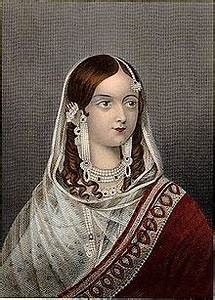
  • Begam Hazrat Mahal

    Begum Hazrat Mahal was  a Muslim ruler of Awadh, India well- known forher bravery in taking control of ‘Awadh’ after he husband was exiled by the British empire. She rebelled against the british east india company during the Indian mutiny of 1857. Begum Hazrat Mahal (c. 1820 – 7 April 1879), also known as the Begum of Awadh, was the second wife of  Nawab of Awadh , and the regent of Awadh in 1857–1858.

    Early life

    No concrete data is available about the childhood of Begam hasrat mahal.She was born in 1820 at Faizabad, the former capital of Oudh State. 

    She was known by the name Muhammadi khanum in the earlier part of her life and was brought up as a dancing girl by her parents, who then sold her to the royal Palace- harem of the ruler of Awadh.

    Her life in the palace of Awadh began as a ‘khawasin’ (maid), and later promoted  as ‘pari’ (fairy). Later she became the concubine of the nawab of Awadh Wajid Ali Shah. During that relationship with nawab she gave birth to a son, Birjis qadar, the tajdaar-e-Awadh. The nawab married her, to make the son his legitimate heir, and then named her Begam Hazrat Mahal, the name with which she is known to history of India.

    The British East India company annexed Awadh in February of 1856, in its conquest of Indian states and annexation to British empire. As per the contract with East India company Nawab of Awadh agreed to be pensioned off to Calcutta and begam was not part of that entourage. Begam Hazrat Mahal was left in Awadh and she decided to fight for her rights in Awadh remaining with people of the land.she made her son, Prince Birjis Qadr, the ruler of Awadh, with herself as regent during his minority.

    In 1857  the sepoy mutiny erupted due to the  prolonged resentment and intolerance with the reign of East India company among Indian soldiers. Its repercussions echoed in Awadh too.

     Begam Hazrat Mahal  and her people made an army against the British East India company and decided to fight. She rebelled against the forces of the British under the leadership of Raja Jailal Singh; they seized control of Lucknow and she took power as the guardian of her minor son, Prince Birjis Qadr, whom she had declared as the ruler.

     As regent, she automatically came to have a leadership role in the rebellion against the British.

    Begam Hazrat Mahal took control of affairs as her son’s regent of Awadh and fought relentlessly for ten months against the British.  She was praised by many people of her time, ranging from the ordinary citizen of Awadh to the Mughal emperor – Bahadur shah jafar  for her courage and exemplary rule.

    Hazrat Mahal worked in association with Nana saheb, but later joined the Maulavi of faizabad in the attack on Shahjahanpur.

     A few British accounts of the battle of Musa bagh in Lucknow, testify that the begum was personally present in the battle ground, fighting and rallying the 9,000  rebels there. She was found in the war field riding an elephant during the battle as well.

    But It was difficult to stand against the mighty British for long for a small state like Awadh. She had to withdraw herself in front of the fire power and strategic help of other regions to British. However, she was not ready to surrender to the British army and live in exile.

    At the end of the war begam rejected the pension and mercy of British throne. She slipped out of Lucknow to the Himalayan belt fighting with the army and sought refuge in Nepal. She lived in Nepal till her last breath with no wealth left. Yet she was not ready to surrender to British throne even in those adverse circumstances. When she died in Nepal in 1879, it was very difficult to find money even for a grave for the people around her.

    Begum Hazrat Mahal’s tomb is located in the central part of Kathmandu near Jama Masjid, Ghantaghar,

    She will be remembered in the history of India for the exemplary courage with which she fought against British army and later preferring an ordinary life rejecting their agreement of  pension by surrendering.

    After her death, on the occasion of the jubilee of  Queen of England (1887), the British Government pardoned her son Birjis Qadr and he was allowed to return to India.

    Memorials & honours

    On 15 August 1962, Begam Hazrat Mahal was honoured at the Old Victoria Park in Hazratganj, Lucknow for her role in the Great mutiny in 1857. The renaming of the park to Begam Hazrat mahal park in her honour took place in this year and also a marble memorial was constructed, which includes a marble tablet with four round brass plaques bearing the coat of arms of the Awadh royal family. 

    A scholarship is given in her name through Maulana azad foundation to meritorious Girls belonging to minority communities by the government of India.

  • Badami cave temples, Karnataka

    The Badami cave temples are a complex of Buddhist, Hindu and Jain cave temples located in Badami, an ancient heritage town in the Bagalkot district in northern part of Karnataka, India. This is an instance of rock cut temple built in Chalukya architectural style

    .

    History & geographical location

    The Badami cave temples are located about 142 km east of Belagavi and 140 km northwest of Hampi.

    Badami   a heritage town, was previously known as “Vataapi”, the capital of the early Chalukya dynasty. Chalukyas ruled a significant portion of Karnataka from the 6th to the 8th century. Badami is situated on the west bank of a man-made lake Agastya Teertha ringed by an earthen wall with stone steps. In this serene heritage town, you can feel the footsteps of history in the vestiges and artefacts centuries have left behind.

        It is surrounded on the north and south by forts built during Early Chalukya  reign and in later times. The Malaprabha River is flowing silently [4.8 km away)  through this pilgrim land of ancient architectural marvels. The journey to Badami cave temples will definitely provide you an enthralling and delightful experience transporting into another period of time.

      The UNESCO world heritage site Pattadakal  [23km]and  Aihole – another site with over a hundred ancient and early medieval era Hindu, Jain and Buddhist monuments[ 35km] are close to Badami.

    The Badami temple complex has principally 4 caves. The first three caves feature sculptures of Hindu gods and legends focusing on Shiva and Vishnu, while Cave 4 features Jain icons and themes.

        It is believed that the cave temples are built in the late 6th century onwards. The exact dating is known only for Cave 3, which is a Hindu temple dedicated to Lord Vishnu.

    An inscription found here records the dedication of the shrine by Mangalesha in Saka 500 (solar calendar, 578/579 CE). The inscription is written in the old Kannada language and it denotes the dating of these rock cave temples to the 6th century. This makes the cave 3 temple of Badami as the oldest firmly-dated Hindu cave temple in India.

    Architecture of Badami cave temples

    The temple is built on a rocky terrain in red sandstone and here you can explore the Chalukya architectural style.The Badami rock temple caves include 4 caves, all in the escarpment of the hill in soft Badami sandstone formation, to the south-east of the town.

    The complex includes four caves principally, although a few caves are also located in the premises. Around the lake, Badami has additional caves and one of them is believed to be a Buddhist cave. Another Cave like gallery known as Arali Tirtha has around twenty-seven carvings.

    Four cave temples in the escarpment of the hill to the south-east of the town were carved into the cliff’s monolithic stone face. The escarpment is above a man-made lake called Agastya Teertha, created by an earthen dam faced with stone steps.

     The largest and highest cave is Cave 3 in the complex and it is situated further to the east on the northern face of the hill. The fourth cave, Cave 4, is a few steps down further east. The cave has fine carvings exhibiting matured stage of Karnataka ancient art. Cave 4 is dedicated to revered figures of Jainism.

    The artwork in Caves 1 and 2 exhibit the northern Deccan style of the 6th and 7th centuries, while those in Cave 3 represent two ancient Indian artistic traditions; the northern Nagara and the southern Dravida styles.Cave 3 also shows icons and reliefs in the so-called Vesara style, a fusion of ideas from the two styles, as well as some of the earliest surviving historical examples in Karnataka of yantra-chakra motifs (geometric symbolism) and colored fresco paintings.

     Cave 1 is a Hindu temple and here you can find various sculptures of Hindu divinities and themes along with  a prominent carving of the dancing Shiva as Nataraja. Cave 2  goes in the same architectural line of cave 1 in  its layout and dimensions, featuring Hindu subjects of which the Hari Hara, Ardhanari shiva, Mahishamardini, Dwi Bahu Ganesha and Skanda in a separate antechamber on extended cave at western side-next to great Nataraja sculpture. The Cave 2 also has premier images  of Vishnu as Trivikrama and it is the largest.

    The largest cave, Cave 3, featuring Vishnu as Ananta seated on coiled serpent, Varaha with Bhudevi, Harihara, Narasimha in standing posture, great image of Trivikrama and Virata Vishnu.

    which Alice Boner – a Swiss art historian and Indologist, states is a time division symbolizing the cosmic wheel.

    The Badami cave temples- Interior architecture &themes

    Cave I of Badami   :

    Nataraja Carving is the significant feature of this cave. The cave depicts the Tandava-dancing Shiva as Nataraja on the rock face to the right of entrance. The image, 5 feet (1.5 m) tall, has 18 arms (9 in left and 9 on right) in a form that expresses the dance position (about 9×9=81 combinations in total) arranged in a geometric pattern. The eighteen arms express Natya mudras (symbolic hand gestures), with some holding objects such as drums, a flame torch, a serpent, a trident and an axe.

    Shiva has his son Ganesha and the bull Nandi by his side.

    The wall depicts the goddess Durga of Shaktism tradition slaying the buffalo-demon Mahishasura. The carvings and its accuracy show that sculptors who built this cave temple  were  very proficient in the Natya mudras of Bharatanatya dance form.

    Mahisasura Mardini Carving

    On the right side of the Nataraja carving is a carving of Mahishasura mardini with Chaturbhuja (Chatur means 4, Bhuja means hands). The sculpture depicts the killing of the demon Mahishasura by godess Durga.  According to legends and myths Mahishasura, a demon was the son of Mahisi and great grandson of Bhahmarishi Kashyapa.

    On the left of the entrance is a two-handed Shaiva dvarapala who holds a trident, and below him is a bull-elephant fused image where they share a head; seen from left it is an elephant and from right a bull.

    Harihara Carving

    Inside the veranda, the cave depicts a carved sculpture of Harihara, a 7.75-foot (2.36 m) high sculpture of a fused image that is half-Shiva and half-Vishnu. He is flanked by the goddesses Parvati and Lakshmi on each side.

    Ardhanareshwara Carving

    To the right, toward the end of the wall, is a relief sculpture of Ardhanarishvara, a fused image of Shiva and his consort Parvati. One half of the image has Shiva with a moon on his mukuta (head), snakes in his hands, earrings and next to the half that represents Parvati is an attendant carrying a tray of jewels.

    It delineates the vision of the Chalukya kings delivering message to the Chalukya citizens about gender equality.

    On the ceiling of this cave  are images of the Vidyadhara couples as well as couples in courtship and erotic Mithuna scenes.

     Through a cleft in the back wall of the cave is a square sanctuary with more carved images.

    In the mantapa is a seated Nandi facing the garbha ghruha (sacrum sanctum) containing a Shiva linga.

    Cave 2 of Badami

    Cave 2 is above and to the east of Cave 1 and faces north. It was built in late 6th or early 7th century. It is smaller than Cave 1 and it is dedicated primarily to Lod Vishnu. It depicts the legend of Vishnu in his Trivikrama form.

    Inside the temple are friezes showing stories from Hindu texts such as the Bhagavata Purana. These show the legend of cosmic ocean churning (Samudra Manthan) and Krishna’s birth and flute playing indicating the theological and cultural significance of these in 7th century India.

     The ceiling and door head carvings show Gajalakshmi, the swastika symbols, flying couples, Brahma, Vishnu.

    The ceiling of Cave 2 shows a wheel with sixteen fish spokes in a square frame. The end bays have a flying couple and Vishnu on Garuda.

    Cave3 of Badami

    Cave 3 is considered as the earliest dated Hindu temple in the Deccan region. It is dedicated to Lord Vishnu and it is the largest cave in the complex.

    The cave is facing north, 60 steps from Cave 2 at a higher level. The cave is 15 feet (4.6 m) high; it is supported by six pillars, each measuring 2.5 square feet (0.23 m2). It has intricately carved friezes and giant figures of Trivikrama, Anantasayana, Vasudeva, Varaha, Harihara and Narasimha.

    This temple is built in Vaishnavite theme; however, it also shows Harihara on its southern wall –  half Vishnu and half Shiva shown fused as one.

    Cave 3 also shows fresco paintings on the ceiling, some of which are faded and broken. These are among the earliest known surviving evidence of fresco painting in Indian art.

     The Hindu god Brahma is portrayed on Hamsa vahana in one of the mural paintings. The wedding of Shiva and Parvati, attended by various Hindu deities is depicted in another painting.

    Cave 4 of Badami

     The cave 4 is located immediately adjacent to and east of Cave 3.  The floor is situated about 10 feet lower and is the smallest of the four caves of this land. It is dedicated to Tirthankaras, the revered figures of Jainism.

    It was constructed after the first three, sponsored by Hindu kings in later part of the 7th-century. Some scholars are of the view that this cave may have been created in the 8th century.

     Also it has been proposed that some  embellishments seems to be added in the  subsequent centuries until about the 11th or 12th century.

    Cave 4  shows detailed carvings and a diverse range of motifs. The cave has a five-bayed entrance with four square columns – each with brackets and capitals. To the back of this verandah is a hall with two standalone and two joined pillars

    Inside the cave are major carvings of Bahubali, Parshvanatha and Mahavira with symbolic display of other Tirthankaras.

    Bahubali is standing in Kayotsarga meditating posture with vines wrapped around his leg, his classic iconography. Parshvanatha is shown with the five-headed cobra hood.

    Mahavira is represented sitting on a lion throne.

    Other carvings include Indrabhuti Gautama covered by four snakes, Brahmi and Sundari.

    In the sanctum is an image of Mahavira resting on a pedestal containing a 12th-century Kannada inscription marking the death of one Jakkave. Twenty-four small Jaina Tirthankara images are engraved on the inner pillars and walls. In addition there are idols of Yakshas, Yakshis and Padmavati.

    Other unnamed caves of Badami

       Apart from the numbered 4 main caves of Badami, this land has a few other centuries old caves with statues and carvings.  History sleeps in this land of temples which is believed to be built in medieval era. On the other side of the lake, near the Bhutanatha temple, there is a 7th-8th century Chalukya period cave with a carved statue seated over a sculpted throne with reliefs showing people holding chauris (fans), a Pipal tree, elephants, and lions in an attacking pose.

         According to colonial-era texts of John Murray – a Jainism scholar  & missionary in British India, the main image carved in this Cave  is that of a Jaina figure.  However, it has been contradicted by archeologists Henry Cousens and A. Sundara and their views have been buttressed by local legends, which proposes that the statue is of an ancient king.  Because in a photograph of the statue taken before its face was damaged, the figure lacked the Ushnisha lump that typically found with Buddha’s image.

    The statue has several unusual, non-Buddha ornaments such as rings for fingers, a necklace, and a chest-band; it wears a Hindu Yajnopavita thread and its head is stylistically closer to a Jina head than a Buddha’s head. These features point out that the statue may be of a king represented with features of various traditions. There are no clear-cut evidence regarding the century of construction of this main statue.

     Adjacent to the controversial cave are other monuments belonging to the ancient centuries. One of them is a small shrine consisting of a 7th-century rock carving of Anantashayana Vishnu, or reclining Vishnu with Lakshmi and Garuda in namaste posture.

    In 2013, Manjunath Sullolli, Assistant Director of Bagalkot district working for the state government of Karnataka, reported the discovery of another cave with 27 rock carvings, about 500 metres (1,600 ft) from the four main caves.

    Water gushes from this newly discovered cave year-round. It depicts Vishnu and other Hindu deities, and features an inscription in the Devanagari script. The dating of these carvings also is unknown.

    Best time to visit Badamicaves

    November to February is the best season to visit. The weather is fine cool and and clear. Other months are less recommended as scorching summer or Monsoon rain may make it difficult to travel and explore.

    Internet Connectivity

    BSNL or Cell one connectivity is available

    How to reach Badami ?

    The nearest airports to Badami in Karnataka are Hubli and Belgam. Hubli is connected to Banglore and Mumbai airports.

     From Hubli cabs are available to Badami[105km].

    From Belgam to Badami [150km]

    Badami is connected to other cities by bus.

    For international travelers

    Flight to Banglore and train to Badami [447km]-7 hours 51 minutes

    Flight to Pune airport[Mumbai] and then train to Badami[470km] 9 hours 28 min

    Flight to Hyderabad [Andrapradesh]airport and train to Badami.[420km] 9 hours 32 min

    References

    1.Evolution of Temple Architecture – Aihole-Badami- Pattadakalhttps://whc.unesco.org/en/tentativelists/5972

    2. Badami around the Tank:

    Western Chalukya Monuments

    http://www.art-and-archaeology.com/india/badami/baplan.html

    3. cave 4 Badami. http://www.art-and-archaeology.com/india/badami/cave403.html

    4. Chronology and Development of the Chāḷukya Cave Temples https://www.jstor.org/stable/4629258

    5. Badami cavetemples. https://en.wikipedia.org/wiki/Badami_cave_temples

    6. Upinder Singh (2008). A History of Ancient and Early Medieval India: From the Stone Age to the 12th Century

  • Sustainable living

    Sustainable living is a method of reducing one’s “carbon footprint”. In this life style people learn to minimize their use of Earth’s resources and reduce the personal and environmental impact. It also includes healthy organic food choices.

    Sustainable living means we prioritize the use of natural and renewable resources instead of creating excess waste and depleting environmental resources for future generations. Sustainable living can counteract climate change and other negative environmental concerns happening from human activity of exploiting natural resources.

    Sustainable living is a practical life style choice or philosophy that aims to reduce personal and environmental impact by making positive changes.

    More precisely, sustainable living is a method of reducing one’s “carbon footprint”.

    In this life style people learn to minimize their use of Earth’s resources and reduce the  personal and environmental impact.

    Sustainability or sustainable living was an idea proposed to create and maintain the conditions under which humans and nature can exist in productive harmony to support present and future generations.

    Living sustainably means” curb expenditure” in order to protect and improve our environment.”

        The natural resource base to supply food is being threatened by overfishing, land degradation, and more human activities exploiting natural resources. All these unbridled exploitations are polluting the world’s freshwater supplies faster than nature can purify them, and excessive use of water is contributing to global water stress. And household energy usage is contributing to 21 percent of consequential CO2 emissions.

    A few sustainable living options

    ·       Empower organic farmers & people with agricultural and financial support they needed to make a fair living without cutting down trees.

    ·       Don’t use plastic bags at checkout. Instead, take your own bags for groceries.

    ·       Buy your grains & groceries in bulk from your local farmer’s markets.

    ·       Avoid buying plastic-wrapped products, opt for a paper bag instead.

    ·       Stop buying bottled water. Use your own steel or glass bottles filled with water.

    ·       Shop at bulk food stores for any goods, avoid frequent food travels. Better take products in your own jars or bags.

    ·       Take your own paper bags or a container when buying snacks .

    ·       Support fashion brands that are ethical and environmentally conscious.

    ·       Learn how to find sustainable materials when shopping.

    ·       Go paperless to avoid deforestation or falling down trees for making paper.

    ·       Opt to receive digital letters and notices.

    ·       Send electronic wedding invitations.

    ·       Collect scrap paper in a tray.

    ·       Turn off your computer before leaving work.

    ·       Get rid of your home printer.

    ·       Unplug workstation from ports overnight to reduce phantom power.

    ·       If you need business cards, use an eco-friendly printer.

    ·       Add small pot plants to your workspace. Adopt green office environment

    ·       Always use double-sided printing where possible.

    ·       Juice the off-cuts of your vegetables and fruits.

    ·       Repurpose glass jars usage.

    ·       Use washable metal straws instead of disposable plastic straws.

    ·       Limit the use of hot water when hand washing dishes.

    ·       Use cloths instead of paper towels.

    ·       Make your own coffee instead of buying takeaway.

    ·       Ditch your bin liner or use newspaper instead.

    ·       Start composting the vegetable and food waste.

    ·       Reduce your food waste by eating only what you need.

    ·       Invest in a pressure cooker and reduce your cooking time and save energy.

  • Thalagunda – Pranaveswara temple a connecting link to the history of south India

    This image has an empty alt attribute; its file name thalagunda temple-1.jpg

    Praveswara temple, Thalagunda in Karnataka is an ancient shiva temple of Kadamba dynasty , a monument protected monument by Archeological Survey of India[ASI] due to its historical significance.

    Thalagunda,karnataka

    Thalagunda is a village in the Shikaripura taluk of Shivamogga district in the state of Karnataka, India. The village has been referred as Sthala-Kundura, Sthana-Kundur and Sthana-kunja-pura during ancient period. This hamlet is situated about 45 km from Banavasi, 20 km from Soraba and 7 km from Siralkoppa town.

    There are many ancient temples in Thalagunda village including pranaveshvara, gangaadhareshvara, trineetra and veerabhadra temples. Praveswara temple is a protected monument by Archeological Survey of India[ASI] due to its historical significance.

    According to the inscription found in the pillar of pranaveswara temple, it can be assumed that the temple was worshiped by earlier rulers including the Satakarnis. The temple dates back to the Satavahana period. However the current findings of architecture denotes that it is not of the Satavahana period but of the early Kadambas although explorations around the temple premises had revealed brick structure of the Satavahana period.

    Pranaveswara temple

      The temple is a small square building consisting of a garbhagriha and a sukanasi. There is a huge Shivalinga inside the sanctum. The garbha-griha doorway jambs are carved out of Kadamba inscription stones, the entrance doorway construction style denotes that it is of a later period, perhaps of the eleventh century CE.

    Thalagunda inscription pillar

    The Talagunda pillar inscription of Kakusthavarman is a well known epigraphic record in Sanskrit found in the ruined pranaveswara temple. The pillar is located in front of the Pranavalingeshwara temple.

    The inscriptions are engraved on hard grey granite and dated to between 455 and 470 CE. It throws light into the history of Kadamba dynasty and the reign of king Śāntivarma in northwest Karnataka.

    The pillar is 1.635 metres (5.36 ft) high with a 0.4 metres (1.3 ft) square top. It is octagonal shaft that slightly tapers and narrows as it goes up. The width of the octagonal face is 0.178 metres (0.58 ft). The inscription is found on all faces, but on 7 of the 8 faces, it consists of two vertical lines that start at the bottom of the pillar. On the eighth face, we can find just one short line.

    The inscription consists of 34 poetic verses that respect the chanda rules of Sanskrit. It is the earliest epigraphical evidence found in Karnataka about the existence of a Hindu temple dedicated to Shiva in Talagunda, the construction of a temple water tank, and the practice of worshipping the Shiva Linga before about 450 CE.

    The inscription unravels the glory of Kanchipuram as a center (ghatika) for advanced studies in ancient India, where the already learned Brahmin Mayurasarman from Talagunda goes with his counsellor to study the whole Veda. It also throws light into the cultural values and customs prevailed in the 5th-century India with the mention of “music” and goddess of wealth (Lakshmi) and speaks about the practice of marriage between north Indian and South Indian empires.

    How to reach Thalagunda ?

    The nearest railway station is Shivamoga .You may reach Manglore or Bangluru by flight and may reach Shivamoga by train or bus service. Approximately a one and half hour journey from Shivamoga by cab may help you reach Thalagunda[77.5km].

    References