

Tag: biodiversity

  • Conserve your ecosystems to delay species extinction

    Our ecosystems and its sustainability are intricately linked to numerous factors ranging from human activities to climate change which operate conjointly. The conservation of ecosystem is crucial for the existence of mankind and biodiversity in the coming decades as degradation or decline of ecosystem is associated with natural catastrophes which can wipe out numerous species from this earth forever.
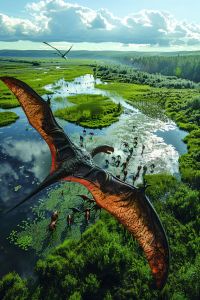
    To conserve the integrity of our ecosystem fundamentally an understanding about the structure and function of ecosystems is crucial.

    What constitutes an ecosystem?

    An ecosystem is a community of living organisms including plants, animals, microbes which interact with each other and the non-living environment (water, soil, air, sunlight) as a functional unit. An ecosystem is characterized by nutrient cycles and energy flows, and can range in size from a puddle to a forest or ocean. The term “ ecosystem “ was first introduced by British biologist Sir Arthur Tansley in 1935.

    Ecosystem is regarded as the functional unit of ecology which is the study of our environment and its organisms. Ecosystems denote the interactions between living organisms and their environment.

    Ecosystems can be classified in different ways. It can be natural, such as forests, oceans, and grasslands, or human-made, such as agricultural systems and urban areas..

     Over a few decades the idea of ” conservation of ecosystems” is fostered all over the globe due to the increased awareness about its role in disaster risk reduction which is simply denoted as Eco-DRR. Natural disasters of high magnitude as well as man-made catastrophes are potent enough to erase many species including mankind or a part of ecosystem altogether.

    Moreover, human survival is dependent solely on the ecosystem that provide food, water, and other essential resources.

    However, it is a fierce fact that human activities pose great threat to our ecosystem in the form of deforestation, pollution, and overexploitation of natural resources. The long-term sustainability and the preservation of this planet earth for future generations is a task that requires tireless efforts for conservation of ecosystem.

    Geohazards such as earthquakes, volcanic eruptions, landslides, and tsunamis could be the consequences of ecosystem degradation and vice versa can  happen  causing extinction of the ecosystems.

    Ecosystem conservation refers to the protection, management, and restoration of ecosystems, and it focuses on maintaining their structure, function, and the biodiversity they support. This strategic movement is implemented giving emphasis to the interdependence of species and their habitats.

    Ecosystem conservation strategies underscore the establishment of protected areas, habitat restoration, and the integration of biodiversity conservation.

    Types of Ecosystems

    1.Terrestrial Ecosystems:

    Terrestrial ecosystems are those that are found on land, such as forests, grasslands, and deserts.

    Grassland ecosystem is dominated by grasses and herbs.

    Forests include the plants, trees, animals &microorganism. Forests act as a major carbon sink and regulate temperature and climate.

    Aquatic Ecosystems: Aquatic ecosystems include sources of water, such as oceans, rivers, and lakes.

    Tundra ecosystem is  the arctic and Antarctic terrains covered with snow.

    2.Urban Ecosystems:

    Urban ecosystems are those man-made urban areas, such as parks, gardens, and green roofs.

    Examples for ecosystems

    • The Amazon rainforest is a natural complex ecosystem that contains a diverse range of plant and animal species. The Aazon rainforest ecosystem is under threat of extinction from deforestation and climate change.
    • The Great Barrier Reef: The Great Barrier Reef is a complex marine ecosystem that includes a diverse range of marine species. The reef is under threat of extinction or degradation  from pollution and climate change.

    Agricultural Systems: Agricultural systems are human-made ecosystems that are used to produce food and other resources. These systems can be managed to promote sustainability and conservation.

    Major issues demanding Ecosystem Management and Conservation

    Habitat Loss:

    Habitat loss caused by human activities such as deforestation and urbanization can endanger the biodiversity of ecosystems in various ways. Deforestation causes massive biodiversity loss through habitat destruction and species extinction.

    Furthermore, it can accelerate climate change releasing stored carbon, reducing CO2 absorption. Deforestation also disrupts water cycles altering rainfall, increasing floods or droughts. It causes severe soil erosion reducing fertility and eventual desertification.

    Pollution:

    Environmental pollution degrades the health of ecosystems.  Air pollution, water pollution, and soil contamination erode the structure of ecosystems. Toxins build up in organisms and become more concentrated up the food chain. This is called bioaccumulation. Heavy metals, pesticides, plastics, and air contaminants (NO3, SO2) bioaccumulate and eventually lead to genetic damage, reproductive failure, and alter the ecosystem resilience.

     Pollutants annihilate organisms either directly or by destroying habitats, cause species extinction.

    Overexploitation of Natural Resources:

    Overexploitation of natural resources cause habitat loss, biodiversity decline, soil erosion, water scarcity and disrupting food webs. For instance, overfishing and mining, undermine the sustainability of ecosystems.

    Invasive Species:

     An invasive species is a non-native organism (plant, animal, microbe) that spreads aggressively in a new environment, causing harm in multiple ways. They outcompeting with native species disrupt the ecological balance. It is a mammoth threat to biodiversity and ecosystem as they can cause extinctions as well as threaten endangered species. To be termed as invasive, they must adapt quickly, reproduce rapidly, and cause significant damage. Eg: kudzu vine, zebra mussels, and lionfish.

    Ecosystem Management and Conservation

    Ecosystem management and conservation involve the following:

    • Understanding Ecosystems:

    Understanding the structure and function of ecosystem involves understanding the interactions between living organisms and their physical and chemical environment.

    • Monitoring Ecosystems:

     Monitoring ecosystems means collecting data on ecosystem structure and function. This data is used to inform management decisions and track changes in ecosystem health.

    • Ecosystem Restoration:

     Ecosystem restoration is the process of restoring degraded ecosystems to their natural state. This process includes reforestation, habitat restoration, and water quality improvement.

    • Sustainable Use:

     Sustainable use of ecosystems involves using natural resources in a way that ensures their long-term sustainability. This can involve activities such as sustainable forestry, fisheries management, and agricultural practices.

    • Policy and Regulation:

     This involves establishing laws and regulations that promote sustainable use and conservation of ecosystems.

    Conclusion

    To sustain on this planet for the generations in the decades and centuries yet to come, we need to conserve our ecosystems from today. Moreover, there is a dire need to mitigate the impact of bioaccumulated toxins in the food chain to survive on this planet at least for the average life span, keeping the quality of life in good state, free from morbidities. To achieve this daunting task a strategic management plan has to be implemented by authorities with participation of common people to preserve the resources and biodiversity with its ecosystem for the posterity.

  • Impact of plate tectonics on biodiversity

     The term “Biodiversity” encompasses a wide variety of life on Earth, with a large diversity of genes, species, and ecosystems. Tectonic plate movements and its consequent climate and habitat change have detrimental impact on biodiversity and evolution of species.

    Biodiversity is a hotly debated and researched topic from time to time by numerous scientists & environmentalists in relation to climate, ecosystems and demographic characteristics. Its significance has been enhanced unprecedently in this modern era as multiple factors influence and impact on biodiversity.

    Biodiversity is integral part of sustenance life on earth as it is essential to sustain the constant flow of clean air, fresh water, and food. Biodiversity plays key role in regulating the climate, and maintaining healthy ecosystems that support human well-being.

    Biodiversity is studied by scientists conducting expeditions to survey and monitor species, habitats, and their interactions. On these expeditions, they collect data on various parameters such as population sizes and trends, distribution and habitat use, and impacts of management or other human activities.

    Since prehistoric times the earth and ecosystems have been subjected to transformations and extinctions. It is an unfortunate fact that currently the impacts on biodiversity are happening in an unprecedented rate.

     There has been an enhanced threat to biodiversity in the recent decades including habitat loss and fragmentation, excessive use of unsustainable resources, pollution, global climate change, emergence of invasive species.

     Biodiversity is influenced by a wide array of factors. The population is exploding all over the world and its impact on biodiversity is unimaginable. Overconsumption of resources and human intervention on biodiversity has adverse impacts on mankind.

    However, plate tectonics have a massive impact on biodiversity creating as well as destroying species and accelerating the process of evolution.

    Plate tectonics

    Movement of tectonic plates on the crust of Earth’s surface [plate tectonics] has major biogeographical consequences. Evidences suggest that tectonic activity began over 4 billion years ago. Collisions or rifting movements of plates creating and destroying habitats of organisms continues spanning centuries. It is happening through continental drift &by forming physical barriers like mountains through plate collisions.

    Modern understanding of planetary dynamics including plate tectonics unravel the habitat loss or creation stemming from geographical changes like this.

    Tectonic plate movement range from 10 to 40 millimetres per year (0.4 to 1.6 in/year). Where the plates meet, their relative motion determines the type of plate boundary as convergent, divergent, or transform.

    [Read more about plate tectonics]

    Tectonic movements are of different types.

    1. Ocean-to-continent subduction, where the dense oceanic lithosphere plunges beneath the less dense continent plate. At zones of ocean-to-continent subduction mountain ranges form.

    2. Ocean-to-ocean subduction where older, cooler, denser oceanic crust slips beneath less dense oceanic crust. Deep marine trenches are typically associated with subduction zones.

    3. At continental collision zones two masses of continental lithospheres are converging. As they are of similar density, neither is subducted.

    The plate edges are compressed, folded, and uplifted forming mountain ranges,

    4. At zones of ocean-to-ocean rifting, divergent boundaries form by seafloor spreading, allowing for the formation of new ocean basin. Two plates slide apart from each other.  This rifting when happens on oceanic plates it leads to formation of new ocean basin.

    5.Transform boundaries (conservative boundaries or strike-slip boundaries)

     Here plates are neither created nor destroyed. Instead, two plates slide, or precisely they grind past each other, along transform faults. Strong earthquakes may happen along a fault.

    Impact of plate tectonics on biodiversity

    Tectonic movements and continental deformation consequent to that lead to complexity of habitat. They trigger a complex landscape response. For instance, a river network reorganization including river captures by tectonic forces leads to an unusually high diversity of habitat through isolation, creation or destruction of facets of the landscape.

     Building of mountain barriers consequent to plate tectonics quite often lead to isolation and speciation, and connecting landmasses via land bridges that allow for species migration and exchange.

     These movements of tectonic plates also drive global climate shifts, influencing the distribution and evolution of life.

    Let us delve deeper into the tectonic impact on geomorphology and its impact on species and biodiversity.

    • Continental drift and habitat formation:

     As continents separate, new continental margins are created during movement of tectonic plates, it creates potential habitats and spurring diversification.

    • Continental collision &new merged habitat formation:

     When the tectonic plates collide, previously separated landmasses can merge again. This may lead to competition between new species and that occupied similar niches in isolation.

    • Land bridges formation & migration

     Plate tectonics can cause sea levels to drop, forming land bridges that connect continents. This new land bridges facilitate migration of species between the continents. A famous example is the Bering land bridge between Siberia and Alaska, which allowed many species, including early humans, to migrate between continents.

    • Isolation and speciation

    The formation of mountain ranges through plate collisions may function as a physical barrier leading to isolation or separating populations and thus preventing gene flow. Over time, isolated populations can evolve independently as new species through a process called allopatric speciation.

    The separation of continents and the formation of ocean basins can act as another kind of barriers driving marine and terrestrial diversification.

    • Climate change and species composition

      Plate tectonics influence global climate patterns drastically by changing ocean currents and creating mountain ranges that affect atmospheric circulation.

    The global climate patterns in turn affects the types of habitats available for organisms. The fossil records elucidate how climate changes drive changes in species composition and distribution.

    • New ecosystems formation

    Geological changes such as the creation of mid-ocean ridges, oceanic trenches, and volcanic island arcs due to tectonic movements eventually lead to the formation of new habitats and ecosystems.

    The subsequent cooling and sinking of oceanic crust can displace seawater, causing global sea levels to rise.

    • Evolutionary patterns of populations from variance

     The splitting of a continuous population by the formation of a physical barrier such as mountains, ocean basins etc. is called vicariance. This can lead to the evolutionary divergence of populations on either side of the barrier.

    • Plate tectonics function as Rift and collision pumps:

     Plate tectonics can be described as a “rift pump” as it increases biodiversity through isolation. It functions as a “collision pump” that enhances competition between new & existing species when continents collide. In either way plate tectonics impacts on biodiversity.

    • Acceleration of evolution:

      The separation and collision of continents compel species to adapt to new environments created.

    This can lead to new evolutionary paths or extinctions.

    The dynamic changes impacted by plate tectonics, including the creation and destruction of habitats, can accelerate the pace of biological evolution.

    Fossil studies reveal that plate tectonics have been associated with profound biogeographical consequences, such as isolation and speciation. Eventually geologically isolated species may emerge as a new species in the new ecosystem.  Similarly, another type of collision of tectonic plates may merge isolated continents forming ridges or land bridges. Now this may cause competition between existing and newly joined species and gradual extinction.

     The impact of plate tectonics on biodiversity and climate is evident in the fossil record of animals with Gondwanan affinities in India and Madagascar.

      The collision of continents can connect previously separated landmasses. The collision of India with Asia as per the fossil studies show that fossils of shared vertebrate groups found in both India and Madagascar, showing a link to the former supercontinent Gondwana.

    A formation of the Isthmus of Panama allowed for the exchange of animals between North and South America.

    conclusion

     Plate tectonic is not the only cause that impacts biodiversity. Several other factors like global warming, human interventions and natural catastrophes such as volcanic eruptions and ocean currents play their own roles. However the tectonic movements have significant role in the evolutionary process of extinction as well as emergence of new species.

    Written by dr sanjana p souparnika

  • Impact of plate tectonics on biogeography

    Plate tectonics is defined as gliding over of tectonic plates of earth’s crust over its semi fluid asthenosphere. This movement of plates accounts for the formation of biogeography of earth with mountains, earthquakes, volcanoes, and the distribution of continents and oceans over millions of years.  

     Of late tectonic plates movements and the impact on biogeography is researched with unprecedented significance. Tectonic plates and their movement have pivotal role in the evolution of species including mankind. How?

    The planet earth has tectonic plates over its surface and which are in constant motion. Their movement and collisions are associated with significant transformations in earth’s geological and oceanographic structures.

    What are tectonic plates?

    Tectonic plates are large, fragmented sections of Earth’s upper mantle and crust that cover the entire globe.These tectonic plates are in continuous movement and the movements and collisions lead to formation of huge mountains, and ocean trenches and various other geological features. These activity of tectonic plate happens at different intervals reshaping global geography over millions of years.

    The term plate tectonics is derived from Latin word  tectonicus or from Ancient Greek word tektonikos  meaning ‘pertaining to building’

    The tectonic plates on the surface of Earth on Lithosphere have been slowly moving since 3–4 billion years ago.Earth’s lithosphere, the rigid outer shell including the crust and upper mantle, is fractured into seven or eight major plates and many minor plates or “platelets”. The relative movement of the plates typically ranges from zero to 10 cm annually.

    Tectonic plates are composed of the oceanic lithosphere and the thicker continental lithosphere, each topped by its own kind of crust.

    What are plate boundaries?

    Plate boundaries are formed by movement of different types of tectonic plates relative to each other. Tectonic plate movement range from 10 to 40 millimetres per year (0.4 to 1.6 in/year). Where the plates meet, their relative motion determines the type of plate boundary as convergent, divergent, or transform.

    Three types of plate boundaries exist, characterized by the way the plates move relative to each other.

    They are associated with different types of geomorphological changes& climate change.

    1.Divergent boundaries (constructive boundaries or extensional boundaries).

     These are boundaries where two plates slide apart from each other.  This rifting may lead to the formation of new ocean basin.

    At zones of ocean-to-ocean rifting, divergent boundaries form by seafloor spreading, allowing for the formation of new ocean basin.

    2.Convergent boundaries (destructive boundaries or active margins)

    These boundaries occur where two plates slide toward each other. The convergent boundaries may form either a subduction zone (one plate moving underneath the other) or a continental collision.

    Subduction zones :

    1.ocean-to-continent subduction, where the dense oceanic lithosphere plunges beneath the less dense continent plate.

    2. ocean to ocean subduction

    here older denser oceanic crust slips beneath less dense ocean

    associated with subduction zones, and the basins that develop along the active boundary are often called “foreland basins”.

    At zones of ocean-to-ocean subduction a deep trench forms in an arc shape. The upper mantle of the subducted plate then heats and magma rises to form curving chains of volcanic islands e.g. the Aleutian Islands, the Mariana Islands, the Japanese island arc.

    At zones of ocean-to-continent subduction mountain ranges form, e.g. the Andes, the Cascade Range.

    Continental collision zones:

    At continental collision zones  two masses of continental lithospheres are converging. As they are of similar density, neither is subducted.

    The plate edges are compressed, folded, and uplifted forming mountain ranges, e.g. Himalayas and Alps. Closure of ocean basins can occur at continent-to-continent boundaries.

    3.Transform boundary

    Transform boundaries (conservative boundaries or strike-slip boundaries) occur where plates are neither created nor destroyed. Instead, two plates slide, or precisely they grind past each other, along transform faults.

    Strong earthquakes may happen along a fault. The San Andreas Fault in California is an example of a transform boundary exhibiting dextral motion.

    In addition to these three boundaries other plate boundary zones occur where the effects of the interactions are not very clear.

    Geomorphological consequences of tectonic plate movements

    It is intriguing to understand that plate tectonics affects climate patterns, ocean currents, and the evolution of species.

     The boundaries where tectonic plates interact are risky zones of increased volcanic and seismic activity. Volcanic eruptions and earthquakes are common in these zones.

     Earthquakes do occur when tectonic plates slip past each other, while volcanoes form where plates collide and one dives under the other (subduction), or where plates pull apart (divergent movement).

    Along convergent plate boundaries,as the process of subduction carries the edge of one plate down under the other plate and into the mantle there is reduction in the total surface area (crust) of Earth. The lost surface at one boundary is balanced by the formation of new oceanic crust along divergent margins by seafloor spreading[ divergence] and thus keeping the total surface area constant in a tectonic “conveyor belt”.

    The mankind has always amazed at the formation of huge mountain ranges since time immemorial. Study of tectonic plate movements unraveled this mystery to man a few decades ago. The tectonic plates can collide with each other and the forceful collision cause the land to be forced upward, creating mountain ranges. Similarly, divergence when happens on oceanic plates it leads to formation of new ocean basin. ocean-to-ocean subduction leads to the formation of deep marine trenches typically.

    Impact of plate tectonics on global climate

    Over millions of years, the continents have drifted apart and have come together, creating new oceans and continents.

    These movements of tectonic plates affect global climate by influencing ocean currents, which distribute heat around the planet. Mountains formed by tectonics can also affect regional climates and function as important sinks for carbon dioxide.

     Impact of tectonic plate movement on evolution

      The separation and collision of continents compel species to adapt to new environments created.

    This can lead to new evolutionary paths or extinctions.

    Impact on marine environment

     The formation of new ocean ridges may happen from plate tectonics. The subsequent cooling and sinking of oceanic crust can displace seawater, causing global sea levels to rise.

    Beyond earthquakes and volcanoes, plate tectonics can contribute to tsunamis and landslides.

    According to a hypothesis proposed by Robert Stern and Taras Gerya, plate tectonics are a necessary criterion for a planet to be able to sustain complex life as they play a key role in regulating the carbon cycle.

    Continental drift theory helps biogeographers to explain the disjunct biogeographic distribution of present-day life found on different continents.