

Aloe Vera is a widely and extensively used ingredient in cosmetic industry since its potential in anti-ageing of the skin is unraveled. Aloe Vera is one of the best natural agents capable of reducing fine lines and wrinkles on the ageing skin. Its potential to intensely hydrate your skin providing a moisturized, supple look makes it the favorite ingredient in many brands of face packs.

Aloe is a plant that grows in hot, dry climates in subtropics. The scientific name of Aloe vera is Aloe barbadensis miller. It belongs to Asphodelaceae (Liliaceae) family.
Aloe Vera plant has triangular, fleshy leaves with serrated edges. Its flowers may be yellow tubular and its fruit contain numerous seeds.
The leaves of Aloe Vera are composed of three layers. An inner clear gel that contains 99% water and rest is made of glucomannans, amino acids, lipids, sterols and vitamins. The middle layer of latex with the bitter yellow sap contains anthraquinones and glycosides.
The outer thick layer has protective function and helps to produce carbohydrates and proteins.
The story of Aloe Vera while flipping through the pages of history.
Aloe Vera has been used as a cosmetic since antiquity. The ancient Greek scientists had given this plant great importance. The Egyptians considered Aloe Vera as “the plant of immortality.”
The name Aloe Vera is derived from the Arabic word “Alloeh” meaning “shining bitter substance,” while “vera” in Latin means “true.”
Aloe Vera has gathered immense popularity since time immemorial as a medicinal plant in Greece, Egypt, India, Mexico, Japan and China for centuries.
It is a curious and interesting fact that Egyptian queens Nefertiti and Cleopatra used Aloe Vera gel as one of the main ingredients of their regular beauty regimes.
The Macedonian emperor Alexander the Great, and Italian explorer and navigator Christopher Columbus were aware of its healing properties and used aloe vera to treat wounded soldiers.
Aloe vera is grown in dry arid regions of India, mostly cultivated in Rajasthan, Andhra Pradesh, Gujarat, Maharashtra, Kerala and Tamil Nadu.
Nutritive value of Aloe vera
Aloe Vera is an abundant source of several important vitamins and minerals. It contains vitamin A (beta-carotene), C and E, which are antioxidants. Aloe Vera is also a great source of vitamin B12, folic acid, and choline. Minerals calcium, chromium, copper, selenium, magnesium, manganese, potassium, sodium and zinc are also present in Aloe Vera.
Aloe Vera has anti-inflammatory properties due to the presence of enzyme Bradykinase. It helps to reduce excessive inflammation when applied to the skin topically.
Good effects of Aloe Vera on your skin
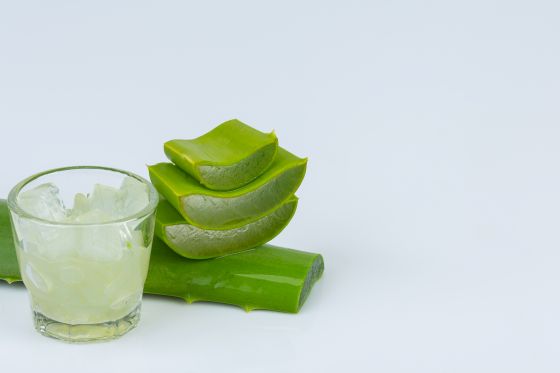
Aloe Vera has been a gathering unprecedented significance in the cosmetic industry, as various clinical trials and studies have vividly suggested the potential of aloe Vera as a good moisturizing and hydrating agent for the skin. It is an excellent topical agent having anti-ageing properties and used for enhancing the beauty of skin reducing wrinkles considerably.
Aloe Vera is used as one of the major ingredients in several natural face packs and hair packs to accentuate the beauty.
Aloe Vera possesses several properties beneficial to skin &hair.
- Antioxidant properties
Aloe Vera is rich in vitamins A (beta-carotene), C and E, which are antioxidants and helps to remove or free radicals causing oxidative stress to your skin.
- Anti-inflammatory action
Bradykinase enzyme in aloe Vera helps to reduce excessive inflammation to the skin as a topical agent
- Antibacterial properties
Aloe vera is a source of Lupeol, salicylic acid, urea nitrogen, cinnamonic acid, phenols and sulfur. All these have inhibitory action on fungi, bacteria and viruses.
- Wound healing
Aloe Vera has polysaccharide compounds which can increase skin fibroblast activity and proliferation, and thus collagen production which may lead to wound healing and repair. Aloe gel not only increases collagen content of the wound but also changes collagen composition (more type III) and increased the degree of collagen cross linking. Due to these properties, aloe Vera gel can boost wound contraction and increased the breaking strength of resulting scar tissue of wound.
An increased production of hyaluronic acid and dermatan sulfate in the granulation tissue of a healing wound following oral or topical treatment with aloe vera has been reported.
- Anti-ageing properties
Aloe Vera also has Glucomannan, a mannose-rich polysaccharide, and gibberellin, a growth hormone which can increase collagen production which gives strength and tightness to your skin preventing wrinkles.
Furthermore, the antioxidant vitamins A (beta-carotene), C and E protect your skin from free radical mediated injury or oxidative stress.
- Anti-inflammatory properties
Bradykinase enzyme in aloe Vera helps to reduce excessive inflammation on skin. Aloe Vera can prevent excessive inflammation on skin tissue as It inhibits the cyclooxygenase pathway and reduces prostaglandin E2 production from arachidonic acid.
Recently, the novel anti-inflammatory compound called C-glucosyl chromone has been isolated from aloe vera gel extracts.
- Aloe vera hydrates your skin.
Aloe Vera improves hydration of your skin and gives moisturized supple look. Mucopolysaccharides in aloe Vera facilitates binding moisture into the skin.
- Protects against U V radiation damage to skin
Aloe vera gel as a topical application has a protective effect against radiation damage to the skin. A study shows that following the administration of aloe vera gel, an antioxidant protein, metallothionein, is generated in the skin, which scavenges hydroxyl radicals. It also prevents suppression of superoxide dismutase and glutathione peroxidase in the skin. It reduces the production and release of skin keratinocyte-derived immunosuppressive cytokines such as interleukin-10 (IL-10).
- Skin diseases are improved by aloe Vera
Topical use of aloe is promoted for acne, lichen planus (a very itchy rash on the skin or in the mouth), oral submucous fibrosis, burning mouth syndrome, burns, and radiation-induced skin toxicity.
Is aloe Vera safe for consumption?
Generally, it is believed that prolonged use of laxative has been linked to increased risk of colorectal cancer. Laxative effect may cause electrolyte imbalances also. According to the U.S. Food and Drug Administration ruling of 2002 manufacturers need to remove aloe from over-the-counter laxative products because of a lack of safety data. Anthraquinones present in latex are a potent laxative. It increases intestinal water content, stimulates mucus secretion and increases intestinal peristalsis. Aloe Vera preparations in over dose may produce abdominal cramps, diarrhea, red urine, hepatitis, dependency or worsening of constipation. So excessive intake of aloe vera is not recommended.
However, it’s very safe and effective on skin as an anti-ageing topically applied agent. Those who have allergy to raw aloe vera gel may use synthetic or company made aloe vera gels of various brands.
Contraindication to consume aloe vera:
1. The intake of aloe Vera is contraindicated in people having known allergy to plants in the Liliaceae family.
2. Oral aloe is not recommended during pregnancy as it may stimulate uterine contractions.
3.It is contraindicated in breastfeeding mothers, as it may sometime causes gastrointestinal upsets to the baby.
Clinical trials data for benefits of aloe Vera on skin diseases
Seborrheic dermatitis, psoriasis vulgaris, genital herpes, skin burns, diabetes (type 2), HIV infection, cancer prevention, ulcerative colitis. Pressure ulcers, mucositis, radiation dermatitis, acne vulgaris, lichen planus, frostbite, aphthous stomatitis, and constipation have been benefited by aloe vera gel application as a topical agent.
Results of studies regarding the role of aloe Vera on wound healing are mixed with some studies reporting positive results while others showing no benefits.
Written by dr sanjana p
References for further reading
- Anti-inflammatory action: Aloe vera inhibits the cyclooxygenase pathway and reduces prostaglandin E2 production from arachidonic acid. Recently, the novel anti-inflammatory compound called C-glucosyl chromone was isolated from gel extracts. https://pubmed.ncbi.nlm.nih.gov/9579551/
- https://www.nccih.nih.gov/health/aloe-vera
- The Review on Properties of Aloe Vera in Healing of Cutaneous Wounds https://pubmed.ncbi.nlm.nih.gov/26090436/
- https://pubmed.ncbi.nlm.nih.gov/7920425/
- https://www.ncbi.nlm.nih.gov/pmc/articles/PMC2763764/
- West DP, Zhu YF. Evaluation of aloe vera gel gloves in the treatment of dry skin associated with occupational exposure. Am J Infect Control. 2003;31:40–2. https://pubmed.ncbi.nlm.nih.gov/12548256/
- Biochem J.1984 Jun 1;220(2):597-600. doi: 10.1042/bj2200597.Hyaluronate is synthesized at plasma membranes.P Prehm https://pubmed.ncbi.nlm.nih.gov/11867195/