
Category: Cultural heritage

  • Tamil Nadu’s cultural heritage vibrancy

    Tamil Nadu is a state of unparalleled cultural vibrancy due to its vast heritage temples, art forms, festivals and being the cradle of various dance forms. Have a glimpse at Tamil Nadu’s cultural heritage.
    According to historical data Tamilakam region indicates a continuous history of human occupation for more than 3,800 years. The region was inhabited by Tamil-speaking Dravidian people.  The cultural heritage of Tamilakam evolved from a diverse range of empires ruled the region over many centuries.

    The region was reigned by many renowned kingdoms including the Sangam period (3rd century BCE to 3rd century CE) triumvirate of the Cheras, Cholas and Pandyas, the Pallavas (3rd–9th century CE), and the later Vijayanagara Empire (14th–17th century CE). European colonization began in the 17th century CE, and lasted for over two centuries.

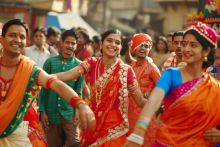
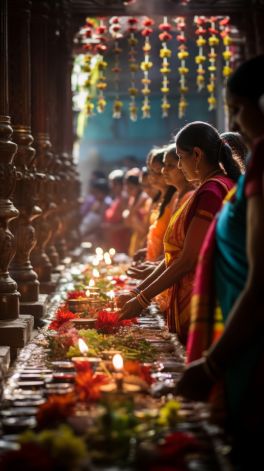
    Tamil Nadu boasts a vibrant tapestry of cultural festivals, some of which are harvest-related such as Pongal while some of the festivals are intricately linked with the myths and legends of the land. For instance, Thaipusam is a Tamil festival celebrated on the first full moon day of the Tamil month of Thai coinciding with Pusam star and dedicated to God Murugan.

    Pongal, the harvest festival, is one of the most celebrated, lasting four days and honouring the Sun God and farm animals.

    The Chithirai Festival is a festival that takes place at Madurai, which puts on a grand spectacle marking the celestial wedding of Lord Sundareswarar and Goddess Meenakshi.

    The state has a rich cultural heritage steeped in history and myth and people of this land still preserve it with great fervour and passion.

    Dravidian temple architecture of Tamil Nadu

    The state is famous for its temple architectural styles and millions of pilgrims visit Tamil Nadu from all over the world every year. Dravidian architecture style of temple architecture defines the spiritual landscape of the state. The temples consisted of a central sanctum (garbhagriha) topped by pyramidal tower or vimana, porches or mantapas preceding the door leading to the sanctum and large gate-pyramids or gopurams on the quadrangular enclosures that surround the temple. Besides these, they consisted of large pillared halls and one or more water tanks or wells.

    Murals &Fresco paintings adorn Tamilakam temples

    Tamil paintings are usually centered around natural, religious or aesthetic themes. Sittanavasal is a rock-cut monastery and temple attributed to Pandyas and Pallavas which consist of frescoes and murals from the 7th century CE, painted with vegetable and mineral dyes in over a thin wet surface of lime plaster.

      The murals on the Ranganathaswamy Temple at Srirangam and the Brihadeeswarar temple at Thanjavur are amazing examples.

     One of the major forms of Tamil ancient painting is Thanjavur painting. Thanjavoor painting originated in the 16th century CE. In this visual art form, a base made of cloth and coated with zinc oxide is painted using dyes and then decorated with semi-precious stones, as well as silver or gold threads.

    The musical heritage history of Tamilakam

    The ancient Tamilakam region had its own system of music called Tamil Pannisai.

    The Sangam literature, Silappatikaram from 2nd century CE states about music notes and instruments.

    From the 9th century CE, Shaivite hymns Thevaram and Vaishnavite hymns Tiruvaymoli were sung along while musical instruments were played in the background.

    There are many traditional instruments received from the region dating back to the Sangam period such as parai, tharai, yazh,and murasu. Nadaswaram, a reed instrument that is often accompanied by the thavil, a type of drum instrument are the major musical instruments used in temples and weddings.

    Melam is from a group of percussion instruments from the ancient Tamilakam which are played during events and functions.

     Carnatic music originated later from the region which included rhythmic and structured music by composers such as Thyagaraja, Muthuswami Dikshitar, and Shyama Shastri.

     Villu Paatu is an ancient form of musical story-telling method where narration is interspersed with music played from a string bow and accompanying instruments.

     Gaana is a combination of various folk music sung mainly in Chennai region of Tamil Nadu.

    Tamilakam -the cradle of Bharatanatyam

    Bharatanatyam is a major genre of Indian classical dance that originated from Tamil Nadu and reached global platforms through talented and renowned artists from the country. It is one of the oldest classical dance forms of India.

    There are many folk-dance forms that originated and are practiced in Tamil Naadu.

     Karakattam involves dancers balancing decorated pot(s) on the head while making dance movements with the body.

    Kavadiattam is part of a ceremonial act of sacrifice, wherein the dancers bear a kavadi, an arch shaped wooden stick balanced on the shoulders with weights on both the ends.

    Kolattam is a folk-dance form performed by women in which two small sticks (kols) are crisscrossed to make specific rhythms while singing songs.

    Kummi is similar to Kolattam, with slight difference  that hands are used to make sounds while dancing instead of sticks used in the later.

     Mayilattam is another folk-dance form. In Mayilattam, dancers wear attires and outfits resembling the peacocks and peacock feathers and head dresses. They perform movements to various folk songs and tunes while trying to imitate the movements of a peacock.

    Koothu is a form of theatre performance usually happening on streets. The play consists of dance along with music, narration and singing. The performers wear elaborate wooden headgear, special costumes with swirling skirts, ornaments such as heavy anklets along with prominent face painting and make-up. This art of Koothu is performed during festivals in open places and streets and it is dedicated to goddesses such as Mariamman or Draupadi with stories drawn from Hindu epics, mythology and folklore.

    Bommalattam is a type of puppetry that uses various doll marionettes manipulated by rods and strings attached to them.

    The themes are drawn from various Hindu scriptures such as the Puranas and epics and/with local folklore.

    Cultural festivals of Tamil Nadu

    The state of Tamil Nadu has been celebrating many cultural festivals commemorating its ancient pride and grandeur. Most of these festivals are connected to the epics and  the divinity associated with the landscape.

    • Chithirai Festival is a festival that takes place at Madurai, which puts on a grand spectacle marking the celestial wedding of Lord Sundareswarar and Goddess Meenakshi.
    • Pongal

    Pongal is a major and multi-day harvest festival celebrated by Tamils in the month of Thai according to the Tamil solar calendar (usually falls on 14 or 15 January). The harvest festival  also has a sacred linking with Indian mythology as it dedicated to the Sun God .This festival is named after the ceremonial “Pongal”[ meaning -to boil, overflow] which is the traditional dish prepared from the new harvest of rice boiled in milk with jaggery offered to Surya.

    Mattu Pongal is meant for celebration of cattle when the cattle are bathed, their horns polished and painted in bright colors, garlands of flowers placed around their necks and processions.

    Jallikattu is yet another traditional event held during the Pongal festival period. In this event a bull is released into a crowd of people, and multiple human participants attempt to grab the large hump on the bull’s back with both arms and hang on to it while the bull attempts to escape. Although it is a scary event jeopardizing human lives and has claimed legal attention several times it part of the tradition of the state.

    Karthikai Deepam is a festival of lights that is observed on the full moon day of the Kartika month, called the Kartika Pournami, [on the months of November or December].

    • Aadi Perukku is a Tamil cultural festival celebrated on the 18th day of the Tamil month of Adi which pays tribute to water’s life-sustaining properties. The worship of Amman and Ayyanar deities are organized during the month in temples across Tamil Nadu with much fanfare.
    •  Panguni Uthiram is a festival marked on the purnima (full moon) of the month of Panguni and celebrates the wedding of various Hindu gods.
    • Vinayaka Chaturthi is a festival of Lord Ganesha. It is celebrated with special temple poojas to pay respect to Lord Ganesha. On the fourth day after the new moon in the Tamil month of Avani, devotees start eleven days of celebrations by worshipping clay idols of the Lord. These idols will be installed outdoors in pandals or marquees. The legend linked with this festival is that it was on this day that Lord Shiva beheaded Lord Ganesh for refusing him entry into his abode. Lord Ganesh was guarding Lord Parvati while she was taking a bath. Later, Lord Shiva brought him back to life, by replacing his head with that of an elephant. Pran Pratishtha, Shodashopachara, Uttar Puja and Ganpati Visarjan are the four rituals associated with the festival. Grand celebrations are held at the Vinayaka temples on this day.
    • Mahamaham

    This bathing ritual is celebrated once in 12 years in the quaint town of Kumbakonam and it is a festival event attracting huge crowd.

    The Mahamaham festival is a bathing ritual that is believed to cleanse one of all sins. The bathing takes place in the Mahamaham tank that is situated at the heart of the land of temples. The date and time for the celebration of this festival is calculated according to the astrological positions of planets.

    There is a myth associated with this holy bath. It was the prayer by the holy rivers Ganga, Yamuna, Sarayu, Cauvery, Saraswati, Mahanadi and Narmada which paved way for Mahamaham bathing festival. These river goddesses prayed to Lord Bhrahma to get rid of the sins of theirs that occurred by humans washing in these rivers. As they prayed to Lord Brahma, he instructed them to take a bath in Mahamaham waters together so that they attain purity. Since that time, it is believed that the Mahamaham tank comprise of the waters of all the holy rivers and taking a dip in the tank is equivalent to taking a dip in all the holy rivers.

     During the mahamaham festival Kumbakonam town bustles with celebration and the fervour of devotion. During the event the whole town glistens with lamps and vibrant colours.

    • Natyanjali dance festival

    Natyanjali is an annual classical Indian dance festival. It denotes to the dance festival at Chidambaram Nataraja temple. Originally, the festival was introduced at the Chidambaram temple, but nowadays it has been organized at many other temples in Kumbakonam, Thanjavur, Chennai, Nagapatinam, Mayavaram, Thirunallar, Thiruvanaikoil, etc.

     This dance festival provides an opportunity for all dancers, from all over India, to perform and to pay their tribute to Lord Nataraja. It begins on the auspicious occasion of MahaShivarathiri. Many famous dancers from all over the country congregate and dance in the temple as an offering to Lord Nataraja on this occasion.

    Other notable cultural festivals of Tamilnadu include Thaipusam, a spiritual celebration honouring Lord Murugan. Tamil Nadu also celebrates  Navaratri & Deepavali  festivals with its vibrance and fervour.

     Chennai Sangamam is  yet another big Tamil cultural festival held in Chennai  every year with the noble purpose of rejuvenating the old village festivals , folk art forms and for encouraging artists from the remote hamlets of Tamil Nadu.

     Location of Tamil Nadu

    Coordinates: 11°N 79°E

    Country      India

    Region        South India

    It is a south Indian state of India with many heritage spots.

    For international travellers

    Air ports in Tamil Nadu-

    • Tiruchirappalli International Airport
    • Chennai International Airport
    • Coimbatore International Airport
    • Madurai International Airport

    written by dr sanjana p souparnika[ copyright]

    References

  •  Bhagoriya festival – Vibrant expression of tribal culture , Madhyapradesh

     Bhagoriya festival is a harvest festival celebrated by tribal people in Madhya Pradesh and Maharashtra, a unique celebration of the Bhil and other indigenous communities such as Bhilalas and Pateliyas.

    It is a festival of singing and dance which celebrates the arrival of Spring and harvest.  The tribal people start the celebrations  seven days before the festival of Holi.

     Bhagoriya is more than just a festivity, it’s a vibrant expression of tribal culture, unity which also has a sacred linking with divinity, according to the beliefs of tribal community.

    It is the tradition of the tribes of the hamlets here to honour Lord Shiva and his consort goddess Parvati. The name Bhagoriya is derived from “Bhav-Gauri”, another name for lord Shiva and goddess Parvati.

    Locations of bhagoriya celebration

    The festival takes place in the Barwani, Dhar, Alirajpur, Khargone and Jhabua districts of Madhya Pradesh and Maharashtra. It is celebrated for seven days in the month of March before the Holi.

    Traditionally, the people of the tribes travel to the festival grounds with their families on decorated bullock carts to do shopping for the upcoming festival of Holi and dance to traditional musical instruments, sing songs in unison with the tribal people of different areas.

    The festival is the celebration of vibrant colours with music and dance in the ground of fair where men reach wearing dhoti, jhuladi, and a safa (turban), often accessorised with conventional weapons and a belt of bells around their waists. The tribal women appear in ghaghra and polki, adorned with dazzling  accessories of silver jewellery  from head to foot.

    History

    According to folklore  the festival is connected to a king who initiated  it for searching his missing daughter.  However, historians attribute the patronage of the festival to King Kasumar Damor.

    During the festival, the dancing tribes take Mahua liquor, a local brew enjoyed during the festivities. Groups from various villages arrive in processions, carrying traditional musical instruments such as the mandar, kund, brass plates, and flutes.

    The dance is a visual treat with the fascinating performance of tribes in silver ornaments , vibrant attires enriched with intricate body movements and expressions.

    The Bhagoriya Festival  fairs are a treasure trove of tribal life, featuring shops selling  tribal jewellery, artefacts, clothes, and indigenous items made by the tribal people.

     Food stalls are also organized to offer local delicacies across the festival ground.  The festival fair also comes alive with fun rides, including merry-go-rounds.

    Cultural organisations and NGOs have taken initiatives to document and promote Bhagoriya festivities.  DECU ISRO has worked with local artists to preserve the dance and its traditions.  Recently Madhya Pradesh ministry has stated that Bhagoriya festival is part of its cultural heritage.

    Indeed, tribal fests are to be revived & preserved for the posterity to understand the indigenous culture and tradition of this land in the decades yet to come.   These kinds of tribal fests of the subcontinent features our tangible & intangible heritage which can inspire the world forever.

    References

  • Maha kumbh mela 2025

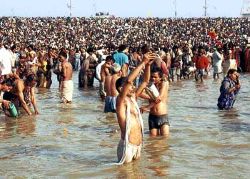
    Kumbh Mela (the festival of the sacred Pitcher or pot ) is considered as the largest peaceful congregation of pilgrims on earth, and it includes the ritual of taking bathe or a holy dip in a sacred river.

     It is a huge spiritual event inviting global attention as a tradition interwoven with the rich cultural heritage of India since ancient times.The event is a religious and cultural spectacle which occurs once in 12 years attracting participants from around the globe to take a dip in the holy waters

     In 2025 Mahakumbhamela is happening in Prayagraj in India. The 45-day Maha Kumbh, happening after a gap of 144 years, will witness the participation of over 45 crore devotees, including nearly 15 lakh from foreign nations

      Kumbh Mela plays a central spiritual role in the country and the  event encapsulates the science of astronomy, astrology, spirituality, ritualistic traditions, and social and cultural customs and practices making this a culturally diverse festival. Knowledge and skills related to this tradition are transmitted through ancient religious manuscripts, oral traditions, historical travelogues and texts produced by eminent historians. However, the teacher-student relationship of the sadhus in the ashrams and akhadas remains the most important method of imparting and safeguarding knowledge and skills relating to Kumbh Mela.

    The ritualistic bath of kumbh mela

    The kumbh mela festival is connected with the ritual of the sacred bath or dip in Ganges River or its confluences. Devotees believe that by bathing in the holy Ganges, one is freed from sins liberating the person from the cycle of birth and death. This impart Kumbh mela a dimension of salvation or moksha along with the fervor and enthusiasm interwoven with the celebration of spirituality.

    The congregation of pilgrims attending Maha Kumbh mela includes ascetics, saints, sadhus, aspirants-kalpavasis and visitors from any part of the globe. It is believed that Kumbh mela is a festival which is celebrated in India since ancient times at periodic intervals as a celebration of holy bath and congregation for spiritual discussions and rituals, in various other names as Magh festival. Still it is a matter of debate while looking through the lens of history .

    Most pilgrims stay at the venue of Kumbh mela for a day or two, but some stay the entire month of Magh during the festival and live an austere life during the stay. They attend spiritual discourses, fast and pray over the month, and these Kumbh pilgrims are called kalpavasis

    Traditionally, the riverside events conducted at four major pilgrimage sites are recognized as the Kumbh Melas: Prayagraj (Ganges-Yamuna-Sarasvati rivers confluence), Haridwar (Ganges), Nashik-Trimbak (Godavari), and Ujjain (Shipra). It was asserted that, in 2022, after a 700-year break, Bansberia (Hooghly), hosted the pilgrimage again.

    Apart from the ritualistic dip in the waters, Kumbh mela is a festival of community commerce with numerous fairs, education, religious discourses by saints, mass gatherings of monks, and entertainment.

    Kumbh mela through the veil of myths

    Kumbh mela is a festival categorized under intangible cultural heritage by UNESCO. This congregation of pilgrims intricately is linked with the legend of Indian mythology.  Through the veil of myths and legends Kumbh mela has deeper connection with Hindu puranas and epics which describes the churning of the great ocean Palazhimanthan and from which many precious objects, animals and divine figurines emerged.

    However historian rejects this linking of Kumbhamela with the myth of “the great ocean churning” with the claim that  as none of the ancient or medieval era texts t mention the Samudra Manthana legend [ ocean churning] ever linked it to a “mela” or festival. Giorgio Bonazzoli, a scholar of Sanskrit Puranas, considers these myths as mere anachronistic explanations, an adaptation of early legends to a later practice by a “small circle of adherents” who have sought the roots of a highly popular pilgrimage and festival.

    Hindu mythology puranas and epics describes the emergence of a “Kumbha of amrita (nectar of immortality)” after the forces of good and evil churn the  great ocean of creation. The gods and demons fight over the possession of this amrit kumbh to attain immortality. In a later day extension to this myth ,the pot or amrit kumbh is spilt at four places, and that relates to the origin of the four Kumbha Melas. However this myth of “spilling” and associated Kumbh Mela celebration is not found in the earliest mentions of the original legend of Samudra Manthana (churning of the ocean) such as the Vedic era texts (pre-500 BCE).

    There is another story associated with Kumbh mela which is the more widely known version that narrates about the Mohini avtar or incarnation of Lord Vishnu to regain the pot from demons who stole it for a short interval from the gods. All these myths and legends impart the festival a divine dimension beyond its relevance as the periodical spiritual congregation .

     The  “Kumbha Mela “ word as such is not found in the ancient or medieval era texts, however many texts and verses mention about a bathing festival, the sacred junction of rivers Ganga, Yamuna and sacred Saraswati at Prayag, and pilgrimage to Prayag.

    History of origin of kumbh mela

    Kumbh mela , an ancient religious festival, the roots of which lies in obscurity since time immemorial. According to religious texts, it is believed that the festival began in the 8th-century  as a Hindu gathering initiated by Hindu philosopher and saint Adi Shankara for philosophical discussions and debates along with Hindu monasteries across the Indian subcontinent. However, historical literary evidence is lacking about these mass pilgrimages called “Kumbha Mela” prior to the 19th century.

      There is mention about Magha mela celebrated annually in various inscriptions and manuscripts with periodic huge gatherings of pilgrims at 6 0r 12 years and taking holy dip in sacred rivers.

    According to the author & professor of school of Humanities and Languages, Kama MacLean, Kumbh mela is rebranding and remobilization of the ancient Magha Mela as the modern era Kumbh Mela, particularly after the Indian Rebellion of 1857.She mentions about Kumbh mela in her book Pilgrimage and power and also in other articles.

    The first Kumbh Mela event was organized in 1870, under the supervision of British empire in the colonial era. The weeks over which the festival is observed cycle at each site approximately once every 12 years based on the Hindu luni-solar calendar and the relative astrological positions of Jupiter, the sun and the moon. The difference between Prayag and Haridwar festivals is about 6 years, and both feature a Maha (major) and Ardha (half) Kumbh Melas.

     The exact years for the celebration of Kumbh Melas at Ujjain and Nashik have been a topic of dispute in the 20th century. The Nashik and Ujjain festivals have been celebrated in the same year or one year apart typically about 3 years after the Prayagraj Kumbh Mela.

    There is mention about holy dip in Prayaga in many religious texts but the name “ kumbh mela “ is conspicuously absent. The earliest mention of Prayaga and the bathing pilgrimage is found in a supplement to the Rigveda.

    The holy bath in prayaga is also mentioned in the Pali canons of Buddhism. In section 1.7 of Majjhima Nikaya, Buddha states that bathing in Prayaga cannot wash away cruel and evil deeds, rather the virtuous one should be pure in heart and fair in action.

     The Indian epic Mahabharata mentions a bathing pilgrimage at Prayag as a means of atonement, penance for past mistakes and guilt.

     In Tirthayatra Parva of Mahabharata [means pilgrimage before the great war depicted in the epic] the epic states “the one who observes firm [ethical] vows, having bathed at Prayaga during Magha, becomes spotless and reaches heaven. Magha mentioned here is the Magha festival of ancient era.

     The Anushasana Parva of the epic [ the part of mahabharatha epic post war] also narrates about this bathing pilgrimage as “geographical tirtha” that must be combined with Manasa-tirtha (tirtha of the heart).

      There are a few other textual references to Prayaga and river-side festivals including the places where present-day Kumbh Melas are held. However, the exact age of the Kumbh Mela is still obscure and remain intertwined with myths and legends. Most of the texts mentioning Prayaga is referring to Magha festival. Nonetheless, no evidences corroborates that Magha is the primitive form of Kumbha mela.

     Historians probably take into account the 7th-century Buddhist Chinese traveller Xuanzang’s (Hiuen Tsang) mentioning about king Harsha and his capital of Prayag, which he states to be a sacred Hindu city with hundreds of “deva temples” and two Buddhist institutions. The ancient traveler also mentions the Hindu bathing rituals at the junction of the rivers. According to some scholars, this is the earliest surviving historical account of the Kumbh Mela, which took place in present-day Prayag in 644 CE.

    Some traditions believes that Kumbha Mela’s origin happened in the 8th CE as philosopher Shankara  called for a major Hindu gatherings for philosophical discussions and debates along with Hindu monasteries across the Indian subcontinent.

    According to James Mallinson, a scholar of Hindu yoga manuscripts and monastic institutions, bathing festivals at Prayag with large gatherings of pilgrims are attested since “at least the middle of the first millennium CE”. He also states that textual evidence exists for similar pilgrimage at other major sacred rivers since the medieval period.  He conclude that four of these pilgrim gatherings morphed under the name ” Kumbh Mela”  during the reign of  East India Company  which made a  deliberate move to control the war-prone monks  through this transformation. The imperial power of Britain also had an eye on  the lucrative tax and trade revenues at these Hindu pilgrimage festivals.

    The Ramcharitmanas, a 16th century text of Tulsidas also cite an annual Mela in Prayag .

    The Muslim historian’s Ain-i-Akbari (c. 1590 CE) The Persian text calls Prayag (spells it Priyag) the “king of shrines” for the Hindus, and mentions that it is considered particularly holy in the Hindu month of Magha.

    The late 16th-century Tabaqat-i-Akbari also describes explicitly of an annual bathing festival at Prayag Sangam where “various classes of Hindus came from all over the country to bathe in large numbers that the jungles and plains were unable to hold them”.

    The Kumbh Mela of Haridwar appears to be the original Kumbh Mela, since it is held according to the astrological sign “Kumbha” (Aquarius), and because there are several references to a 12-year cycle for it.

     The later Mughal Empire era texts that contain the term “Kumbha Mela” in Haridwar’s context include Khulasat-ut-Tawarikh (1695–1699 CE), and Chahar Gulshan (1759 CE).The Khulasat-ut-Tawarikh also mentions an annual bathing pilgrimage festival in Prayag, but it does not call it Kumbh.

     Both these Mughal era texts use the term “Kumbh Mela” to describe only Haridwar’s fair, mentioning a similar fair held in Prayag and Nashik. The Khulasat-ut-Tawarikh lists the following melas: an annual mela and a Kumbh Mela every 12 years at Haridwar; a mela held at Trimbak when Jupiter enters Leo (that is, once in 12 years); and an annual mela held at Prayag (in modern Prayagraj) in Magh.

    The Magh Mela of Prayag is probably the oldest among the four modern-day Kumbh Melas. It dates from the early centuries CE, given it has been mentioned in several early Puranas. However, the name Kumbh for these more ancient bathing pilgrimages probably dates to the mid-19th century.

     D. P. Dubey states that none of the ancient Hindu texts call the Prayag fair a “Kumbh Mela”.

    Kama Maclean states that the early British records do not mention the name “Kumbh Mela” or the 12-year cycle for the Prayag fair. The first British reference to the Kumbh Mela in Prayag occurs only in an 1868 report, which mentions the need for increased pilgrimage and sanitation controls at the “Coomb fair” to be held in January 1870. According to Maclean, the Prayagwal Brahmin priests of Prayag coopted the Kumbh legend and brand to the annual Prayag Magh Mela given the socio-political circumstances in the 19th century.

    The Kumbh Mela at Ujjain began in the 18th century when the Maratha ruler Ranoji Shinde invited ascetics from Nashik to Ujjain for a local festival.

    Management of kumbh mela festival

      The Kumbh Melas have three dates around which the significant majority of pilgrims participate, while the festival itself lasts between one and three months around these dates. Each festival attracts millions, with the largest gathering at the Prayag Kumbh Mela and the second largest at Haridwar.

    The festival is observed over many days, with the day of Amavasya attracting the largest number on a single day. According to official figures, the largest one-day attendance at the Kumbh Mela was 30 million on 10 February 2013 and 50 million on 4 February 2019.

    The Kumbh Mela is curated like camps, facilitating access to Sadhus & Hindu worshippers. Two key groups central to the Kumbh Mela are the Sadhus (Hindu ascetics) and the pilgrims. Through their dedicated yogic practices, Sadhus embody the transient nature of life and play a vital role in connecting the spiritual and the mundane.

    The holy bath at the Kumbh festival

    Bathing, or a dip in the river waters with a prayer, is the most important ritual of the Kumbh Melas for all pilgrims including monks or Sadhu akharas.

     According to the traditions on a precalculated date of amavasya the Hindu pilgrims welcome and wait for the thirteen sadhu akharas to bathe first. This event is called shahi snan or rajyogi snan. This includes a celebratory processional march, with banners, flags, elephants, horses and musicians along with the naked or scantily clad monks, some smeared with bhasma (ashes) called akharas. These monk groups come from different parts of India, and have a particular emblem symbol and deity (Ganesha, Dattatreya, Hanuman, etc.).

    The largest contingent is the Juna akhara, traced to Adi Shankara, representing a diverse mix from the four of the largest Hindu monasteries in India with their headquarters at Sringeri, Dwarka, Jyotirmatha and Govardhana. The Mahanirbani and Niranjani are the other large contingents, and each akhara has their own lineage of saints and teachers.

     In this holy bath celebration, great crowd gather in reverence of Sadhu akharas and cheer for this procession. The holy bath by akhara monks, the festival day opens for bathing by the pilgrim visitors.

    Bathing ritual for the pilgrims in Kumbh mela may be aided by a Prayagwal priest or maybe done as a simple dip that is private. When the holy bath is done under the guidance of priests the rituals include mundan (shaving of head), prayers with offerings such as flowers, sindur (vermilion), milk or coconut, along with the recitation of hymns with shradha (prayers in the honour of one’s ancestors).

    This may include sometimes elaborate ceremonies of yajna (homa) led by a priest and followed by a dip in the water and prayer by the pilgrim. Later pilgrim exits the river waters and visit old Hindu temples near the site.

    The motivations for the bathing ritual is salvation or moksha – a means to liberation from the cycle of rebirths.

    The pilgrimage is also recommended in Hindu texts as a means of atonement, penance for the mistakes committed during lifetime. Pilgrimage and bathing in holy rivers with a motivation to do penance and as a means to self-purify has Vedic precedents and is discussed in the early dharma literature of Hinduism.

    Darshan in Kumbhamela

    After the holy dip in water pilgrims may visit the near by temple in the premises of Kumbh mela.The darshan experience is integral to the Kumbh Mela, and worshippers do it as an act of great reverence, understanding the religious sanctity of the moment.  It emphasizes a visual exchange—a divine connection with the deity’s power through sight. The pilgrims undertake this journey to experience the profound religious and cultural essence of the event.

    The pilgrims can interact with monks or Sadhu akharas during this period.The interaction with Sadhus allows pilgrims to seek spiritual guidance and advice.  In Kumbh mela  any kind of interactions with Sadhus are  very respectful, with devotees often leaving offerings at their feet as tokens of devotion and gratitude.

    Activities at Kumbhamela

     Kumbh mela provides a platform for religious discussions, devotional singing  and religious assemblies where doctrines are debated and standardised (shastrartha).

    The festival grounds also feature a wide range of cultural events including kalagram (venues of kala, Indian arts), laser light shows, classical dance and musical performances from different parts of India, thematic gates reflecting the historic regional architectural diversity, boat rides, tourist walks to historic sites near the river etc.

     The festival also offers opportunities to visit the monastic camps to watch yoga adepts and spiritual discourses.

    In the festival site the food to all is strictly vegetarian and the management has established multiple food stalls, offering delicacies from different states of India. The ritual practices are followed by celebratory feasts for the visitors and the pilgrims and all people sit in rows and share a community meal called mahaprasada that is prepared by volunteers from charitable donations

    The collective energy generated during the Mela strengthens social bonds and elevates individual and communal consciousness, illustrating the power of such gatherings to create shared identity and purpose.

    Caution of stampede

     According to some news agencies’ reports, in January 2025, at least 50 people died and 100 others were injured in the stampede at the Maha Kumbh venue in Prayagraj, and hence Amrit Snan or ritual bath was temporary suspended. It was announced that a judicial enquiry by a three-member committee would be conducted, led by Justice Harsh Kumar.

    Stampedes are common occurrences in many other important temple fests  and other huge events, however it is a grave reminder that in any holy place, extra caution  has to be  exerted in crowd management  with basic as well as emergency medical facilities along with a functional system for providing adequate  resources – food, water and other basic amenities. The authorities must ensure this basic safety and amenities for pilgrims with extra caution and sense of dutifulness in a festival like Kumbh mela , the echoes of which touch the global conscience as well as consciousness.

    Written by

    Dr sanjana p souparnika

    image courtesy-India today

  • Begam Hazrat Mahal

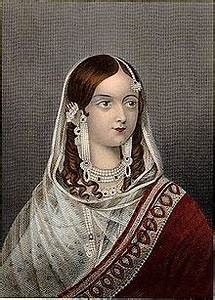
    Begum Hazrat Mahal was  a Muslim ruler of Awadh, India well- known forher bravery in taking control of ‘Awadh’ after he husband was exiled by the British empire. She rebelled against the british east india company during the Indian mutiny of 1857. Begum Hazrat Mahal (c. 1820 – 7 April 1879), also known as the Begum of Awadh, was the second wife of  Nawab of Awadh , and the regent of Awadh in 1857–1858.

    Early life

    No concrete data is available about the childhood of Begam hasrat mahal.She was born in 1820 at Faizabad, the former capital of Oudh State. 

    She was known by the name Muhammadi khanum in the earlier part of her life and was brought up as a dancing girl by her parents, who then sold her to the royal Palace- harem of the ruler of Awadh.

    Her life in the palace of Awadh began as a ‘khawasin’ (maid), and later promoted  as ‘pari’ (fairy). Later she became the concubine of the nawab of Awadh Wajid Ali Shah. During that relationship with nawab she gave birth to a son, Birjis qadar, the tajdaar-e-Awadh. The nawab married her, to make the son his legitimate heir, and then named her Begam Hazrat Mahal, the name with which she is known to history of India.

    The British East India company annexed Awadh in February of 1856, in its conquest of Indian states and annexation to British empire. As per the contract with East India company Nawab of Awadh agreed to be pensioned off to Calcutta and begam was not part of that entourage. Begam Hazrat Mahal was left in Awadh and she decided to fight for her rights in Awadh remaining with people of the land.she made her son, Prince Birjis Qadr, the ruler of Awadh, with herself as regent during his minority.

    In 1857  the sepoy mutiny erupted due to the  prolonged resentment and intolerance with the reign of East India company among Indian soldiers. Its repercussions echoed in Awadh too.

     Begam Hazrat Mahal  and her people made an army against the British East India company and decided to fight. She rebelled against the forces of the British under the leadership of Raja Jailal Singh; they seized control of Lucknow and she took power as the guardian of her minor son, Prince Birjis Qadr, whom she had declared as the ruler.

     As regent, she automatically came to have a leadership role in the rebellion against the British.

    Begam Hazrat Mahal took control of affairs as her son’s regent of Awadh and fought relentlessly for ten months against the British.  She was praised by many people of her time, ranging from the ordinary citizen of Awadh to the Mughal emperor – Bahadur shah jafar  for her courage and exemplary rule.

    Hazrat Mahal worked in association with Nana saheb, but later joined the Maulavi of faizabad in the attack on Shahjahanpur.

     A few British accounts of the battle of Musa bagh in Lucknow, testify that the begum was personally present in the battle ground, fighting and rallying the 9,000  rebels there. She was found in the war field riding an elephant during the battle as well.

    But It was difficult to stand against the mighty British for long for a small state like Awadh. She had to withdraw herself in front of the fire power and strategic help of other regions to British. However, she was not ready to surrender to the British army and live in exile.

    At the end of the war begam rejected the pension and mercy of British throne. She slipped out of Lucknow to the Himalayan belt fighting with the army and sought refuge in Nepal. She lived in Nepal till her last breath with no wealth left. Yet she was not ready to surrender to British throne even in those adverse circumstances. When she died in Nepal in 1879, it was very difficult to find money even for a grave for the people around her.

    Begum Hazrat Mahal’s tomb is located in the central part of Kathmandu near Jama Masjid, Ghantaghar,

    She will be remembered in the history of India for the exemplary courage with which she fought against British army and later preferring an ordinary life rejecting their agreement of  pension by surrendering.

    After her death, on the occasion of the jubilee of  Queen of England (1887), the British Government pardoned her son Birjis Qadr and he was allowed to return to India.

    Memorials & honours

    On 15 August 1962, Begam Hazrat Mahal was honoured at the Old Victoria Park in Hazratganj, Lucknow for her role in the Great mutiny in 1857. The renaming of the park to Begam Hazrat mahal park in her honour took place in this year and also a marble memorial was constructed, which includes a marble tablet with four round brass plaques bearing the coat of arms of the Awadh royal family. 

    A scholarship is given in her name through Maulana azad foundation to meritorious Girls belonging to minority communities by the government of India.

  • Badami cave temples, Karnataka

    The Badami cave temples are a complex of Buddhist, Hindu and Jain cave temples located in Badami, an ancient heritage town in the Bagalkot district in northern part of Karnataka, India. This is an instance of rock cut temple built in Chalukya architectural style

    .

    History & geographical location

    The Badami cave temples are located about 142 km east of Belagavi and 140 km northwest of Hampi.

    Badami   a heritage town, was previously known as “Vataapi”, the capital of the early Chalukya dynasty. Chalukyas ruled a significant portion of Karnataka from the 6th to the 8th century. Badami is situated on the west bank of a man-made lake Agastya Teertha ringed by an earthen wall with stone steps. In this serene heritage town, you can feel the footsteps of history in the vestiges and artefacts centuries have left behind.

        It is surrounded on the north and south by forts built during Early Chalukya  reign and in later times. The Malaprabha River is flowing silently [4.8 km away)  through this pilgrim land of ancient architectural marvels. The journey to Badami cave temples will definitely provide you an enthralling and delightful experience transporting into another period of time.

      The UNESCO world heritage site Pattadakal  [23km]and  Aihole – another site with over a hundred ancient and early medieval era Hindu, Jain and Buddhist monuments[ 35km] are close to Badami.

    The Badami temple complex has principally 4 caves. The first three caves feature sculptures of Hindu gods and legends focusing on Shiva and Vishnu, while Cave 4 features Jain icons and themes.

        It is believed that the cave temples are built in the late 6th century onwards. The exact dating is known only for Cave 3, which is a Hindu temple dedicated to Lord Vishnu.

    An inscription found here records the dedication of the shrine by Mangalesha in Saka 500 (solar calendar, 578/579 CE). The inscription is written in the old Kannada language and it denotes the dating of these rock cave temples to the 6th century. This makes the cave 3 temple of Badami as the oldest firmly-dated Hindu cave temple in India.

    Architecture of Badami cave temples

    The temple is built on a rocky terrain in red sandstone and here you can explore the Chalukya architectural style.The Badami rock temple caves include 4 caves, all in the escarpment of the hill in soft Badami sandstone formation, to the south-east of the town.

    The complex includes four caves principally, although a few caves are also located in the premises. Around the lake, Badami has additional caves and one of them is believed to be a Buddhist cave. Another Cave like gallery known as Arali Tirtha has around twenty-seven carvings.

    Four cave temples in the escarpment of the hill to the south-east of the town were carved into the cliff’s monolithic stone face. The escarpment is above a man-made lake called Agastya Teertha, created by an earthen dam faced with stone steps.

     The largest and highest cave is Cave 3 in the complex and it is situated further to the east on the northern face of the hill. The fourth cave, Cave 4, is a few steps down further east. The cave has fine carvings exhibiting matured stage of Karnataka ancient art. Cave 4 is dedicated to revered figures of Jainism.

    The artwork in Caves 1 and 2 exhibit the northern Deccan style of the 6th and 7th centuries, while those in Cave 3 represent two ancient Indian artistic traditions; the northern Nagara and the southern Dravida styles.Cave 3 also shows icons and reliefs in the so-called Vesara style, a fusion of ideas from the two styles, as well as some of the earliest surviving historical examples in Karnataka of yantra-chakra motifs (geometric symbolism) and colored fresco paintings.

     Cave 1 is a Hindu temple and here you can find various sculptures of Hindu divinities and themes along with  a prominent carving of the dancing Shiva as Nataraja. Cave 2  goes in the same architectural line of cave 1 in  its layout and dimensions, featuring Hindu subjects of which the Hari Hara, Ardhanari shiva, Mahishamardini, Dwi Bahu Ganesha and Skanda in a separate antechamber on extended cave at western side-next to great Nataraja sculpture. The Cave 2 also has premier images  of Vishnu as Trivikrama and it is the largest.

    The largest cave, Cave 3, featuring Vishnu as Ananta seated on coiled serpent, Varaha with Bhudevi, Harihara, Narasimha in standing posture, great image of Trivikrama and Virata Vishnu.

    which Alice Boner – a Swiss art historian and Indologist, states is a time division symbolizing the cosmic wheel.

    The Badami cave temples- Interior architecture &themes

    Cave I of Badami   :

    Nataraja Carving is the significant feature of this cave. The cave depicts the Tandava-dancing Shiva as Nataraja on the rock face to the right of entrance. The image, 5 feet (1.5 m) tall, has 18 arms (9 in left and 9 on right) in a form that expresses the dance position (about 9×9=81 combinations in total) arranged in a geometric pattern. The eighteen arms express Natya mudras (symbolic hand gestures), with some holding objects such as drums, a flame torch, a serpent, a trident and an axe.

    Shiva has his son Ganesha and the bull Nandi by his side.

    The wall depicts the goddess Durga of Shaktism tradition slaying the buffalo-demon Mahishasura. The carvings and its accuracy show that sculptors who built this cave temple  were  very proficient in the Natya mudras of Bharatanatya dance form.

    Mahisasura Mardini Carving

    On the right side of the Nataraja carving is a carving of Mahishasura mardini with Chaturbhuja (Chatur means 4, Bhuja means hands). The sculpture depicts the killing of the demon Mahishasura by godess Durga.  According to legends and myths Mahishasura, a demon was the son of Mahisi and great grandson of Bhahmarishi Kashyapa.

    On the left of the entrance is a two-handed Shaiva dvarapala who holds a trident, and below him is a bull-elephant fused image where they share a head; seen from left it is an elephant and from right a bull.

    Harihara Carving

    Inside the veranda, the cave depicts a carved sculpture of Harihara, a 7.75-foot (2.36 m) high sculpture of a fused image that is half-Shiva and half-Vishnu. He is flanked by the goddesses Parvati and Lakshmi on each side.

    Ardhanareshwara Carving

    To the right, toward the end of the wall, is a relief sculpture of Ardhanarishvara, a fused image of Shiva and his consort Parvati. One half of the image has Shiva with a moon on his mukuta (head), snakes in his hands, earrings and next to the half that represents Parvati is an attendant carrying a tray of jewels.

    It delineates the vision of the Chalukya kings delivering message to the Chalukya citizens about gender equality.

    On the ceiling of this cave  are images of the Vidyadhara couples as well as couples in courtship and erotic Mithuna scenes.

     Through a cleft in the back wall of the cave is a square sanctuary with more carved images.

    In the mantapa is a seated Nandi facing the garbha ghruha (sacrum sanctum) containing a Shiva linga.

    Cave 2 of Badami

    Cave 2 is above and to the east of Cave 1 and faces north. It was built in late 6th or early 7th century. It is smaller than Cave 1 and it is dedicated primarily to Lod Vishnu. It depicts the legend of Vishnu in his Trivikrama form.

    Inside the temple are friezes showing stories from Hindu texts such as the Bhagavata Purana. These show the legend of cosmic ocean churning (Samudra Manthan) and Krishna’s birth and flute playing indicating the theological and cultural significance of these in 7th century India.

     The ceiling and door head carvings show Gajalakshmi, the swastika symbols, flying couples, Brahma, Vishnu.

    The ceiling of Cave 2 shows a wheel with sixteen fish spokes in a square frame. The end bays have a flying couple and Vishnu on Garuda.

    Cave3 of Badami

    Cave 3 is considered as the earliest dated Hindu temple in the Deccan region. It is dedicated to Lord Vishnu and it is the largest cave in the complex.

    The cave is facing north, 60 steps from Cave 2 at a higher level. The cave is 15 feet (4.6 m) high; it is supported by six pillars, each measuring 2.5 square feet (0.23 m2). It has intricately carved friezes and giant figures of Trivikrama, Anantasayana, Vasudeva, Varaha, Harihara and Narasimha.

    This temple is built in Vaishnavite theme; however, it also shows Harihara on its southern wall –  half Vishnu and half Shiva shown fused as one.

    Cave 3 also shows fresco paintings on the ceiling, some of which are faded and broken. These are among the earliest known surviving evidence of fresco painting in Indian art.

     The Hindu god Brahma is portrayed on Hamsa vahana in one of the mural paintings. The wedding of Shiva and Parvati, attended by various Hindu deities is depicted in another painting.

    Cave 4 of Badami

     The cave 4 is located immediately adjacent to and east of Cave 3.  The floor is situated about 10 feet lower and is the smallest of the four caves of this land. It is dedicated to Tirthankaras, the revered figures of Jainism.

    It was constructed after the first three, sponsored by Hindu kings in later part of the 7th-century. Some scholars are of the view that this cave may have been created in the 8th century.

     Also it has been proposed that some  embellishments seems to be added in the  subsequent centuries until about the 11th or 12th century.

    Cave 4  shows detailed carvings and a diverse range of motifs. The cave has a five-bayed entrance with four square columns – each with brackets and capitals. To the back of this verandah is a hall with two standalone and two joined pillars

    Inside the cave are major carvings of Bahubali, Parshvanatha and Mahavira with symbolic display of other Tirthankaras.

    Bahubali is standing in Kayotsarga meditating posture with vines wrapped around his leg, his classic iconography. Parshvanatha is shown with the five-headed cobra hood.

    Mahavira is represented sitting on a lion throne.

    Other carvings include Indrabhuti Gautama covered by four snakes, Brahmi and Sundari.

    In the sanctum is an image of Mahavira resting on a pedestal containing a 12th-century Kannada inscription marking the death of one Jakkave. Twenty-four small Jaina Tirthankara images are engraved on the inner pillars and walls. In addition there are idols of Yakshas, Yakshis and Padmavati.

    Other unnamed caves of Badami

       Apart from the numbered 4 main caves of Badami, this land has a few other centuries old caves with statues and carvings.  History sleeps in this land of temples which is believed to be built in medieval era. On the other side of the lake, near the Bhutanatha temple, there is a 7th-8th century Chalukya period cave with a carved statue seated over a sculpted throne with reliefs showing people holding chauris (fans), a Pipal tree, elephants, and lions in an attacking pose.

         According to colonial-era texts of John Murray – a Jainism scholar  & missionary in British India, the main image carved in this Cave  is that of a Jaina figure.  However, it has been contradicted by archeologists Henry Cousens and A. Sundara and their views have been buttressed by local legends, which proposes that the statue is of an ancient king.  Because in a photograph of the statue taken before its face was damaged, the figure lacked the Ushnisha lump that typically found with Buddha’s image.

    The statue has several unusual, non-Buddha ornaments such as rings for fingers, a necklace, and a chest-band; it wears a Hindu Yajnopavita thread and its head is stylistically closer to a Jina head than a Buddha’s head. These features point out that the statue may be of a king represented with features of various traditions. There are no clear-cut evidence regarding the century of construction of this main statue.

     Adjacent to the controversial cave are other monuments belonging to the ancient centuries. One of them is a small shrine consisting of a 7th-century rock carving of Anantashayana Vishnu, or reclining Vishnu with Lakshmi and Garuda in namaste posture.

    In 2013, Manjunath Sullolli, Assistant Director of Bagalkot district working for the state government of Karnataka, reported the discovery of another cave with 27 rock carvings, about 500 metres (1,600 ft) from the four main caves.

    Water gushes from this newly discovered cave year-round. It depicts Vishnu and other Hindu deities, and features an inscription in the Devanagari script. The dating of these carvings also is unknown.

    Best time to visit Badamicaves

    November to February is the best season to visit. The weather is fine cool and and clear. Other months are less recommended as scorching summer or Monsoon rain may make it difficult to travel and explore.

    Internet Connectivity

    BSNL or Cell one connectivity is available

    How to reach Badami ?

    The nearest airports to Badami in Karnataka are Hubli and Belgam. Hubli is connected to Banglore and Mumbai airports.

     From Hubli cabs are available to Badami[105km].

    From Belgam to Badami [150km]

    Badami is connected to other cities by bus.

    For international travelers

    Flight to Banglore and train to Badami [447km]-7 hours 51 minutes

    Flight to Pune airport[Mumbai] and then train to Badami[470km] 9 hours 28 min

    Flight to Hyderabad [Andrapradesh]airport and train to Badami.[420km] 9 hours 32 min

    References

    1.Evolution of Temple Architecture – Aihole-Badami- Pattadakalhttps://whc.unesco.org/en/tentativelists/5972

    2. Badami around the Tank:

    Western Chalukya Monuments

    http://www.art-and-archaeology.com/india/badami/baplan.html

    3. cave 4 Badami. http://www.art-and-archaeology.com/india/badami/cave403.html

    4. Chronology and Development of the Chāḷukya Cave Temples https://www.jstor.org/stable/4629258

    5. Badami cavetemples. https://en.wikipedia.org/wiki/Badami_cave_temples

    6. Upinder Singh (2008). A History of Ancient and Early Medieval India: From the Stone Age to the 12th Century

  • Sanchi Buddhist Monuments

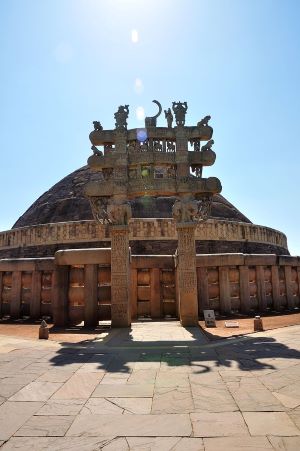
    The stupas, temples, viharas, and stambha monuments at Sanchi in Madhyapradesh,India are among the oldest and most relevant examples of aniconic arts and free-standing architecture that comprehensively document the history of Buddhism in ancient India.

    Sanchi Stupa is a Buddhist complex, famous for its Great Stupa, on a hilltop at Sanchi Town in Raisen District of the State of Madhya Pradesh, India. It is located 46 kilometres (29 mi) north-east of Bhopal, capital of Madhya Pradesh.

    The stupas, temples, viharas, and stambha at Sanchi in central India are among the oldest and most mature examples of aniconic arts and free-standing architecture that comprehensively document the history of Buddhism from the 3rd century BCE to the 12th century CE. It is an important monument of Indian Architecture originally commissioned by the Mauryan emperor Ashoka in the 3rd century BCE. The stupa at Sanchi built during the Mauryan period was made of bricks.

    The monuments at Sanchi now comprise a series of Buddhist monuments starting from the Mauryan Empire period (3rd century BCE), continuing with the Gupta Empire period (5th century CE), and ending around the 12th century CE. It is probably the best preserved group of Buddhist monuments in India.

    The oldest, and also the largest monument, the Great Stupa also called Stupa No. 1, initially built under the Mauryans, and adorned with one of the Pillars of Ashoka

       Sanchi is the center of a region with a number of stupas, all within a few miles of Sanchi. These include

    • Satdhara (9 km to the W of Sanchi]
    • The  Relics of Sariputra and Mahamoggallana
    • Bhojpur (also called Morel Khurd, a fortified hilltop with 60 stupas11km away)
    •  Andher (17 km SE of Sanchi)
    • Sonari (10 km SW of Sanchi)
    •  Saru Maru stupa [ 100 km away ]
    • Bharhut is 300 km to the northeast.

    During the reign of under the Shungas and the Satavahanas, the Great Stupa was enlarged and decorated with gates and railings, and smaller stupas were also built in the vicinity, especially Stupa No.2, and Stupa No.3

    Sanchi monuments were rediscovered by the British colonialists general Henry Taylor in 1818.The first excavation of this site was done under the supervision of Major Alexander Cunningham in 1851.

    The architecture of great stupa at Sanchi

    The “Great Stupa” at Sanchi is the oldest structure and was originally commissioned by the emperor Ashoka the Great of the Maurya Empire in the 3rd century BCE.

    Its nucleus was a hemispherical brick structure built over the sacred relics of the Buddha, with a raised terrace encompassing its base, and a railing and stone umbrella on the summit, the chatra, a parasol-like structure symbolizing high rank.

    The original Stupa only had about half the diameter of today’s stupa at Sanchi , which is further enhanced by the Sungas. It was covered in brick, unlike the stones that now cover it.

    During the later rule of the Shunga, the stupa was expanded with stone slabs to almost twice its original size. The dome was flattened near the top and crowned by three superimposed parasols within a square railing. With its many tiers it was a symbol of the dharma, the Wheel of the Law. The dome was set on a high circular drum meant for circumambulation, which could be accessed via a double staircase. A second stone pathway at ground level was enclosed by a stone balustrade.

    Myths & history associated with Sanchi stupa

      According to one version of the Mahavamsa, the Buddhist chronicle of Sri Lanka, The emperor Ashoka is closely linked with the region of Sanchi. It is believed that While he was heir-apparent and was journeying as Viceroy to Ujjain, he is said to have halted at Vidisha (10 kilometers from Sanchi), and there married the daughter of a local banker who was named as Devi. Sanchi was the venue of Devi and Ashoka’s wedding.

     The original construction work of this stupa was overseen by Ashoka. In the 1st century BCE, four elaborately carved toranas (ornamental gateways) and a balustrade encircling the entire structure were added.

    Inscriptions

    Sanchi, especially Stupa 1, has a large number of Brahmi inscriptions. Although most of them are small and mention donations, they are of great historical significance. James Prinsep in 1837, found that most of them ended with the same two Brahmi characters. Princep took them as “danam” (donation), which permitted the decipherment of the Brahmi script.

        An analysis of the deciphered scripts  denote that most of the donors were from Ujjain, Vidisha, Kurara, Nadinagar, Mahisati, Kurghara, Bhogavadhan and Kamdagigam. Three inscriptions are known from Yavana (Indo-Greek)donors at Sanchi,. The script denoting which reads “Setapathiyasa Yonasa danam” (“Gift of the Yona of Setapatha”), Setapatha being an uncertain city.

    The art of Sanchi

    The  art of Sanchi  developed considerably in the 1st century BCE/CE and is thought to predate the blooming of the Greco-Buddhist art of Gandhara, which went on to flourish until around the 4th century CE.

    The art of Sanchi is considered as the ancestor of the didactic forms of Buddhist art that would follow, such as the art of Gandhara. The Buddhist monuments at Sanchi contain an appreciable concentration of early Indian artistic techniques and Buddhist art, referred to as its Anionic School or Phase. Depicting Buddha through symbols, the sculpted art shows the evolution in sculpting techniques and the elaboration of icons, especially depicting Buddha.

    Ashoka pillar

    A pillar of finely polished sandstone, one of the Pillars of Ashoka, was also erected on the side of the main Torana gateway. The bottom part of the pillar still stands. The upper parts of the pillar are at the nearby Sanchi Archaeological Museum. The capital consists in four lions, which probably supported a Wheel of Law.

    The pillar has an Ashokan inscription (Schism Edict)[13] and an inscription in the ornamental Sankha Lipi from the Gupta period.[6] The Ashokan inscription is engraved in early Brahmi characters. It is unfortunately much damaged, but the commands it contains appear to be the same as those recorded in the Sarnath and Kausambi edicts, which together form the three known instances of Ashoka’s “Schism Edict”. It relates to the penalties for schism in the Buddhist sangha:

    … the path is prescribed both for the monks and for the nuns. As long as (my) sons and great-grandsons (shall reign; and) as long as the Moon and the Sun (shall endure), the monk or nun who shall cause divisions in the Sangha, shall be compelled to put on white robes and to reside apart. For what is my desire? That the Sangha may be united and may long endure.

    Now  Sanchi group of monuments are owned by the Government of India and is conserved, prot

    ected, maintained, and managed by the Archaeological Survey of India under the Ancient Monuments and Archaeological Sites and Remains (AMASR) Act (1958

    Sanchi Monument listed by UNESCO

    Currently , around fifty monuments remain on the hill of Sanchi, including three main stupas and several temples. The monuments have been listed among other famous monuments in the UNESCO World Heritage Sites since 1989.

    How to reach Sanchi?

    The nearest airport is Bhopal which is 55 km away from it. Trains are available from Bhopal and Rani Kamlapati to Sanchi railway station.

    References

  • UNESCO world heritage sites of India

    UNESCO World heritage sites of India

    World Heritage Sites are landmarks and areas with legal protection by an international convention administered by UNESCO for having cultural, historical, or scientific significance. The  “cultural and natural heritage around the world considered to be of outstanding value to humanity”

    World Heritage Sites might be ancient ruins or historical structures, buildings, cities] deserts, forests, islands, lakes, monuments, mountains or wilderness areas

    The sites are intended for practical conservation for posterity, which otherwise would be subject to risk from human or animal trespassing or negligence.  These sites are demarcated by UNESCO as protected zones.

    Intangible cultural heritage from India

    • Koodiyattam  -a performing art from kerala
    • Ramlila performing arts from Ramayana
    • Ramman festival -It is a festival of the Garhwali people of Saloor Dungra village of Himalayas.
    • Cchau dance of westbengal  &Odisha
    • Kalbelia folk songs and dances of Rajasthan 
    • Mudiyettu, ritual theatre and dance drama of Kerala
    • Buddhist chanting of Ladakh: recitation of sacred Buddhist texts in the trans-Himalayan Ladakh region,
    • Sankirtana, ritual singing, drumming and dancing of Manipur
    • Thatheras  handicrafts of Jandiala Guru, Punjab,
    • Naroz festival of Parsi community
    • Kumbh mela festival of Ujjain,Haridwar
    • Garba dance festival of Gujrat

    Tangible  cultural heritage of India

    A. Natural heritage sites

    • Great Himalayan national park,Himachal Pradesh
    • Kaziranga national park, Assam
    • Keoladeo national park , Rajasthan
    • Manas wild life sanctuary, Assam
    • Nandadevi &valley of flowers national park, uttaranchal
    • Sunderbans national park,West bengal
    • Western ghats , Kerala, south India

    B. Man made Heritage sites

    • Agra fort Uttar pradesh
    • Ajanta caves Maharashtra
    • Sanchi buddhist monuments Madhyapradesh
    • Champaner-pavhadh  archeological park,Gujrat
    • Chatrapathi Shivaji terminal Maharashtra
    • Elephanta caves Maharashtra
    • Ellora caves  Maharashtra
    • Goa churches Goa
    • Fatehpur Sikri Uttar pradesh
    • Great living Chola temples Tamilnadu
    • Monuments at Hampi Karnataka
    • Monuments of Mahabhalipuram Tamilnadu
    • Monuments at Pattadakkal karnataka
    • Hill fort at Rajasthan Rajasthan
    • Humayon’ s tomb Delhi
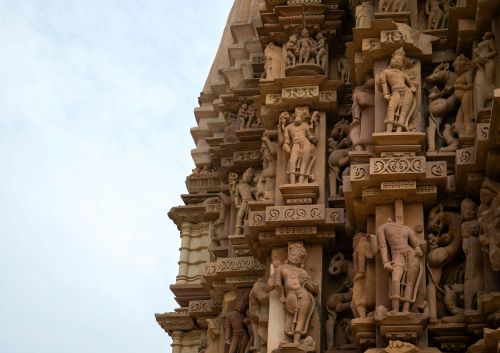
    • Monuments of Khajuraho  Madhyapradesh
    • Maha bodhi temple complex Bodh gaya Bihar
    • Mountain railways of India  Westbengal
    • Qutb minar Delhi
    • Rani-ki-vav stepwell Gujrat
    • Red fort complex New Delhi
    • Rockshelters of Bimbetka Madhyapradesh
    • Sun temple konark
    • Taj mahal Uttar pradesh
    • Jantar mantar Jaipur Rajasthan
    • Nalanda university Bihar
    • Architectural work of Le corbuster Chandigarh
    • Historic city of Ahmedbad Gujarat
    • Victorian,gothic and art ensembles of Mumbai Maharashtra
    • Jaipur city Rajasthan

    C. Mixed type

    • Khangchendzonga National Park sikkim

  • Thalagunda – Pranaveswara temple a connecting link to the history of south India

    This image has an empty alt attribute; its file name thalagunda temple-1.jpg

    Praveswara temple, Thalagunda in Karnataka is an ancient shiva temple of Kadamba dynasty , a monument protected monument by Archeological Survey of India[ASI] due to its historical significance.

    Thalagunda,karnataka

    Thalagunda is a village in the Shikaripura taluk of Shivamogga district in the state of Karnataka, India. The village has been referred as Sthala-Kundura, Sthana-Kundur and Sthana-kunja-pura during ancient period. This hamlet is situated about 45 km from Banavasi, 20 km from Soraba and 7 km from Siralkoppa town.

    There are many ancient temples in Thalagunda village including pranaveshvara, gangaadhareshvara, trineetra and veerabhadra temples. Praveswara temple is a protected monument by Archeological Survey of India[ASI] due to its historical significance.

    According to the inscription found in the pillar of pranaveswara temple, it can be assumed that the temple was worshiped by earlier rulers including the Satakarnis. The temple dates back to the Satavahana period. However the current findings of architecture denotes that it is not of the Satavahana period but of the early Kadambas although explorations around the temple premises had revealed brick structure of the Satavahana period.

    Pranaveswara temple

      The temple is a small square building consisting of a garbhagriha and a sukanasi. There is a huge Shivalinga inside the sanctum. The garbha-griha doorway jambs are carved out of Kadamba inscription stones, the entrance doorway construction style denotes that it is of a later period, perhaps of the eleventh century CE.

    Thalagunda inscription pillar

    The Talagunda pillar inscription of Kakusthavarman is a well known epigraphic record in Sanskrit found in the ruined pranaveswara temple. The pillar is located in front of the Pranavalingeshwara temple.

    The inscriptions are engraved on hard grey granite and dated to between 455 and 470 CE. It throws light into the history of Kadamba dynasty and the reign of king Śāntivarma in northwest Karnataka.

    The pillar is 1.635 metres (5.36 ft) high with a 0.4 metres (1.3 ft) square top. It is octagonal shaft that slightly tapers and narrows as it goes up. The width of the octagonal face is 0.178 metres (0.58 ft). The inscription is found on all faces, but on 7 of the 8 faces, it consists of two vertical lines that start at the bottom of the pillar. On the eighth face, we can find just one short line.

    The inscription consists of 34 poetic verses that respect the chanda rules of Sanskrit. It is the earliest epigraphical evidence found in Karnataka about the existence of a Hindu temple dedicated to Shiva in Talagunda, the construction of a temple water tank, and the practice of worshipping the Shiva Linga before about 450 CE.

    The inscription unravels the glory of Kanchipuram as a center (ghatika) for advanced studies in ancient India, where the already learned Brahmin Mayurasarman from Talagunda goes with his counsellor to study the whole Veda. It also throws light into the cultural values and customs prevailed in the 5th-century India with the mention of “music” and goddess of wealth (Lakshmi) and speaks about the practice of marriage between north Indian and South Indian empires.

    How to reach Thalagunda ?

    The nearest railway station is Shivamoga .You may reach Manglore or Bangluru by flight and may reach Shivamoga by train or bus service. Approximately a one and half hour journey from Shivamoga by cab may help you reach Thalagunda[77.5km].

    References