

Hair loss in women is a common condition triggered by various causes such as genetics, hormonal imbalances, ageing, nutritional deficiencies etc. Hair loss treatment requires a comprehensive approach at the root cause level for better results.
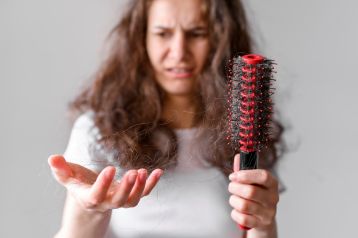
Women suffer from a wide variety of hair loss patterns at different phases of lives. The causes are multiple and vary from women to women.
Causes of hair loss in women
- Acute infections
- Poor nutrition
- Ageing
- stress
- Hormonal imbalances
- Thyroid dysfunction
- Polycystic ovarian syndrome
- Female pattern alopecia
- Alopecia areata
Hair loss in women may happen from mild to severe infections, stress and sudden weight loss. These types of hair loss are categorized as telogen effluvium type hair loss.
Poor nutrition results in diffuse hair loss in women either from poor intake or from inadequate absorption of nutrients.
Low levels of proteins, iron, zinc, vitamins D may trigger excessive hair loss as these nutrients are crucial for follicle growth.
Acute as well as prolonged stress may lead to diffuse hair loss as stress can alter the hormonal rhythms in the body building up cortisol hormones. This may disrupt hair growth cycle and hair enter into resting phase.
Ageing plays a crucial role in hair thinning and diffuse hair loss from scalp due to declining female hormones. Various physiological states like puberty, pregnancy, child birth and menopause is associated with hair loss from hormonal dysfunction. Physiological thinning of hair starts in 30s and40s.
Rarely some androgen hormone secreting tumors may cause hair loss.
Post chemotherapy hair loss is a common adverse effect of cancer treatment which is reversible within a short period of time.
Thyroid dysfunctions lead to chronic hair loss. Both hypo and hyper thyroid states can have adverse impact on hair.
Sometimes alopecia areata, an autoimmune mediated hair loss affects women. The body’s own immune system mistakenly attacks hair follicles and the hairs shed in circular patches.
Female pattern alopecia
Female pattern alopecia is a hereditary condition in which there is hair loss from the top and crown area preserving the front hairline.
It is a chronic type of hair loss in which there is shortening of hair growth [ anagen phase] cycle and lengthening of hair shedding catagen and telogen phase. So, for regrowth of hair long time interval is needed.
There is shrinking of hair follicle and thinning of hair shaft. A polygenic mode of inheritance for FPHL has now been well established. These genes may determine the age of onset, progression, pattern, and severity.
It is characterized by widening of the central hair and thinning of hair shaft. The exact mechanism causing female pattern alopecia is still not fully understood. A separate androgen independent mechanism is believed to be in operation.
PCOS related alopecia & female pattern alopecia – Are they same?
PCOS and female pattern hair loss share some core features. They are not same or identical but closely linked. Women having Female pattern alopecia commonly have PCOS and women having PCOS have thinning of hair with widening of top of scalp.
Both conditions involve hair follicles shrinking (miniaturization) when exposed to androgens like testosterone and dihydrotestosterone (DHT).
Typical recovery timeline from hair loss
Hair loss from acute causes such as poor nutrition, stress and acute infections may take around 6-9 months to recover. More serious causes such as hormonal diseases may require chronic or prolonged treatment for the underlying cause.
How to manage hair loss in women?
- Nutritional deficiency correction with balanced diet and hair growth promoting nutrients in food. Supplements like vitamin D may be prescribed for people who are spending more time indoor.
- Stress management through mind body relaxation techniques like yoga exercises, aerobic exercises etc.
- Treat the underlying cause in hormonal disorders causing hair loss.
- Hair care solutions- Use shampoo and conditioners which are mild to scalp skin and hair. Follow hair care instructions if you have treated hair.
- Conventional medicine: The modern medical trichologists prescribe commonly minoxidil topical applications and antiandrogen drugs.
- Integrative medicine therapy at Mediprecision
We provide homeopathic remedies chosen tailoring to the individual needs and provide customized diet charts and nutritional correction along with some well- chosen yoga poses that help to boost hair growth.
In advanced irreversible hair loss cases we recommend other therapies at trichology &hair transplantation clinics which can be opted at your own discretion.
In hair loss treatment the homeopathic drug selection is crucial in female pattern alopecia and hair loss from hormonal causes. Nutrition and exercises may have only adjunct role in cases which are reversible by medications.
Written by dr Sanjana p
References :